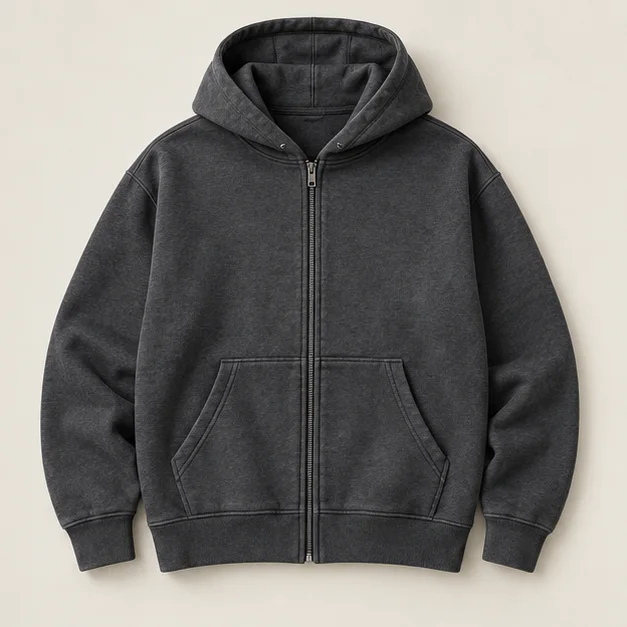
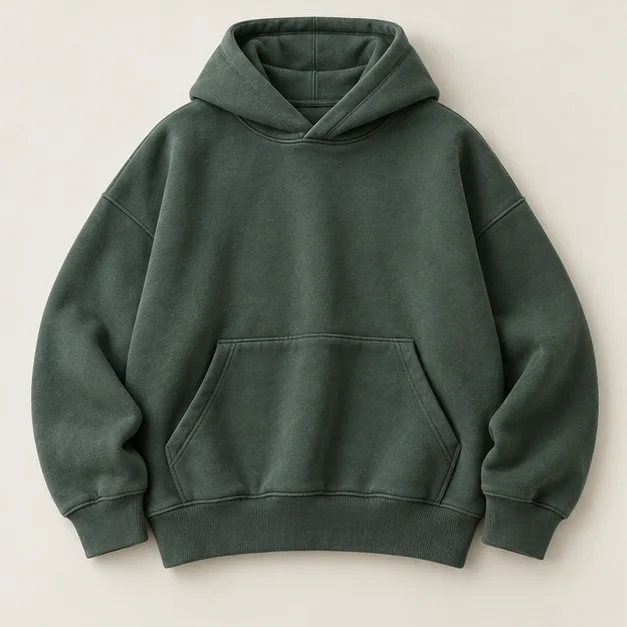
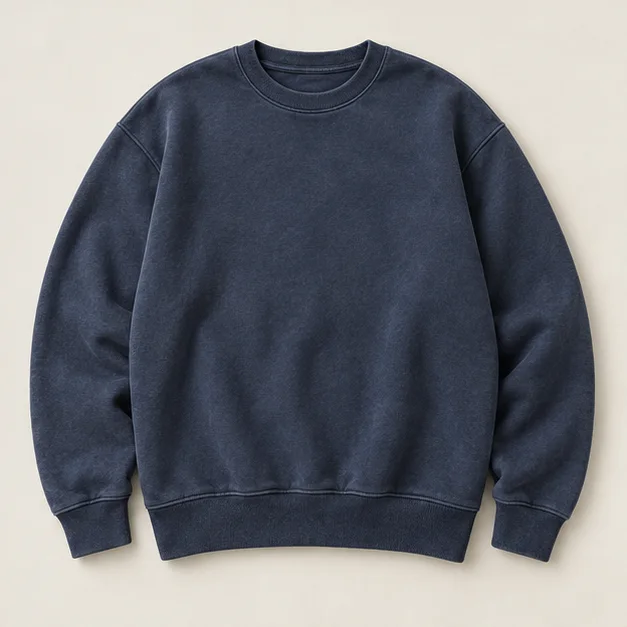
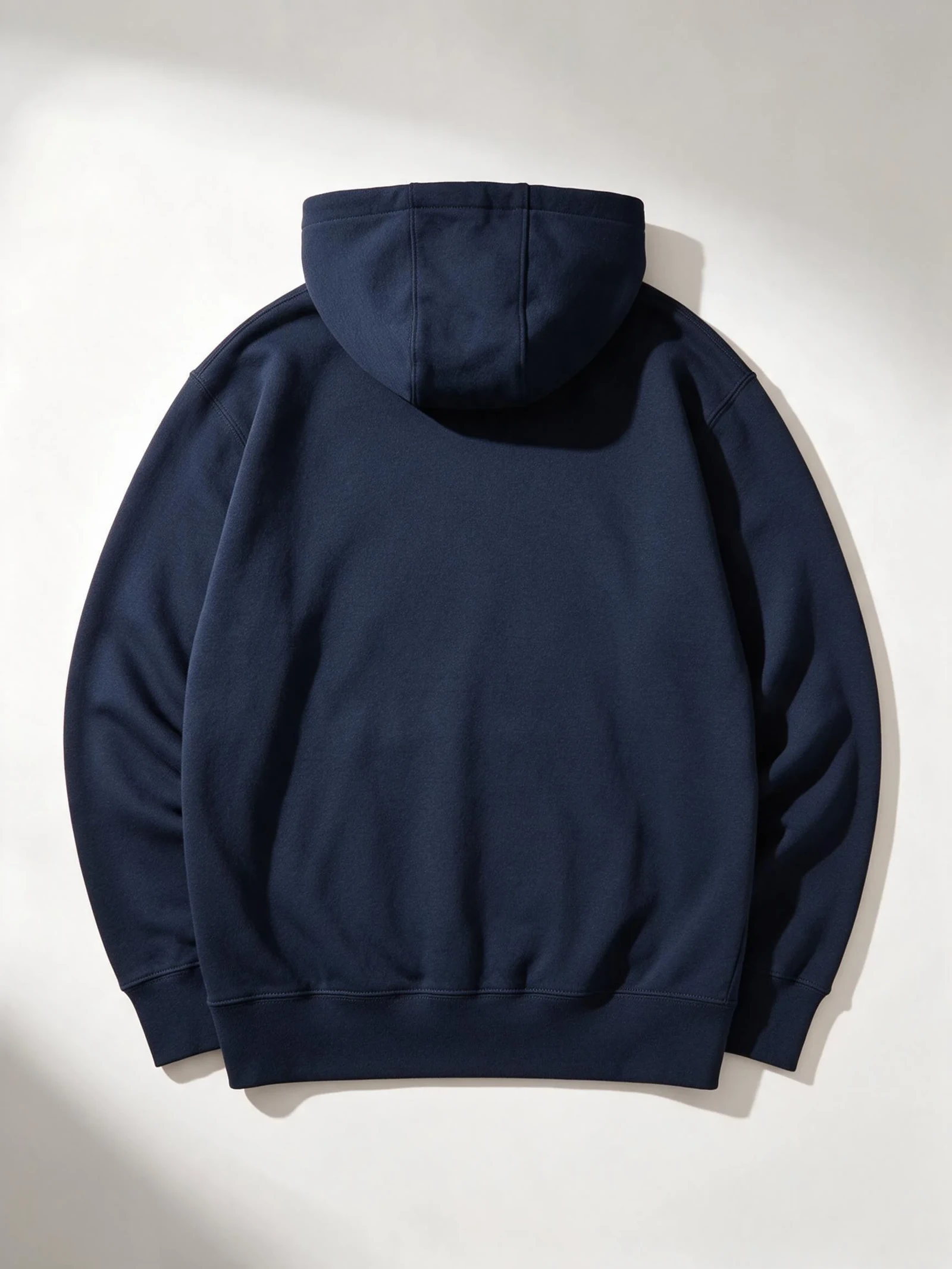
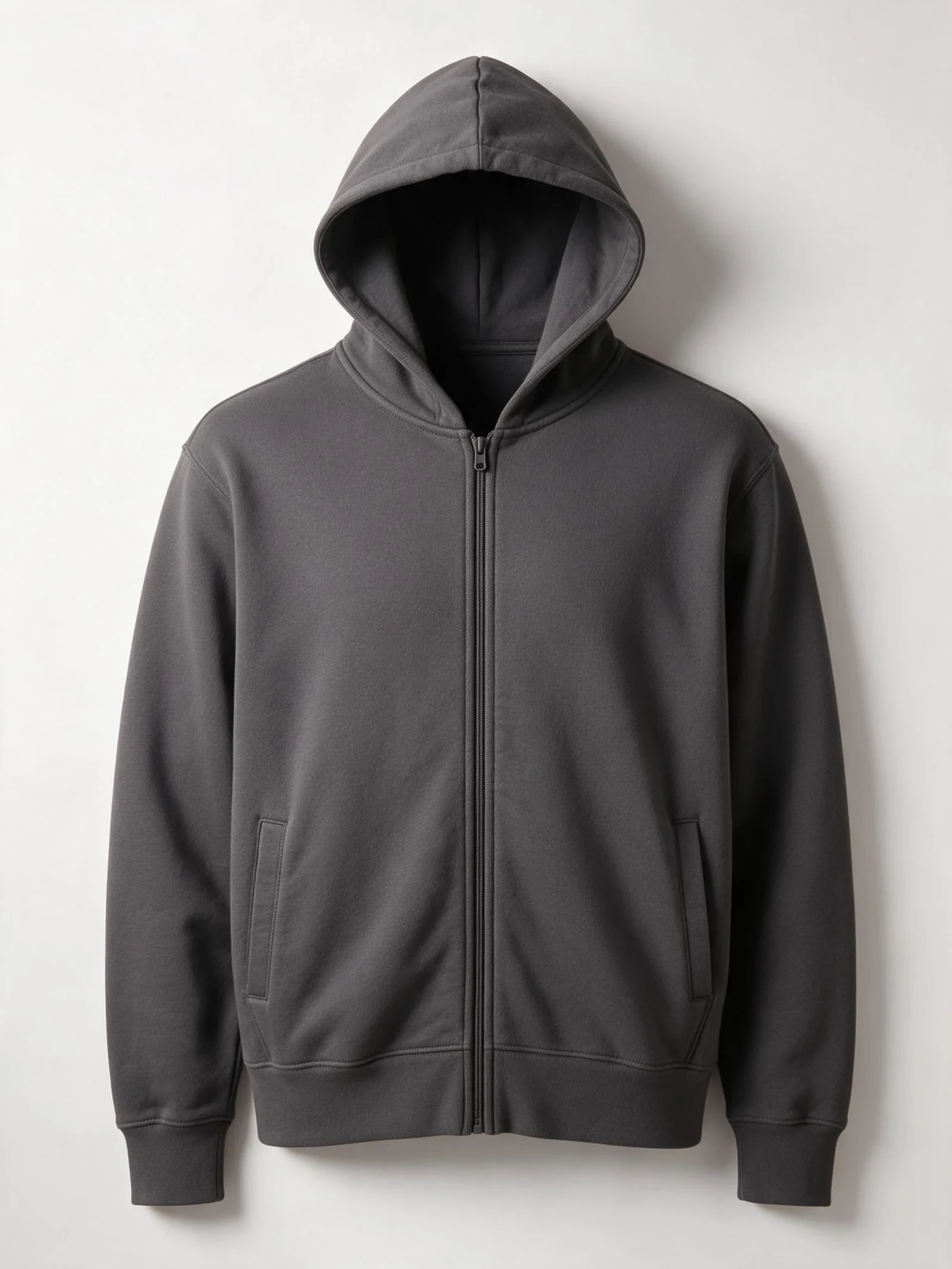
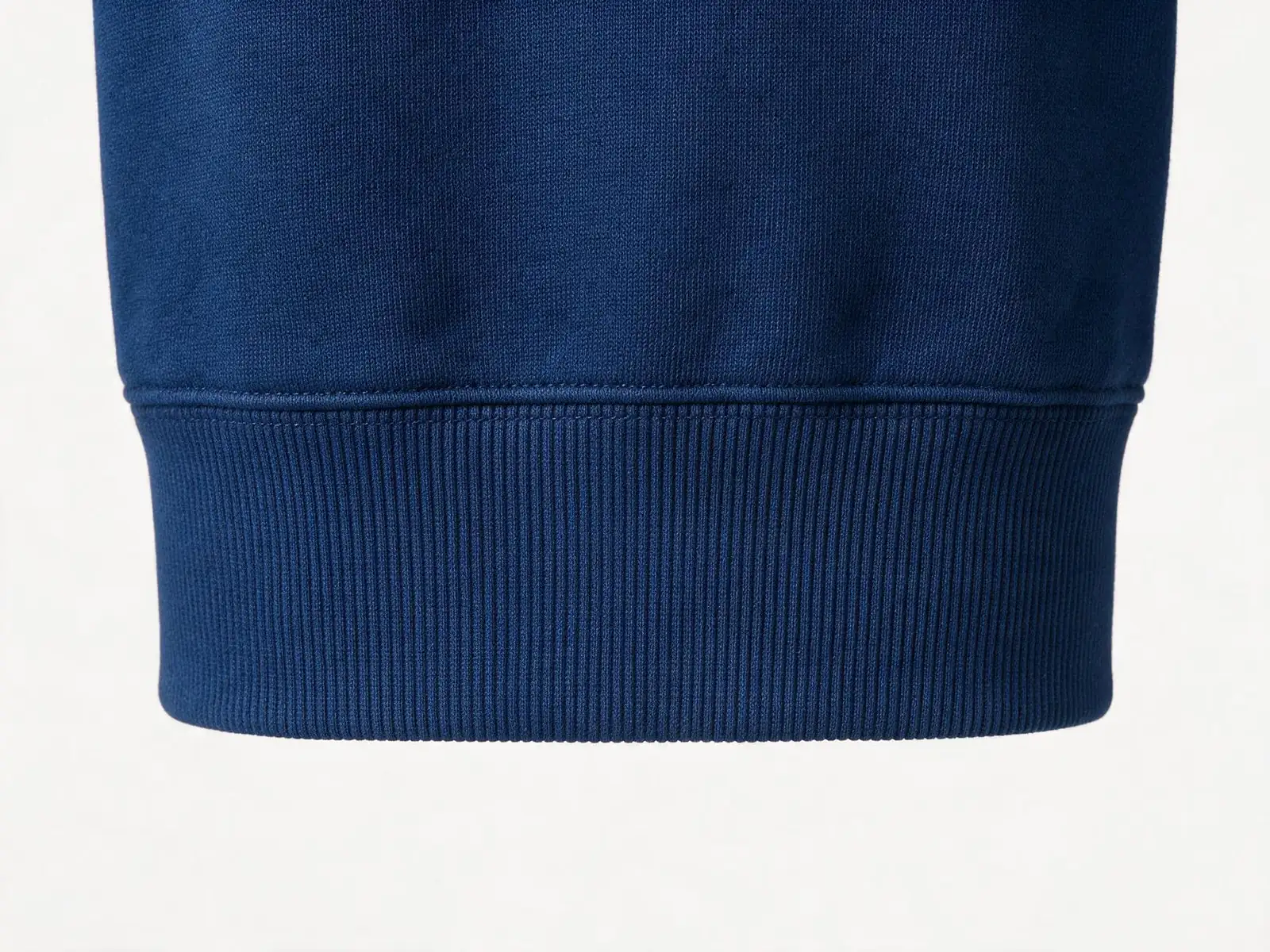
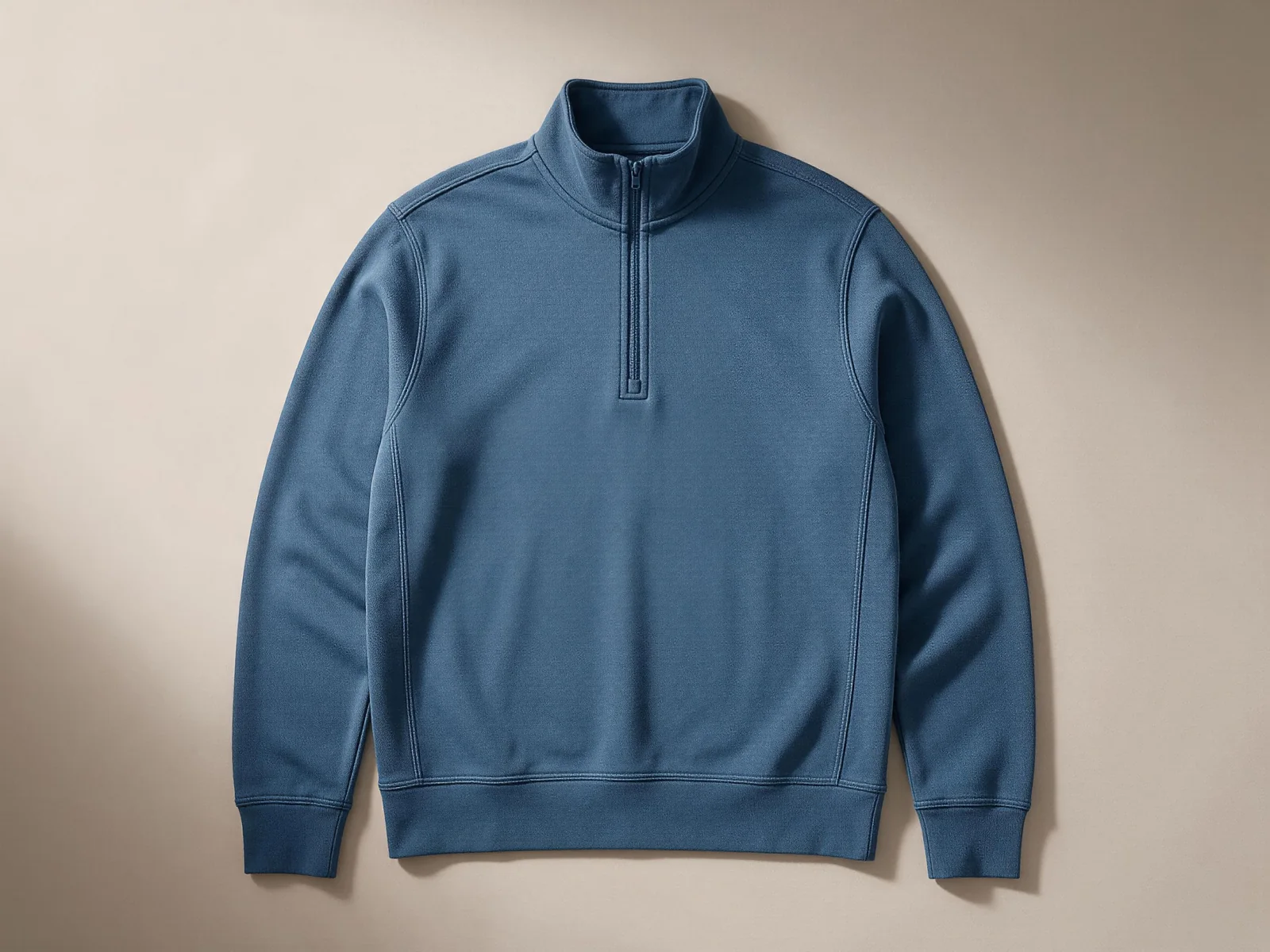
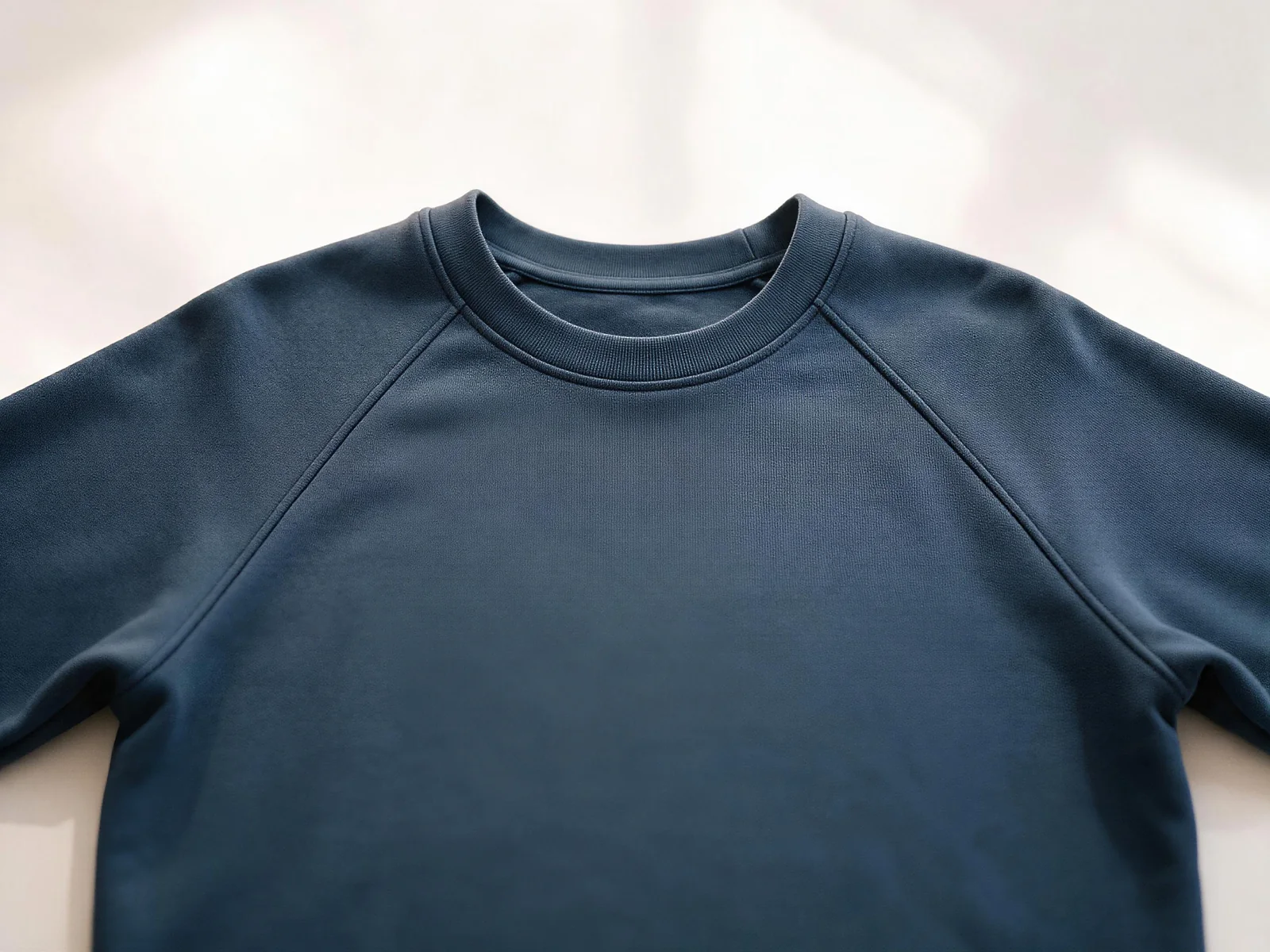
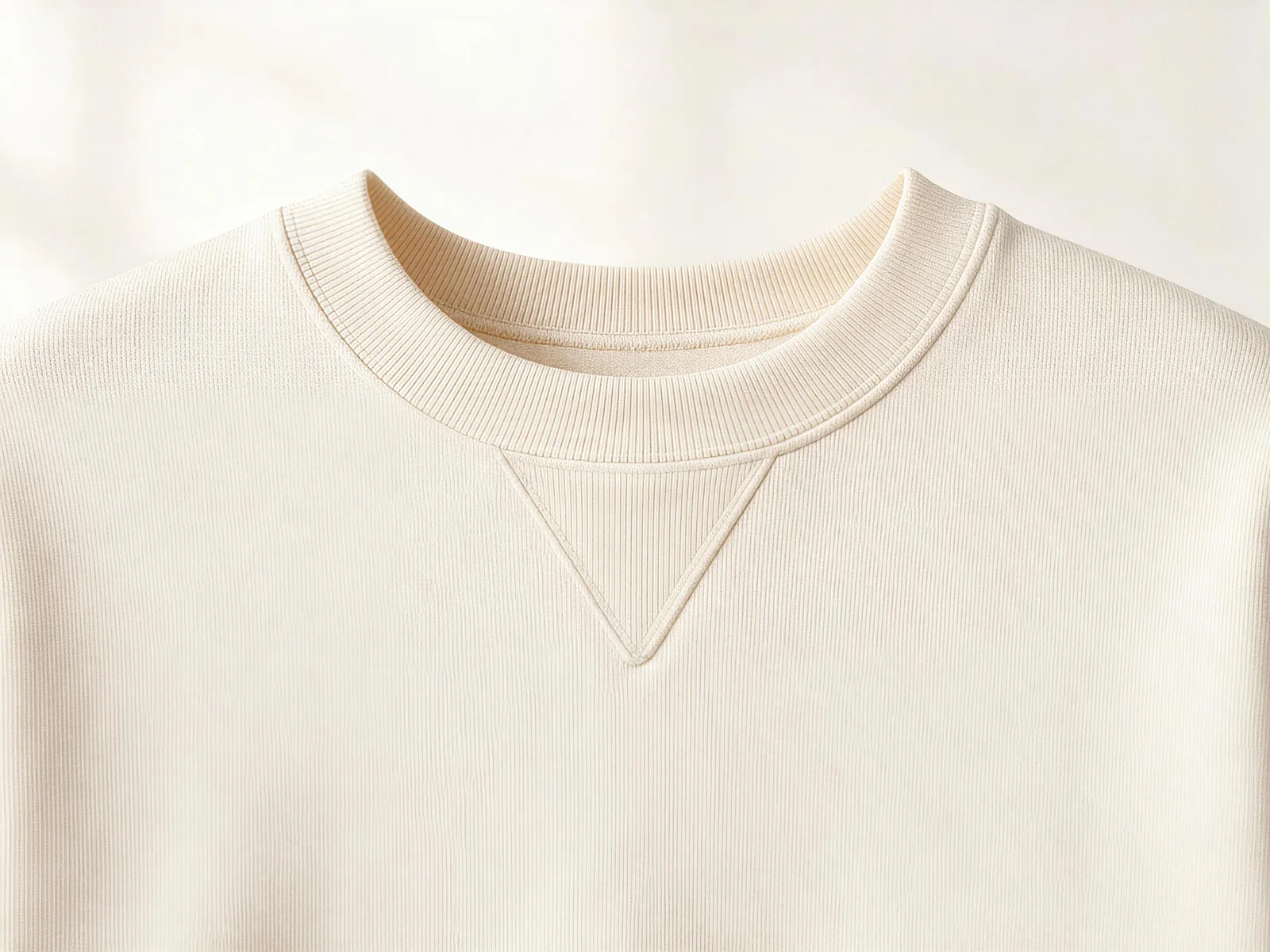
The cropped-jacket and skirt development photographs show those garments. For a comparable hoodie, ask about available sample photographs, specification versions, revisions and approval records.
Explore one hoodie from sketch to finished concept. Look closer at the fabric, artwork placement and finishing details that shape your brief.
Sketch image unavailable
The design notes below describe the details to include in your brief.
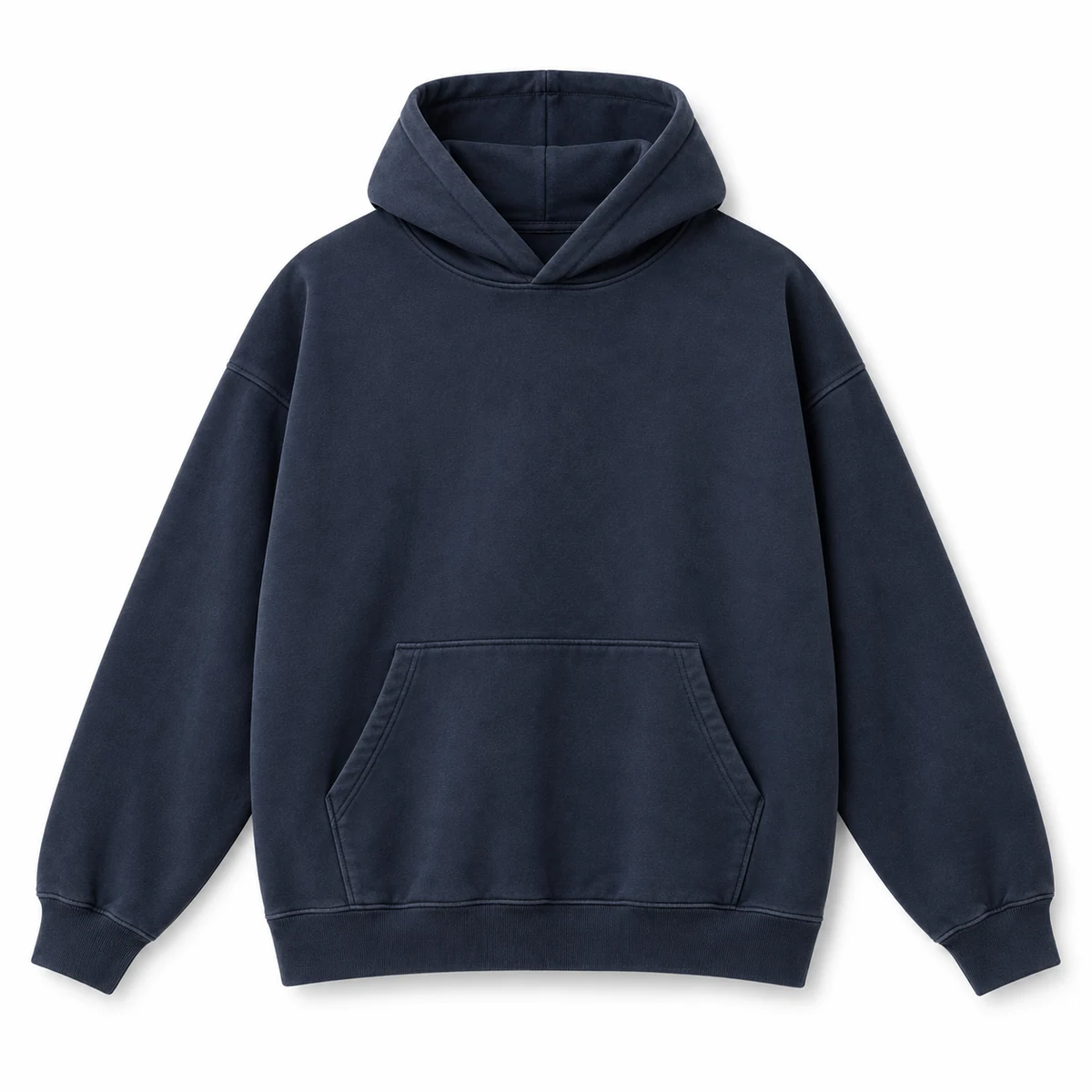
Design sketchThe silhouette, open chest area and construction lines.
Finished concept image unavailable
The design notes below describe the details to include in your brief.
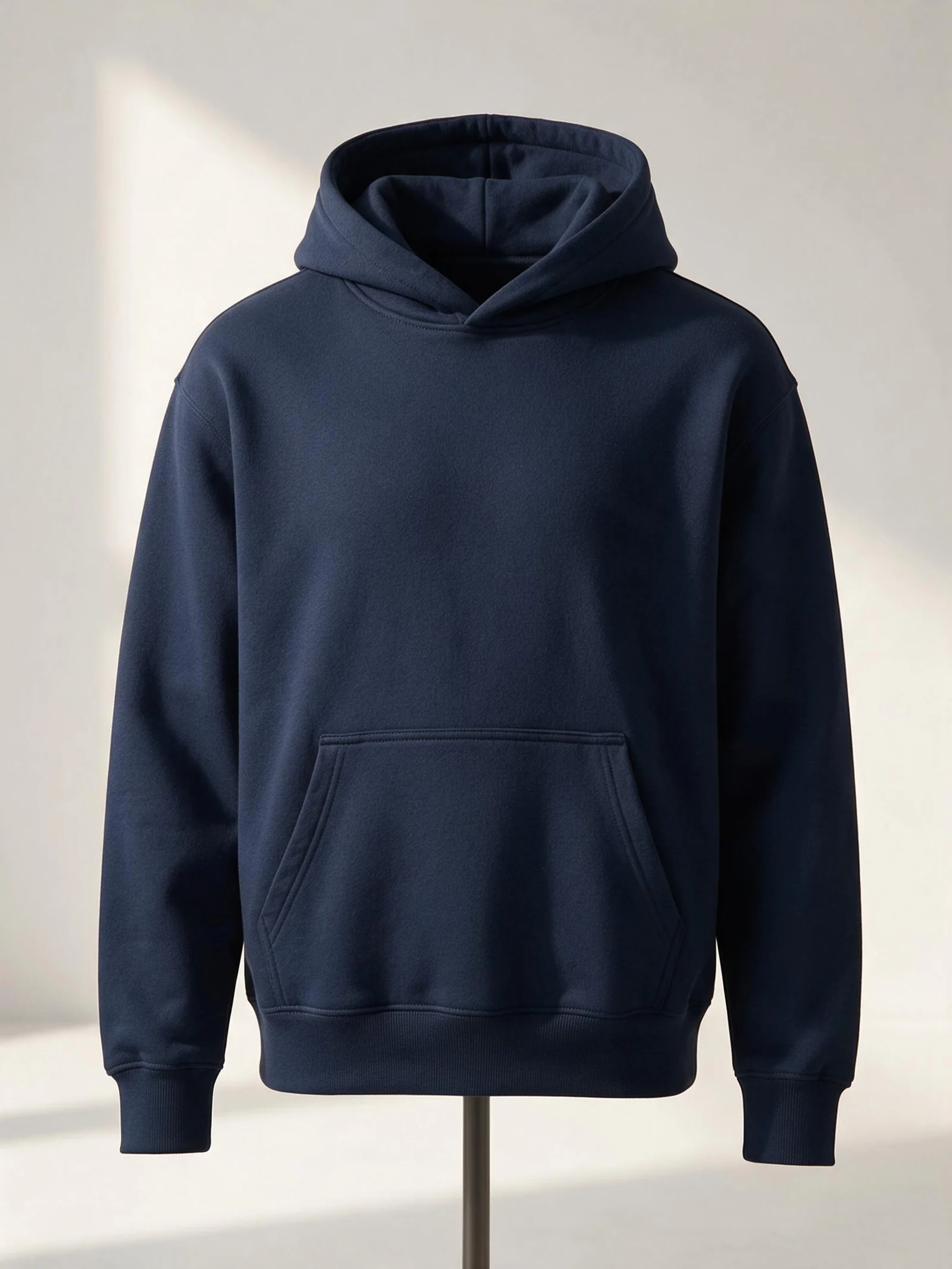
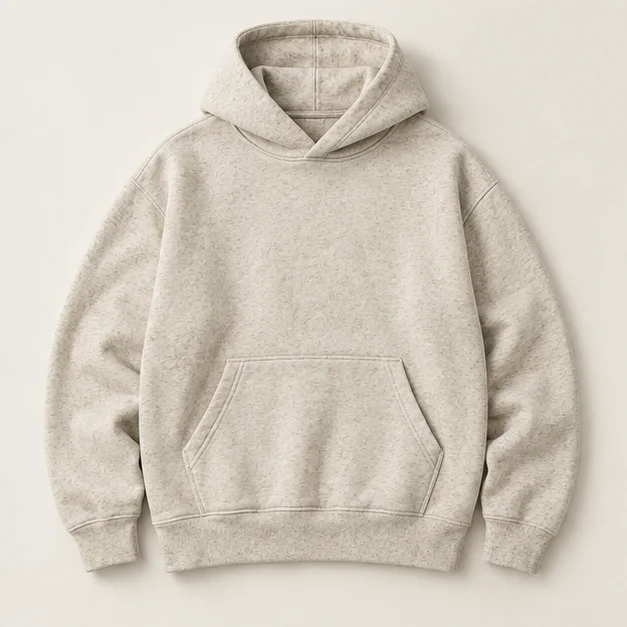
Finished conceptAn imagined fabric appearance, for design discussion.
01 Design sketch02 Finished concept
01
Fabric & handfeel
Define the weight and inside feel. Confirm with a fabric swatch.
02
Artwork placement
Set the size and position. Review the finish on a sample.
03
Cuffs & hem
Specify the rib width and fit. Check against your measurements.
Drag the divider to compare
/
Drag the divider or use the arrow keys. Home shows the finished concept. End shows the full sketch.
* Hoodie shape, pocket placement and rib details for design review.
01 / Design directions
Shape. Weight. The finishing details.
Four starting points for a hoodie or sweatshirt brief. These are design directions, not ready-stock products. Your reference and approved sample define the final garment.
A fabric name is a starting point, not a full specification. Bring the desired look and feel; review the actual material before committing to the garment.
Material directions for hoodies & sweatshirts
Direction
What it changes
What to confirm
Brushed fleece
A softer, warmer-feeling inner surface.
Check brushing, pilling and handfeel after washing.
French terry
A loop-back option for a less bulky inner feel.
Compare loop texture, drape and weight on swatches.
Rib trim
Connects the body, cuffs and neckline visually.
Approve stretch, recovery and color match with the body fabric.
Confirm composition, weight, color, care and any required supporting documents as part of your material brief.
GSM measures mass per area; it does not grade a hoodie. Compare weight with composition, knit construction, finish and the intended fit. Use the hoodie fabric-weight guide to plan a swatch comparison, or the fabric library and unit converter to describe your starting point.
Mark chest width, body length, shoulder drop and sleeve length on one reference.
02
Hood & pocket
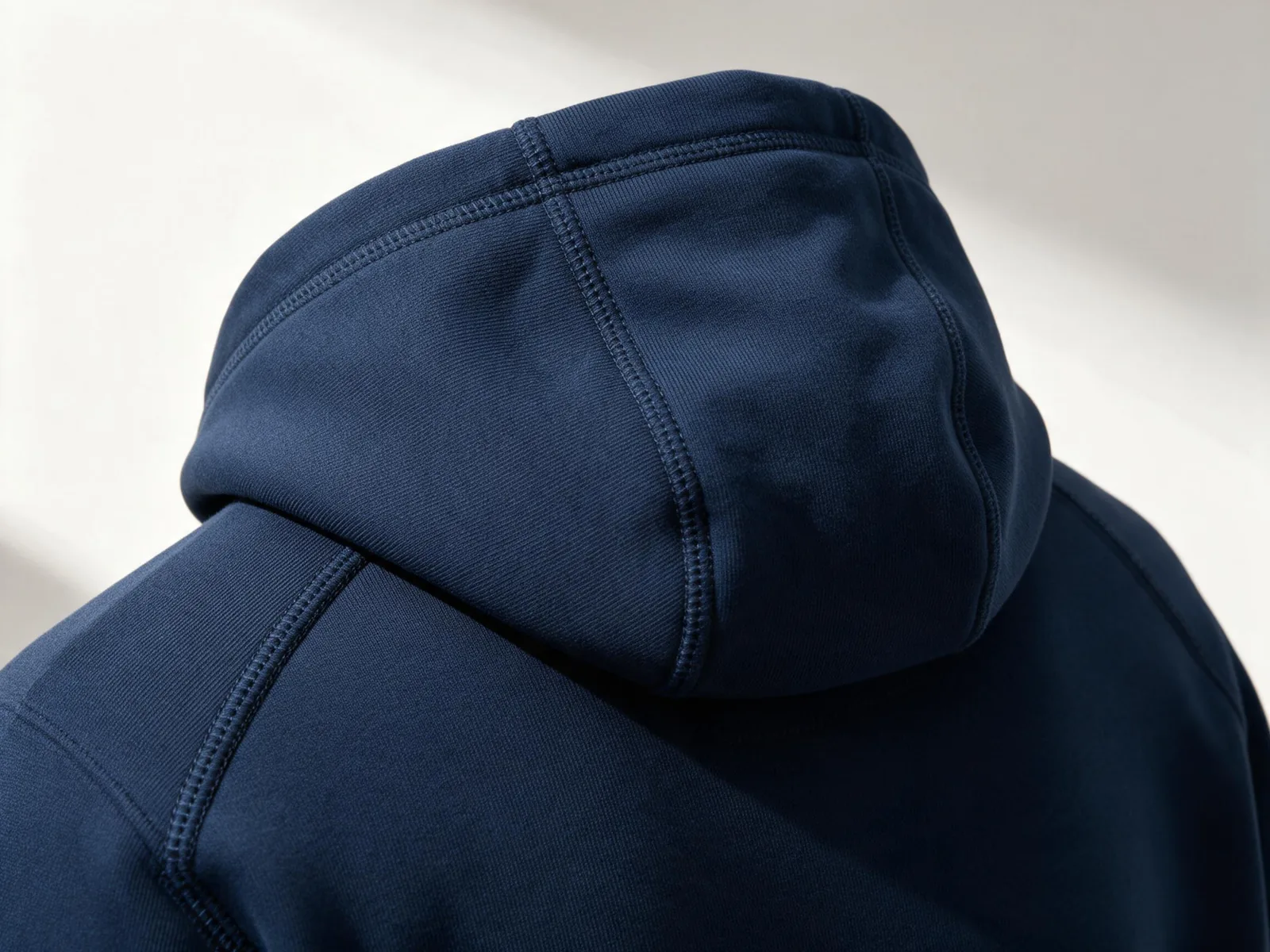
Review hood depth, hood layers and pocket opening before artwork placement.
03
Rib & washing
Agree measurement tolerances and a wash-check method; compare body and rib after care.
04
Branding
Review artwork size, placement, backing and handfeel on the intended fabric.
For a printed graphic, use the streetwear print artwork checklist to prepare the file, finished dimensions and fabric details before sampling.
For back graphics, the hoodie back print placement guide helps define measuring points, hood coverage and print-size rules across the garment range.
For a chest logo or a name above the cuff, use the logo and name embroidery placement brief to define the artwork version, finished size, wearer’s left or right and the measurement reference.
Start with the intended layers and fit. Record the body and sleeve measurements, hood shape, fabric direction, rib and decoration in one brief. Review the actual sample for movement, seam bulk and the relationship between body fabric and rib. Agree the care conditions before comparing measurements or surface appearance after washing. Keep each correction tied to a sample ID and specification version; confirm the approved reference and open points in writing.
Developing a full-front opening? The zip-up hoodie zipper brief separates one-way and two-way opening choices from the component, length and facing details to review on a sample.
If a hood eyelet appears loose, use the hoodie eyelet sample checks to separate hardware movement, fabric distortion and drawstring contact before requesting a revision.
If a cuff becomes loose during use, record hand passage, wrist fit and return after sleeve positioning with our hoodie cuff review.
For a short, wide hoodie, compare ribbed and straight hem designs and define the body length, band height and bottom opening before sampling.
01
Brief
Reference, measurements, materials, quantity and target date.
02
Sample feedback
Marked-up photos, measurements and one consolidated change list.
03
Written approval
Agreed fit, fabric, finishing and any required checks before bulk.
04
Packing plan
Labels, size ratios, carton requirements and delivery details.
Keep the approval tied to the specification.
Use the measurement and sample-review worksheets to record each sample ID, measured observations and requested changes. Confirm the approved version and any outstanding checks in writing before agreeing the production plan.
Use what you know and leave undecided details open. Copy or download your notes when you are ready.
This worksheet does not send an inquiry or save your entries to our server. Keep a copy before leaving this page.
Decoration selected: Puff printing
This technique has been added to your brief. Edit the requirements below; suitability still needs review on your actual fabric and artwork.
01Build your quotation brief
Use the same brief when comparing quotes so materials, finishing and delivery assumptions stay comparable.
02Record a sample review
Record what was specified, what you observed and what needs another check. These are your working notes, not a test report or an automatic approval.
Checkpoints for this category
Body & sleeveMark chest width, body length, shoulder drop and sleeve length on one reference.
Hood & pocketReview hood depth, hood layers and pocket opening before artwork placement.
Rib & washingAgree measurement tolerances and a wash-check method; compare body and rib after care.
BrandingReview artwork size, placement, backing and handfeel on the intended fabric.
Before bulk production, agree which sample and specification version form the final approval reference, including the intended materials and finishing.
Continue to the inquiry form with all filled quotation and sample notes. The transfer is available in this browser tab for one hour; review and send the form yourself.
Send a reference garment or a front-and-back sketch with chest, length, shoulder and sleeve measurements. A label such as oversized does not define a repeatable fit.
Should I choose fleece or French terry?
Compare actual swatches for inner feel, drape and weight. Brushing, composition and finishing matter alongside GSM; approve the choice together with the intended fit.
What is the minimum order quantity?
Orders start at 100 pieces.
How are pricing and bulk production timing confirmed?
Pricing and bulk production timing are confirmed in your order-specific quote after reviewing the style, fabric availability, decoration and quantity.
Can I discuss a design without a finished tech pack?
Yes. Send a sketch or reference image with the measurements and details you already know. Identify what is still undecided so the next sample-development steps can be discussed.
Can the order be split across colours and sizes?
Send the total quantity and your proposed breakdown by style, colour and size. The feasible split and any conditions are reviewed for your project and confirmed in the written quote.
What should I compare in a manufacturing quote?
Compare the same specification version, materials, decoration, labels, packaging and quantity breakdown. Ask which sample, testing, inspection and freight costs are included or separate, and confirm the destination, quote validity and production timing in writing.
Which colour-transfer checks should I discuss for a dark hoodie?
Discuss washing and dry and wet rubbing checks for the intended body fabric, rib and decoration, including the final garment dye or wash finish. Record the sample and colour lot, test method and version, conditions and agreed acceptance limits. Keep dry and wet rubbing results separate, and review any changed material or finish before confirming the bulk reference.
Send your style or reference, total quantity, destination and target date. Add fabric, artwork and label details you know; mark undecided items so we can discuss the next development step.
We use essential storage to keep this site and your project brief working. With your permission, Google Analytics measures visits and Google Ads conversions. Manage cookies lets you allow analytics without ad measurement. Rejecting optional cookies does not affect enquiries.

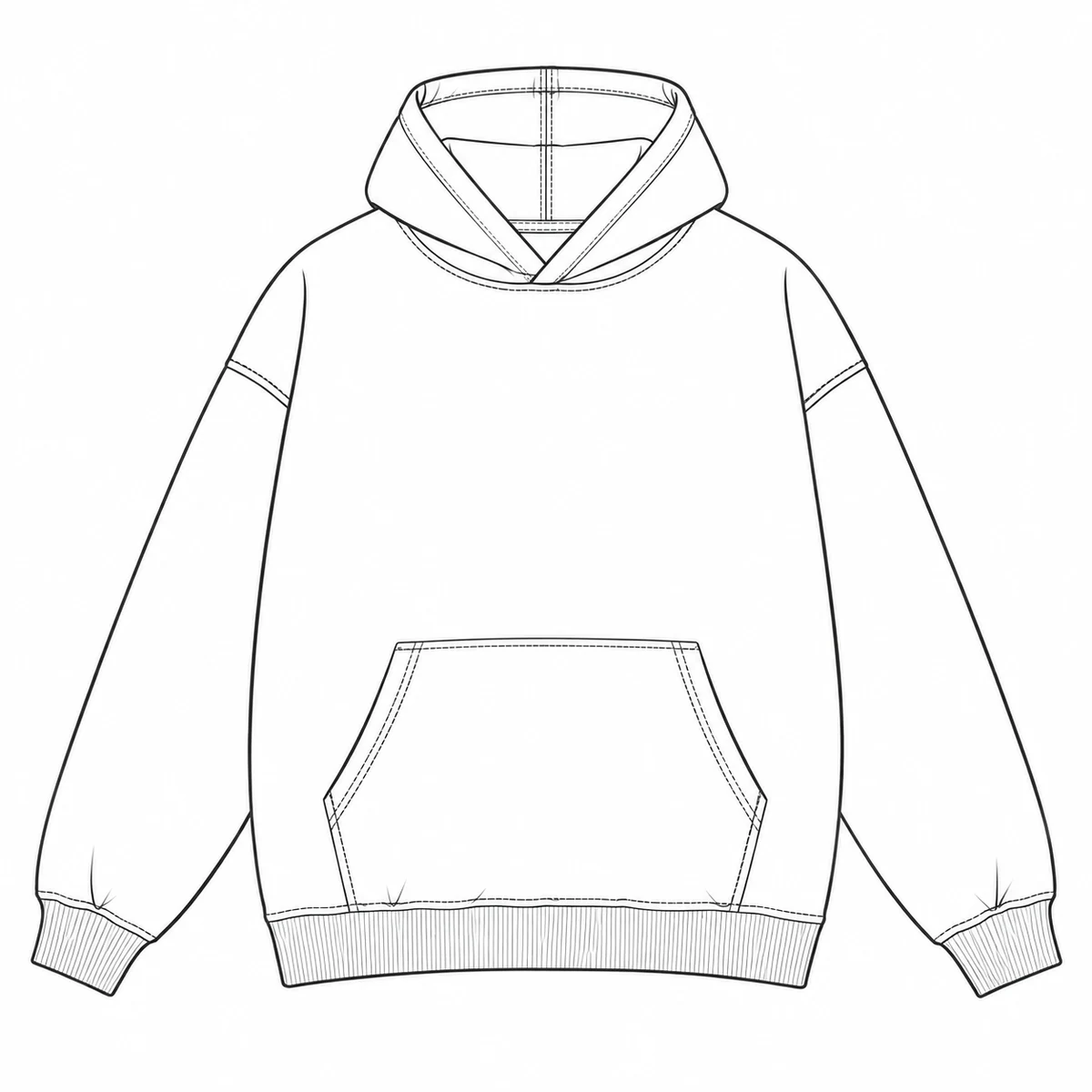
 Shape and construction reference