
Decoration Techniques / Snow & Acid Wash
Snow & Acid Wash for Custom Apparel
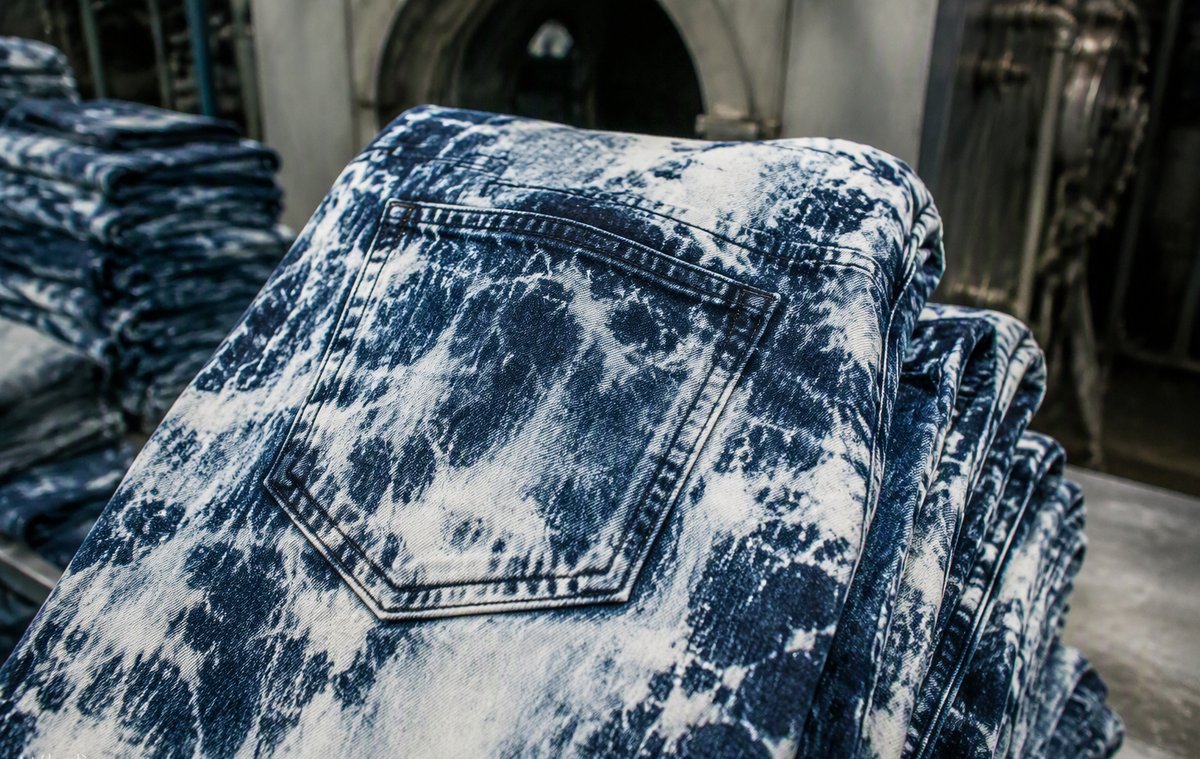
The high-contrast vintage effect: bleach-treated garments with the mottled, cloudy pattern that defines streetwear washes. Bleach is aggressive chemistry — we control strength, contact time and variation range against an approved master sample before bulk.
Overview
One Design. Several Layers.
Acid washing removes colour in a controlled, irregular pattern. The craft is making irregularity repeatable.
Pattern
Snow (fine speckled mottling) or acid (bolder contrast clouds). The approved master sample defines the target pattern.
Quantity
A batch process in wash machines. Review the fabric, load, recipe and intended variation against a reference before confirming the production route.
Surface
Cotton and cotton fleece take bleach predictably. Black and dark garments show the strongest contrast.
Result
High-contrast vintage mottling — each piece unique. Pattern type repeats; exact distribution never does.
Suitability
Is This a Snow & Acid Wash Job?
Dark cotton streetwear is acid wash’s natural territory.
Hoodies & Sweatshirts
The signature acid-wash garment. Heavy black fleece produces the boldest contrast.
T-Shirts
Vintage band-tee aesthetics on black or dark cotton jersey.
Denim & Joggers
Classic acid-wash denim and matching washed fleece sets.
Light & Synthetic Fabrics
Light colours show little contrast; polyester resists the chemistry. Confirmed unsuitable at review rather than after sampling.
Planning a washed hoodie? Use the hoodie project brief to note your base fabric, wash reference and fit requirements. Confirm the finish on a sample before approving production.
How It Works
How Snow & Acid Wash Behaves on Fabric
Bleach contacts the garment unevenly — by design. Where it bites, colour lifts; where it misses, the base stays.
Snow Wash
Fine, speckled mottling across the whole garment — a cloudy frost effect, subtler and more even.
Acid Wash
Bolder, higher-contrast patches and clouds. More drama, more piece-to-piece variation.
Materials
Choose Materials After the Fabric
Bleach chemistry and neutralization are the material decisions — get them wrong and the garment is destroyed.
Bleach Agent
Potassium permanganate or hypochlorite at controlled concentration. Strength decides bite depth and contrast.
Neutralizer
Stops the chemical action at the exact endpoint. Skipping or under-dosing neutralization keeps eating the fabric after wash.
Base Garment
Reactive-dyed cotton in black or dark shades lifts to the characteristic grey-brown contrast.
Process
From File to Finish
From dark garment to vintage wash — chemistry is timed to the second.
Review
Pattern type (snow/acid), contrast level and variation range are agreed against references.
Master Sample
A garment processed to your target becomes the binding standard.
Recipe Lock
Bleach type, concentration, application method, contact time and neutralization are recorded.
Apply
Bleach contacts garments by spray, soak or pumice carrier, per the locked recipe.
Neutralize
Chemical action is stopped precisely at endpoint.
Wash & Dry
Thorough rinse cycles remove all chemical residue, then controlled drying.
Inspect
Each piece compared against the master’s variation range; strength and residue checks per batch.
Pricing
What Changes the Quote
Acid washing prices as a batch chemical process.
Pattern Intensity
Bolder acid effects take more handling and control time than light snow.
Batch Size
Machine loads have efficient ranges — small runs carry a batch premium.
Safety & Rinse
Neutralization and multi-cycle rinsing are non-negotiable cost items: they are what keeps the garment safe to wear.
Quality Control
What a Failed Print Looks Like
Bleach forgives nothing. We inspect against these failure modes — agreed before production.
Over-Bleaching
Too much lift, destroying contrast or weakening fabric. Contact time and concentration are locked from the master sample.
Fabric Weakening
Holes or tears from aggressive chemistry. Strength testing per batch is mandatory.
Off-Pattern Pieces
Pieces outside the agreed variation range — rejected at inspection against the master.
Chemical Residue
Residual bleach irritates skin and keeps degrading fabric. Neutralization and rinse-to-clear are verified per batch.
Seam & Stitch Damage
Thread weakened at stress points. Thread selection and recipe intensity are matched at sampling.
Yellowing
Incomplete neutralization leaves yellow cast on lifted areas. Endpoint chemistry is checked per batch.
Sampling
Approve the Physical Result
One photo of acid wash is not a standard. Your master sample is.
Reference Approval
You confirm pattern type and contrast from references.
Master Sample
A processed garment on your actual style becomes the binding standard.
Variation Range
Best-case and limit-case photos define acceptable piece-to-piece spread.
Bulk Checks
Every piece compared against the master range; strength and residue tests per batch.
Decision Boundary
Snow & Acid Wash or Another Route?
Three vintage wash routes — by contrast and by mechanism.
Snow & Acid Wash
Bleach-lifted high-contrast mottling.
Best for: Streetwear statement washes on dark cotton
Stone Wash
Physical abrasion — worn edges and gentle overall fade.
Best for: Denim and natural worn-in basics
Enzyme Wash
Biological surface refinement — soft, subtle.
Best for: Softness upgrades with minimal colour change
FAQ
Questions Before Sampling
What is the difference between snow wash and acid wash?
Snow wash is a fine, speckled frost effect — subtler and more even. Acid wash is bolder: high-contrast clouds and patches. Both are bleach-based; the difference is application method and intensity. We sample both so you can choose.
Will every piece look the same?
No — controlled variation is the product. The pattern type and contrast level repeat; the exact distribution is unique to each piece. We agree a variation range against a master sample and reject pieces outside it.
Does acid washing damage the garment?
Not when chemistry is controlled. Bleach is stopped at a precise endpoint and fully neutralized; we strength-test every batch. Uncontrolled acid washing does destroy garments — which is exactly why the recipe is locked before bulk.
What fabrics work for acid wash?
Cotton and cotton fleece in dark colours — black lifts to the classic grey-brown contrast. Light colours show little effect and polyester resists the chemistry entirely.
What should I send for an acid wash quote?
Send your garment, artwork and finishing requirements so we can confirm suitability and pricing.
Send the Actual Job
Send what you have — artwork, a reference image or just an idea. The more of this list you include, the sharper our quote. We reply within 24 hours.
✓ Pattern type (snow / acid) with reference photos
✓ Target contrast level
✓ Garment style — dark cotton recommended
✓ Fabric weight (gsm)
✓ Acceptable variation expectation
✓ Quantity per batch
✓ Strength requirements
✓ Delivery country
Continue