
Hoodies & sweatshirts
Bring flock printing into your garment brief, then add fabric, fit and artwork requirements.
Prepare a hoodie briefDecoration Techniques / Flock Printing
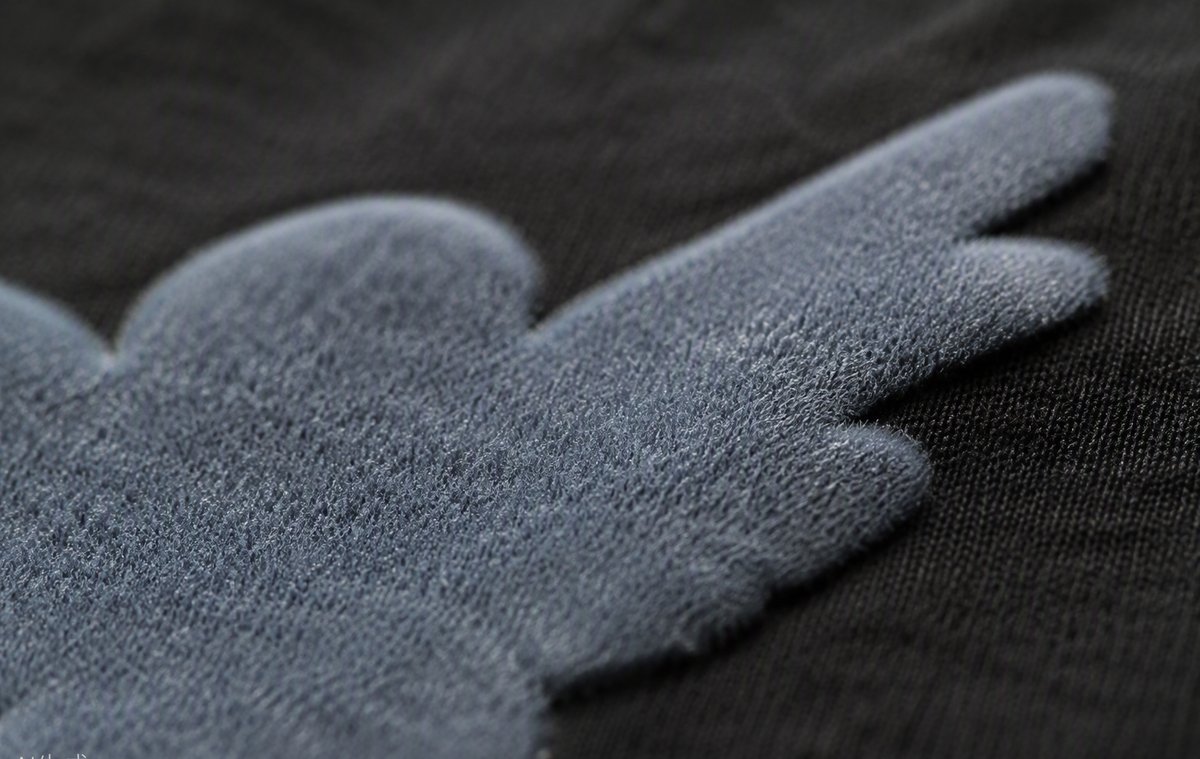
The velvet-touch print: thousands of tiny fibres stand upright in adhesive, creating a soft raised surface that flat ink cannot imitate. Retro, premium, tactile — and approved on a physical strike-off before bulk.
Overview
Flock printing glues upright fibres to the garment in the shape of your design. The result is judged as much by touch as by sight.
Bold shapes and lettering flock beautifully. Very fine detail and small text lose definition in the fibre surface.
Screen-based process with setup per colour. Artwork detail, coverage, fibre choice and planned quantity affect the quote.
Cotton, fleece and stable knits flock well. Stretchy or heavily textured fabrics weaken adhesive contact.
A dense velvet surface with soft raised feel. Fibre length sets the character: short is suede-like, long is plush.
Suitability
Flock is a statement finish — strongest where touch matters.
Retro logos and varsity lettering are the classic flock applications on cotton tees.
Excellent on fleece — the velvet print complements the brushed fabric.
Soft-touch graphics for children’s wear and fashion collections where tactile quality sells.
Not recommended — stretch and moisture management conflict with the adhesive layer. Silicone printing is the better raised route there.
If your garment is a hoodie or T-shirt, add flock printing to the brief: style, fabric and weight, artwork, print placement and size, the pile look you want, and planned quantity. Hoodie and T-shirt pages cover base options; we confirm what can be sampled.
Bring flock printing into your garment brief, then add fabric, fit and artwork requirements.
Prepare a hoodie briefStart with the T-shirt style and fabric, then review print size, placement and the sample details.
Prepare a T-shirt briefHow It Works
Adhesive is screen-printed in the design shape, then fibres are driven into it electrostatically — standing on end like a carpet.
The adhesive is the print: its screen defines the design edges. Deposit control decides both sharpness and bond strength.
Charged fibres shoot upright into the wet adhesive. Density and length are set by fibre choice and flocking time.
Materials
Fibre and adhesive are matched to the garment and the target feel.
The standard: dense, resilient velvet surface in a full colour range.
Softer, more lustrous pile for a dressier vintage look.
Plastisol or water-based adhesives chosen against fabric and wash requirements — the bond is the product.
Process
From artwork to velvet print — adhesive control is where quality is decided.
Artwork is checked for flock feasibility: minimum detail size, gaps and text height.
One screen per colour for the adhesive layers.
Adhesive is printed in the design shape with controlled deposit.
Fibres are applied electrostatically into the wet adhesive until fully covered.
Heat bonds adhesive and fibres permanently to the garment.
Loose fibres are vacuumed and brushed from the finished print.
Coverage density, edge sharpness and adhesion checked; rub and wash tests per batch.
Pricing
Flock prices like a specialty screen print with a material premium.
One screen per colour, same as screen printing, plus flocking station setup.
Fibre material cost scales with print area. Large velvet areas cost more than small logos.
Multi-colour flock and flock-over-print combinations need test strike-offs before final pricing.
Quality Control
We inspect against these known failure modes — agreed before production.
Thin fibre coverage showing adhesive beneath. Flocking time and adhesive deposit are checked at first-off.
Loose fibres after washing — under-cured adhesive. Cure is verified and wash-tested per batch.
Fibres landing outside the design edge. Adhesive screen quality and cleaning process are the controls.
Pile flattened by poor packing or ironing. Care instructions are set and packing protects the print face.
Glue spreading past design edges under the pile. Deposit and viscosity are controlled at print stage.
Fibre lots differing in shade. Fibre from one dye lot is reserved per order.
Sampling
Velvet cannot be judged on a screen. Touch the strike-off.
You confirm design, dimensions and fibre colour on a mockup.
A physical flock print on the actual fabric checks density, feel and edges.
The finished garment is your sign-off standard.
First-off approval, then in-line sampling with rub and wash tests.
Decision Boundary
Three soft or raised routes — by feel and by garment.
Upright fibres in adhesive — velvet touch, retro look.
Best for: Logos and lettering on cotton tees and fleece
Expanded ink — smooth rounded 3D rise.
Best for: Bold graphics with smooth raised surface
Moulded precise 3D — technical, stretch-safe.
Best for: Performance wear and sharp 3D branding
FAQ
Like velvet or suede — thousands of tiny fibres standing upright in the print area. It is the most tactile print finish available, which is exactly why retro and premium brands use it.
To quote flock printing, send the garment style, fabric and weight, artwork, print placement and size, the pile look you want, and your planned quantity, even if it is still an estimate. We then confirm the adhesive and fibre combination, whether a sample is needed, and the production route before pricing.
Flock printing bonds short fibres in an adhesive layer to form a pile surface. Wash performance should be assessed on the actual material sample, and the test method, care requirements and acceptance criteria are to be agreed by both parties for the project. Confirm fabric and weight, artwork, print placement and size. Avoid direct ironing on the pile.
The fibre surface softens fine detail, so bold shapes and lettering work best. Very small text and thin lines belong to flat print routes — we flag this at artwork review.
Flock-printing cost depends on screen setup, print area, colour count, fibre choice and planned quantity. Send the artwork and garment specifications for a written quote.
Send the brief with your garment, fabric, artwork and placement, and planned quantity. We review the flock and adhesive combination, clarify missing details, and agree the quote scope and sample plan.
✓ Vector artwork (AI, EPS or PDF)
✓ Print dimensions in cm
✓ Placement (chest, back…)
✓ Garment style and fabric composition
✓ Garment colour(s)
✓ Fibre colour reference
✓ Quantity per design
✓ Delivery country