
Decoration Techniques / Digital Printing (DTG)
Digital Printing (DTG) for Custom Apparel
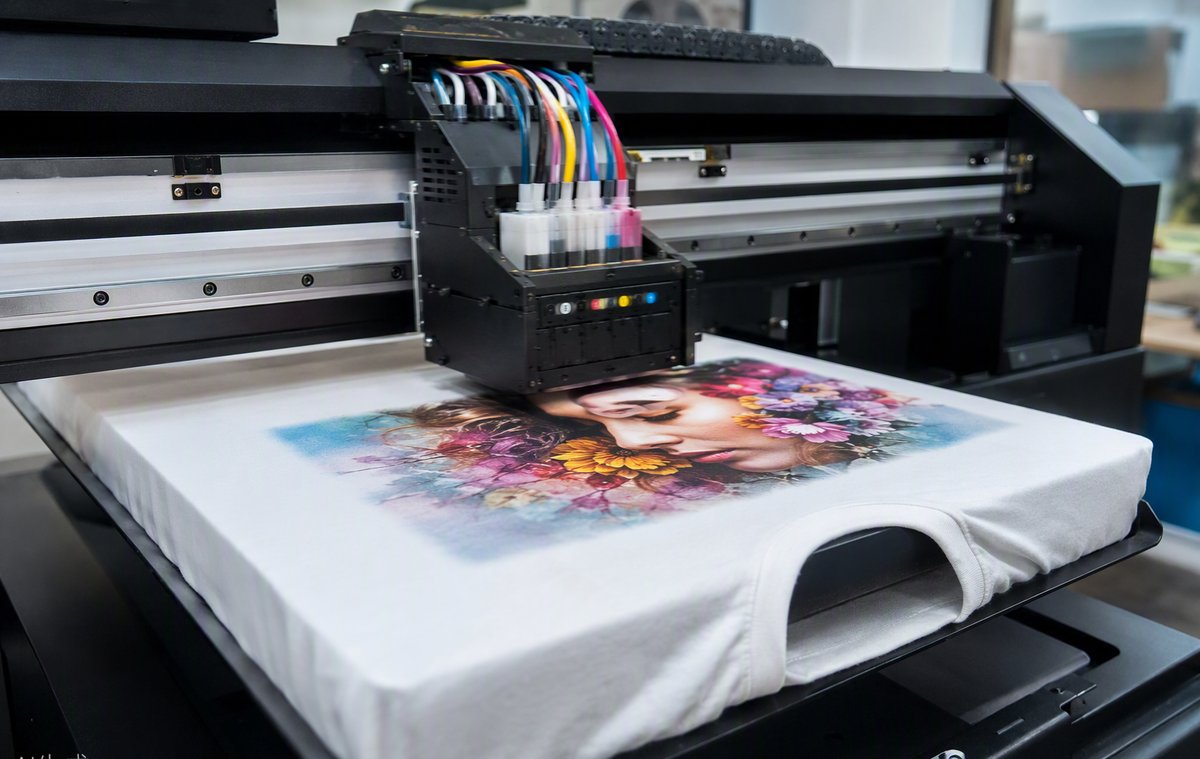
Ink-jet printing directly onto the garment: unlimited colours, gradients and photographic detail with no screens and no setup per colour. The small-run champion on cotton — every print approved on a physical sample before bulk.
Overview
One Design. Several Layers.
DTG behaves like a paper printer for fabric. These four factors decide when it beats screen printing.
Artwork
Photographs, gradients and unlimited colours print at no extra cost. High-resolution files (150dpi+ at final size) are the quality floor.
Quantity
Digital printing does not use screens. Compare artwork detail, garment colour, pre-treatment, print area and planned quantity before choosing the print route.
Surface
Cotton is the natural home. 100% cotton prints richest; high-polyester fabrics need different chemistry or another route.
Result
Soft handfeel with photographic detail. Slightly less opaque than screen printing on dark garments — honest trade-off, shown on the sample.
Suitability
Is This a Digital Printing (DTG) Job?
Full-colour artwork on cotton at small-to-mid quantity is DTG’s sweet spot.
T-Shirts
The core DTG garment: full-colour art on cotton tees.
Hoodies & Sweatshirts
Works well on cotton fleece with smooth print faces. Heavy texture reduces fine detail slightly.
Kids & Babywear
Soft, water-based inks suit children’s wear; small sizes and small runs are natural DTG territory.
Polyester & Performance
Standard DTG chemistry bonds best with cotton. For polyester, sublimation is the correct full-colour route.
How It Works
How Digital Printing (DTG) Behaves on Fabric
Water-based ink is jetted into the fabric and cured. On dark garments, a white underbase is printed first — inside the same machine pass.
Light Garment
CMYK inks print directly into the cotton. Softest possible result — the print is barely there to the touch.
Dark Garment
The fabric is pre-treated, a white underbase is jetted, then colours print on top. Vivid results, with slightly more handfeel than light garments.
Materials
Choose Materials After the Fabric
Fabric and pre-treatment decide print quality more than the printer does.
Combed Cotton
Smooth, consistent surface — the best DTG canvas for fine detail.
Cotton Blends
Printable with adjusted expectations: vibrancy drops as polyester content rises.
Pre-Treatment
A bonding solution applied before printing dark garments. Even application is the difference between vivid and washed-out.
Process
From File to Finish
From file to cured print — resolution and pre-treatment are the controllable variables.
Review
Artwork resolution, garment colour and fabric are confirmed. Low-resolution files are flagged here, not after printing.
Colour Setup
Print profiles are set for the garment colour and fabric. White underbase levels are decided for darks.
Pre-Treat
Dark garments receive an even coat of pre-treatment solution and are heat-dried.
Ink is jetted directly onto the garment — underbase first on darks, then colours.
Cure
Heat sets the ink into the fibres. Time and temperature are logged per batch.
Inspect
Colour, detail and coverage checked against the approved sample; wash test per batch.
Pricing
What Changes the Quote
No setup, near-flat unit pricing — three things still move the number.
Garment Colour
Dark garments need pre-treatment and white ink underbase — a real per-piece cost that light garments skip.
Print Size
Ink is the material cost. Full-front prints use more than chest logos, priced accordingly.
Quantity
Compare the setup and production costs of digital and screen printing using the same artwork, garment and planned quantity.
Quality Control
What a Failed Print Looks Like
We inspect against these known failure modes — agreed before production.
Washed-Out Colour
Weak vibrancy from uneven pre-treatment or low underbase. Checked on the first print, not after the run.
Banding
Visible lines across the print from nozzle issues. Nozzle checks run before each batch.
Resolution Blur
Pixelated output from low-resolution artwork. Files are checked at review — 150dpi at final size is the floor.
Pre-Treat Staining
Visible boxes or marks from uneven pre-treatment. Spray coverage is controlled and checked per piece.
Wash Fading
Under-cured ink loses colour in the wash. Cure time and temperature are logged and wash-tested per batch.
Texture Detail Loss
Fine detail softens on heavy fleece. Surface suitability is confirmed at sampling.
Sampling
Approve the Physical Result
Screen previews lie about vibrancy. The printed garment tells the truth.
Artwork Approval
You confirm the file, dimensions and placement on a mockup.
Print Sample
A physical print on the actual garment colour checks vibrancy, detail and handfeel.
Pre-Production Garment
The final printed garment is your sign-off standard.
Bulk Checks
First-off approval, in-line sampling and wash tests per batch.
Decision Boundary
Digital Printing (DTG) or Another Route?
Three full-colour-capable routes — pick by fabric and quantity.
Digital Printing (DTG)
Soft ink-jet print, unlimited colour, cotton-first.
Best for: Detailed full-colour artwork on cotton
Sublimation
Dye inside polyester fibres, zero handfeel.
Best for: All-over colour on white polyester
Screen Printing
Spot colours through mesh, bolder opacity.
Best for: Repeated graphics with defined spot colours
FAQ
Questions Before Sampling
What should I send for a digital printing quote?
Send your garment, artwork and finishing requirements so we can confirm suitability and pricing.
Can DTG print photographs?
Yes — that is exactly what it is built for. Photographic detail, gradients and unlimited colours all print at the same cost. The file needs 150dpi or more at final print size.
Does DTG work on dark garments?
Yes, with pre-treatment and a white ink underbase jetted before the colours. Results are vivid, with slightly more handfeel than on white garments — we show you exactly how it looks on a physical sample first.
How durable is DTG in the wash?
Properly cured prints typically hold 30-50 wash cycles with gradual, gentle fading — similar to a vintage tee aging. Cure time and temperature are logged and wash-tested per batch.
How much does DTG printing cost?
As a frame: a full-colour chest print on a white tee adds roughly $1.50-$3.00 per piece; dark garments cost more due to pre-treatment and white ink. Send artwork and quantity for an exact quote.
Send the Actual Job
Send what you have — artwork, a reference image or just an idea. The more of this list you include, the sharper our quote. We reply within 24 hours.
✓ Artwork at 150dpi+ at final size (PNG, PSD or TIFF)
✓ Print dimensions in cm
✓ Placement (front, back, sleeve…)
✓ Garment style — cotton recommended
✓ Garment colour(s)
✓ Quantity per design
✓ Colour-critical areas (if any)
✓ Delivery country
Continue