
Decoration Techniques / Heat Transfer Printing
Heat Transfer Printing for Custom Apparel
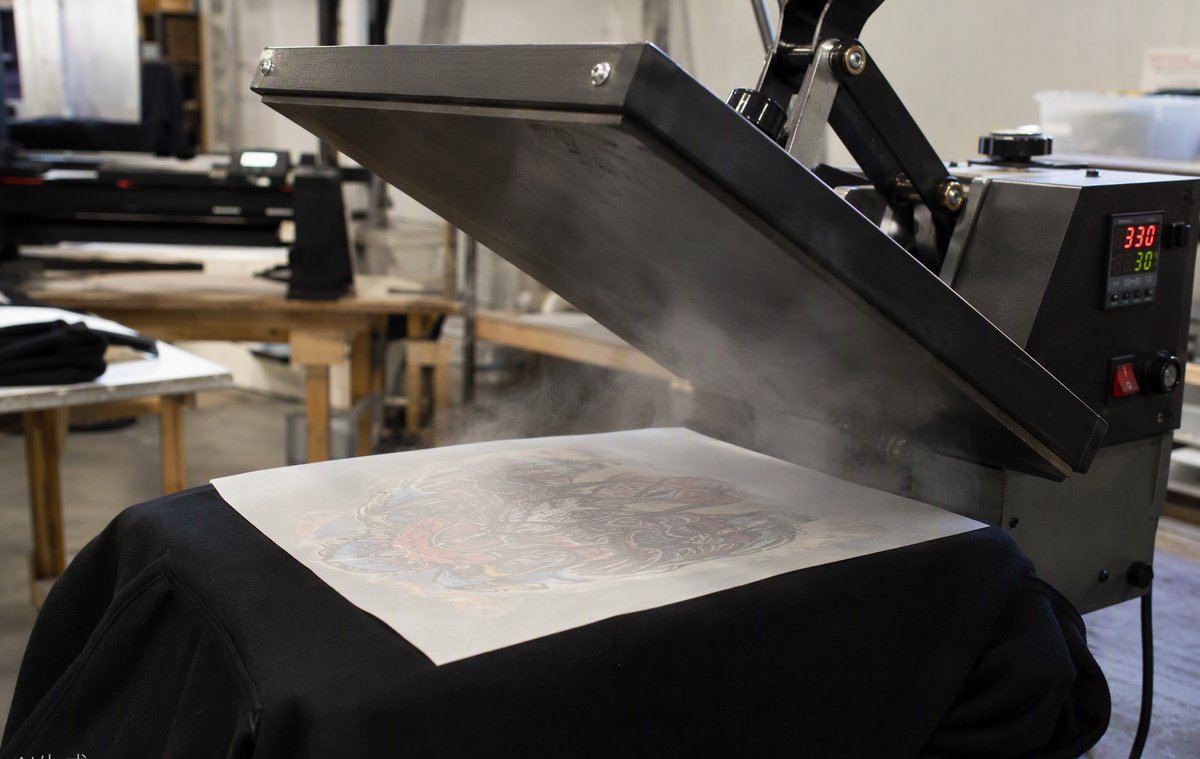
The precision route for names, numbers and small runs: cut film or printed transfers applied by heat, sharp on any fabric colour, no screens, with artwork and transfer specifications reviewed for the garment. Every transfer is wash-tested on the actual fabric before bulk.
Overview
One Design. Several Layers.
Heat transfer moves decoration from the press room to the film. These four factors decide if it beats ink routes for your job.
Artwork
Sharp vector shapes, text and numbers are ideal. Printed transfers also handle full-colour artwork and photos.
Quantity
Transfer preparation, cutting or printing, and pressing time affect the quote. Include any names or numbers that change between garments.
Surface
Works on cotton, polyester, blends and most colours. Very heat-sensitive fabrics need adjusted temperature and dwell.
Result
Crisp edges and solid colour with a light film handfeel. Not as soft as ink — a real consideration for large prints.
Suitability
Is This a Heat Transfer Printing Job?
Personalization and small batches are where heat transfer wins outright.
Team & Sports Wear
Names and numbers on jerseys are the classic use — every piece different, every piece sharp.
T-Shirts & Polos
Small logos and short runs. For large chest graphics at quantity, screen printing is softer and cheaper per piece.
Workwear & Uniforms
Staff names, company logos and safety markings on demand — easy to reorder piece by piece.
Caps & Accessories
Curved cap presses handle structured caps that are difficult to screen print.
How It Works
How Heat Transfer Printing Behaves on Fabric
Film meets fabric under controlled heat and pressure. The adhesive layer bonds; the carrier peels away.
Cut Vinyl (HTV)
Solid-colour film cut to shape and weeded. One colour per layer — crisp, durable, ideal for text and simple logos.
Printed Transfer
Full-colour artwork printed onto transfer film, then pressed. Photographic detail without screens — at a slightly heavier handfeel.
Materials
Choose Materials After the Fabric
The film is the material decision. It is matched to fabric, stretch and wash requirement.
Standard PU Vinyl
Thin, soft, matte finish. The everyday choice for cotton and blends.
Stretch Vinyl
Engineered for elastane and performance knits — flexes without cracking.
Specialty Films
Metallic, glitter, reflective, glow and flock-effect films for fashion and safety applications.
Process
From File to Finish
From file to pressed garment — temperature, pressure and dwell are the controlled variables.
Review
Artwork, fabric composition and colour are checked — heat tolerance decides press settings.
Prepare Film
Vinyl is cut and weeded, or artwork is printed onto transfer film.
Set Press
Temperature, pressure and dwell time are set for the specific film-fabric combination.
Position
Transfers are placed to the measurement chart — name bars aligned, numbers centred.
Press
Heat and pressure bond the adhesive layer to the fabric.
Peel
Carrier film is peeled hot or cold depending on the vinyl type.
Inspect
Edges, adhesion and placement checked per piece; wash test per batch.
Pricing
What Changes the Quote
No screens means pricing is almost pure per-piece logic.
Per-Piece Film Cost
Film area drives cost: a name bar costs cents, a full back printed transfer costs more.
Layers & Colours
Each vinyl colour is a separate layer to cut, weed and press. Single-colour designs stay cheapest.
Personalization
Different names or numbers per piece add handling time — quoted per unique piece.
Quality Control
What a Failed Print Looks Like
We inspect against these known failure modes — agreed before production.
Edge Lifting
Transfer corners peel up after washing. Press temperature, pressure and peel timing are verified per batch.
Cracking Under Stretch
Standard vinyl cracks on stretch fabrics. Stretch-grade film is selected for performance wear.
Scorching
Heat marks on sensitive fabrics. Temperature is adjusted and test-pressed on the actual garment colour.
Misplacement
Names or numbers off-centre or crooked. Placement follows the measurement chart with per-piece checks.
Weeding Residue
Unwanted film left in letter counters and fine gaps. Weeded pieces are inspected before pressing.
Dye Migration
Polyester dyes ghost into light transfers under heat. Migration-blocking films are used on sublimated or dyed polyester.
Sampling
Approve the Physical Result
A pressed sample on your actual garment is the approval standard.
Artwork Approval
You confirm design, dimensions, placement and film type on a mockup.
Press Test
A transfer pressed on the actual fabric checks adhesion, colour and scorch safety.
Pre-Production Garment
The finished garment is your sign-off standard.
Bulk Checks
Per-piece placement and adhesion checks, plus wash tests per batch.
Decision Boundary
Heat Transfer Printing or Another Route?
The honest boundary between transfer and ink routes.
Heat Transfer
Film applied by heat — sharp, flexible, per-piece.
Best for: Names, numbers, small runs and personalization
Screen Printing
Ink through mesh — softer handfeel at quantity.
Best for: Repeated spot-colour graphics
Digital Printing (DTG)
Ink jetted into the fabric — soft, full colour.
Best for: Full-colour artwork on cotton at small runs
FAQ
Questions Before Sampling
What should I send for a heat transfer printing quote?
Send your garment, artwork and finishing requirements so we can confirm suitability and pricing.
How durable is heat transfer in the wash?
Quality PU vinyl correctly pressed typically survives 30-50+ wash cycles. Durability depends on press temperature, pressure and peel timing — we wash-test on the actual fabric before bulk.
Can you print full-colour photos with heat transfer?
Yes, with printed transfer film. The trade-off is a slightly heavier film handfeel than ink routes. For large full-colour prints on cotton, digital printing is softer; for small runs on any colour, printed transfers are sharp and practical.
Does heat transfer work on polyester?
Yes, with two controls: press temperature is lowered for heat-sensitive fabrics, and migration-blocking film is used on dyed or sublimated polyester so garment dye does not ghost into the transfer.
How much does heat transfer cost per piece?
As a frame: a name or small logo adds roughly $0.30-$1.00 per piece; full-colour printed transfers by size. No setup fees — send the artwork and quantity for an exact quote.
Send the Actual Job
Send what you have — artwork, a reference image or just an idea. The more of this list you include, the sharper our quote. We reply within 24 hours.
✓ Artwork (vector preferred; high-res PNG for printed transfers)
✓ Print dimensions in cm
✓ Placement and measurement references
✓ Garment style and fabric composition
✓ Garment colour(s)
✓ Names/numbers list if personalized
✓ Quantity per design
✓ Delivery country