
Decoration Techniques / Stone Wash
Stone Wash for Custom Apparel
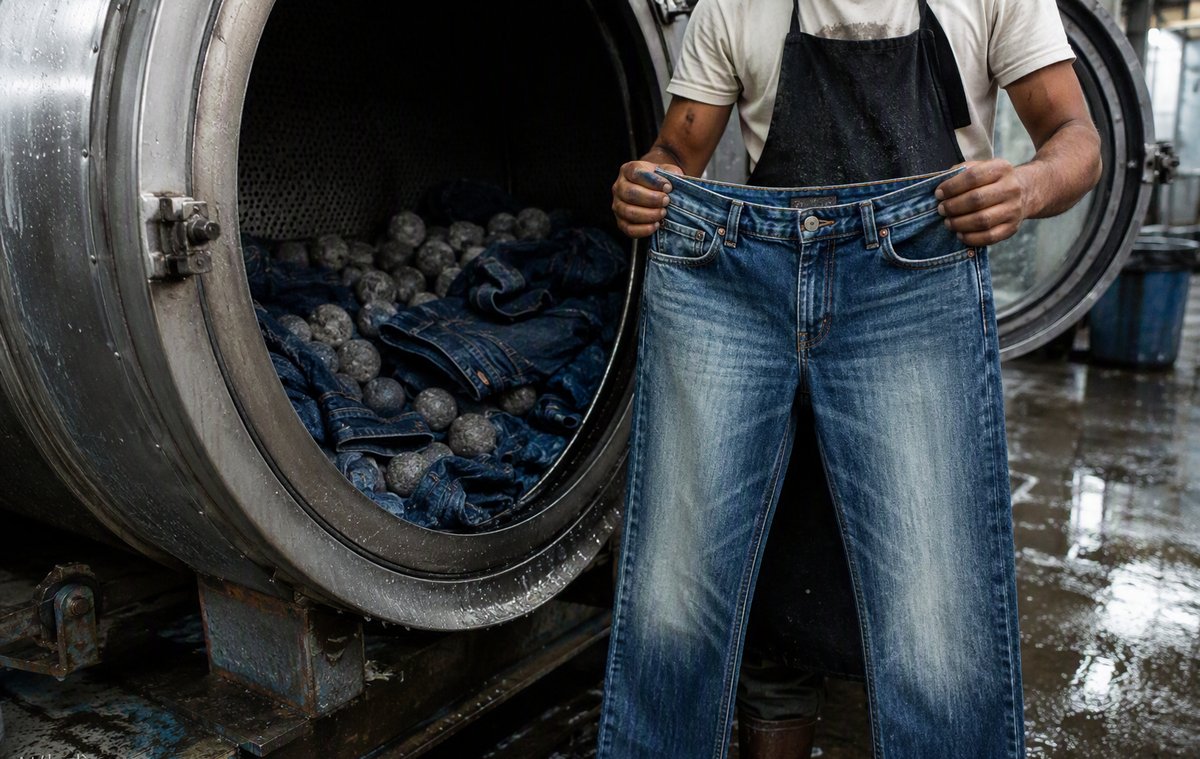
The original vintage wash: garments tumbled with pumice stones until edges soften and colour wears true. Physical abrasion cannot be faked — and cannot be uncontrolled. Stone load, time and strength limits are locked on a master sample before bulk.
Overview
One Design. Several Layers.
Stone washing is controlled physical abrasion. These four factors set what the process can deliver.
Abrasion Level
From a gentle soften-and-fade to heavy distressed wear. The master sample defines where your product sits.
Quantity
A batch process using mechanical abrasion. Fabric, machine load, wash media and the target finish affect feasibility and cost.
Surface
Denim is the classic; heavyweight fleece and canvas also stone-wash well. Lightweight knits risk damage.
Result
Worn edges, softened handfeel, gentle overall fade — the authentic worn-in character that chemicals alone cannot reproduce.
Suitability
Is This a Stone Wash Job?
Denim invented this finish, but heavyweight casual wear owns it now too.
Denim & Jeans
The original application: authentic worn seams, faded thighs and softened rigid denim.
Heavy Fleece & Hoodies
Stone-washed hoodies are a streetwear staple — abrasion catches seams and edges beautifully.
Canvas & Workwear
Softens stiff canvas and adds honest work-worn character to jackets and pants.
Lightweight Knits
Risky — thin jersey can tear under abrasion. Enzyme wash is the safer softening route for light garments.
How It Works
How Stone Wash Behaves on Fabric
Pumice stones tumble with the garments, physically scuffing fibre surface and lifting dye at edges and seams.
Light Stone Wash
Short cycle, low stone ratio: softened handfeel and gentle fade without visible distress.
Heavy Stone Wash
Extended abrasion for visible wear at edges, seams and high points — controlled distress, not damage.
Materials
Choose Materials After the Fabric
Stones, ratio and machine are the materials of abrasion.
Pumice Stones
Volcanic stones of graded size. Stone-to-garment ratio decides abrasion intensity.
Enzyme Combination
Often paired with cellulase to soften stone action and refine the surface — the modern standard recipe.
Base Garment
Indigo denim and dark reactive-dyed cotton show abrasion contrast best.
Process
From File to Finish
From rigid garment to worn-in finish — abrasion is measured in minutes and ratios.
Review
Target abrasion level and garment construction are assessed — weak points identified before washing.
Master Sample
A garment washed to your target becomes the binding standard.
Recipe Lock
Stone size, ratio, cycle time, water level and enzyme addition are recorded.
Wash
Garments tumble with stones under the locked recipe.
Desize & Rinse
Loose dye and stone residue are washed out thoroughly.
Dry & Finish
Controlled drying and final inspection preparation.
Inspect
Abrasion level against the master, strength tests and seam checks per batch.
Pricing
What Changes the Quote
Stone washing prices as machine time plus wear-and-tear logic.
Abrasion Level
Heavy distress takes longer cycles and more stone handling than a light soften.
Batch Size
Machine loads have efficient ranges — small runs carry a batch premium.
Garment Weight
Denim and heavy fleece load machines by weight; priced accordingly.
Quality Control
What a Failed Print Looks Like
Abrasion cannot be undone. We inspect against these failure modes — agreed before production.
Over-Abrasion
Holes and thinning beyond the approved level. Cycle time and stone ratio are locked from the master sample.
Uneven Wear
Some pieces heavily worn, others barely touched. Load size and machine action are controlled per batch.
Seam Failure
Stitching burst at stress points. Seam construction is reviewed at sampling for wash resistance.
Hardware Damage
Buttons, zips and rivets scratched by stones. Hardware is protected or selected for wash durability.
Stone Residue
Pumice grit left in pockets and seams. Multi-cycle rinsing and piece-level checks before packing.
Colour Loss Beyond Target
More fade than the master sample showed. Cycle parameters are logged and compared per batch.
Sampling
Approve the Physical Result
Abrasion is physical — approve it physically.
Reference Approval
You confirm the target wear level from references.
Master Sample
Your actual garment washed to target becomes the binding standard.
Recipe Lock
All parameters recorded from the approved sample before bulk.
Bulk Checks
Per-batch abrasion comparison, strength and seam integrity tests.
Decision Boundary
Stone Wash or Another Route?
Three vintage wash routes — by mechanism and by look.
Stone Wash
Physical abrasion — worn edges, honest fade.
Best for: Denim, heavy fleece and work-worn canvas
Snow & Acid Wash
Bleach chemistry — high-contrast mottling.
Best for: Bold streetwear statement washes
Enzyme Wash
Biological refinement — soft, subtle, clean.
Best for: Softness upgrades on cotton basics
FAQ
Questions Before Sampling
What is the difference between stone wash and acid wash?
Stone wash is physical abrasion: pumice stones scuff the fabric for worn edges and gentle fade. Acid wash is chemical: bleach lifts colour in high-contrast mottled patterns. Stone wash looks naturally worn; acid wash looks dramatically mottled.
Does stone washing weaken the garment?
Controlled stone washing trades a small, planned amount of surface fibre for its look — the garment remains fully functional. Over-abrasion is the real risk, which is why cycle time and stone ratio are locked from the master sample and strength-tested per batch.
Can you stone wash t-shirts?
Heavyweight tees (200gsm+) yes, beautifully. Thin lightweight tees are risky under physical abrasion — enzyme wash is the safer route to softness for light jersey.
What should I send for a stone wash quote?
Send your garment, artwork and finishing requirements so we can confirm suitability and pricing.
How much does stone wash cost?
Roughly $1.00-$3.00 per garment depending on abrasion level and weight. Send your style, fabric and target reference for an exact quote.
Send the Actual Job
Send what you have — artwork, a reference image or just an idea. The more of this list you include, the sharper our quote. We reply within 24 hours.
✓ Target abrasion level with reference photos
✓ Garment style and fabric composition
✓ Fabric weight (gsm)
✓ Hardware details (buttons, zips, rivets)
✓ Acceptable variation expectation
✓ Quantity per batch
✓ Strength requirements
✓ Delivery country