
Decoration Techniques / Tie-Dye
Tie-Dye for Custom Apparel
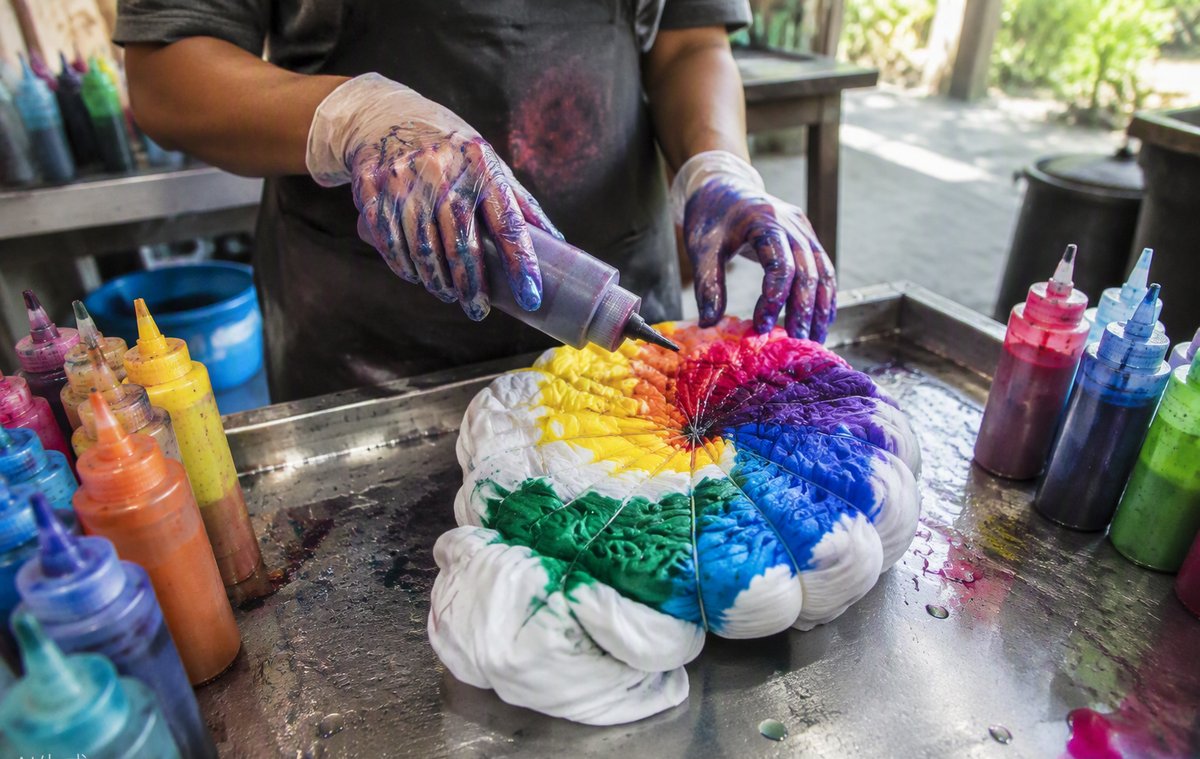
Every piece unique, by design: spiral, crumple and custom patterns dyed directly into finished garments. The craft is making deliberate chaos repeatable — we control pattern, colour and variation range against an approved master sample.
Overview
One Design. Several Layers.
Tie-dye is controlled randomness. These four factors decide whether your idea can be produced consistently at scale.
Pattern
Spiral, crumple, bullseye, stripe and custom ties. Each pattern is documented — fold method, tie positions, dye order — so it can be repeated.
Quantity
Hand work per piece. Small runs are natural; large runs need a trained team following the documented pattern.
Surface
100% cotton takes dye best. White or light garments show colour true; polyester blends dye pale or not at all.
Result
One-of-a-kind pieces within an agreed variation range. No two are identical — that is the product, not a defect.
Suitability
Is This a Tie-Dye Job?
Cotton casual wear is tie-dye’s home ground.
T-Shirts
The classic tie-dye garment. White 100% cotton tees in any weight — heavier fabrics hold shape better through wet processing.
Hoodies & Sweatshirts
Strong seller. 300gsm+ cotton fleece dyes richly; brushed interiors take colour unevenly, which reads as character.
Joggers & Sets
Matching tie-dye sets are dyed as pieces and matched by eye within the approved variation range.
Performance & Polyester
Not suitable. Reactive dyes do not bond with polyester — for colour effects on performance wear, use sublimation.
How It Works
How Tie-Dye Behaves on Fabric
Where the tie blocks the dye, the garment keeps its base colour. Pattern, saturation and colour placement all come from how the garment is bound.
Tie Method
The fold-and-bind pattern decides the design geometry. We document every fold and tie position of the approved sample so bulk repeats it.
Dye Application
Colours are applied in a fixed order and saturation. Soda ash pre-treatment sets how strongly the cotton takes the dye.
Materials
Choose Materials After the Fabric
Dye chemistry and garment fabric decide what colours are even possible.
Fibre-Reactive Dyes
The standard for cotton: bonds chemically with the fibre, wash-fast and vivid. The professional choice over craft-store dyes.
100% Cotton
The reliable base. Combed, carded and organic cotton all dye well with slightly different character.
Blends
Cotton-poly blends dye lighter and less predictably — usable for washed-out looks only, with expectations set at sampling.
Process
From File to Finish
From white garment to dyed piece — the master sample governs every step.
Review
Pattern reference, colour list, garment and acceptable variation range are agreed before any dyeing.
Master Sample
A sample piece is tied and dyed to your reference. This becomes the production standard.
Document
Fold method, tie positions, dye colours, order and saturation are recorded from the master.
Pre-Treat
Garments are soaked in soda ash solution so the dye bonds fully with the cotton.
Tie & Dye
Teams tie each piece to the documented pattern and apply dyes in the fixed order.
Batch & Rinse
Dyes cure for a set time, then pieces are rinsed until water runs clear.
Inspect
Each piece is compared against the master’s variation range; outliers are rejected.
Pricing
What Changes the Quote
Tie-dye pricing follows hand work, not machinery.
Pattern Complexity
A single spiral is fast; multi-tie custom patterns add labour minutes per piece.
Colour Count
Each dye colour adds application time and rinse load. Three-colour designs cost more than one-colour.
Garment
The white cotton base garment is the main material cost. Heavy fleece costs more to dye evenly than jersey.
Quality Control
What a Failed Print Looks Like
In tie-dye, variation is the product — but uncontrolled variation is a defect. We inspect against an agreed range.
Off-Pattern Pieces
Spirals that drift off-centre or ties in wrong positions. Compared against the documented master and rejected.
Muddy Colours
Colours bleeding into brown where they overlap. Dye order and application timing are the controls.
Pale or Uneven Saturation
Weak dye take from under-treatment or short batch time. Soda ash concentration and cure time are logged.
Colour Bleeding in Wash
Insufficient rinsing leaves loose dye. Pieces are rinsed to clear and wash-tested before packing.
Set Mismatch
Tops and bottoms of a set that read as different dye batches. Sets are matched by eye before packing.
Shrinkage Drift
Hot processing can shrink garments beyond spec. Pre-shrunk blanks and controlled temperatures are used.
Sampling
Approve the Physical Result
A photo of someone else’s tie-dye is inspiration, not a standard. Your master sample is.
Reference Approval
You confirm pattern type, colours and variation expectations from references.
Master Sample
A physical dyed piece on the actual garment becomes the binding standard.
Variation Range
Acceptable piece-to-piece variation is agreed with photos of best-case and limit-case.
Bulk Checks
Every piece is compared against the master range before packing.
Decision Boundary
Tie-Dye or Another Route?
Three ways to get colour into the whole garment — by effect and by fabric.
Tie-Dye
Patterned multi-colour effects, every piece unique.
Best for: Statement tees, hoodies and festival wear on cotton
Garment Dyeing
Even, solid colour across the finished garment.
Best for: Vintage solid colours and lived-in basics
Sublimation
Printed all-over colour, photographic precision.
Best for: All-over designs on white polyester
FAQ
Questions Before Sampling
Will every piece look identical?
No — and it should not. Tie-dye is controlled randomness: the pattern, colours and overall look repeat, but each piece is unique. We agree a variation range with a master sample and reject pieces outside it.
Can you tie-dye polyester or performance fabrics?
No. Reactive dyes bond with cotton, not polyester. Blends dye pale and unpredictably. For colour effects on polyester, sublimation is the correct route.
What should I send for a custom tie-dye quote?
Send your garment, artwork and finishing requirements so we can confirm suitability and pricing.
Will the colours bleed in the wash?
Properly cured and rinsed reactive dyes are wash-fast. We rinse every piece until the water runs clear and wash-test samples from each batch before packing.
How much does custom tie-dye cost?
Roughly $1.50-$4.00 per garment on top of the blank, depending on pattern complexity and colour count. Send your pattern reference and quantity for an exact quote.
Send the Actual Job
Send what you have — artwork, a reference image or just an idea. The more of this list you include, the sharper our quote. We reply within 24 hours.
✓ Pattern reference (photos of the look you want)
✓ Colour list (Pantone or physical references)
✓ Garment style — 100% cotton recommended
✓ Base garment colour (white dyes truest)
✓ Acceptable variation expectation
✓ Quantity per pattern
✓ Matching set requirements (if any)
✓ Delivery country
Continue