
Fabric & Quality Control
Fabric Colorfastness Test Guide: Wash, Crocking, Light & Perspiration
Matching the approved color is only step one. The next question is whether it stays on the garment—and off everything else.
August 21, 2026 · 12 min read
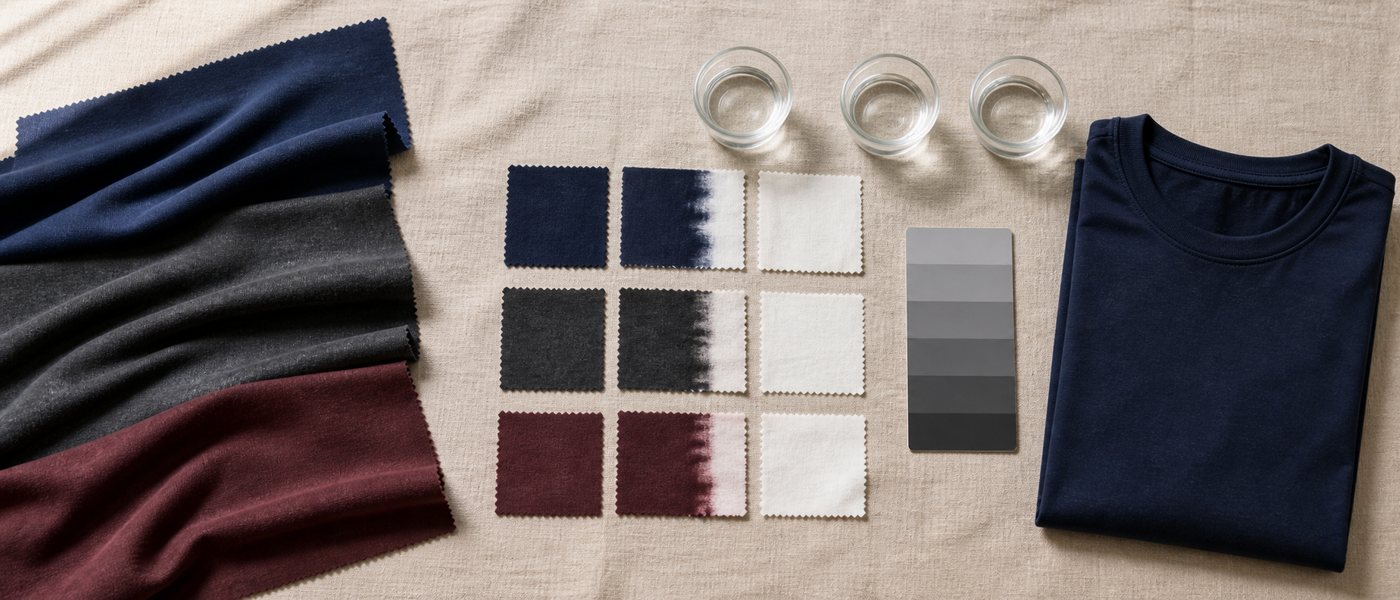
Table of Contents
1. What Colorfastness Actually Measures
Colorfastness is a fabric's resistance to changing color or transferring color under a defined condition. A fabric can match the approved lab dip perfectly and still bleed in the wash, rub onto a light bag, fade in a shop window, or stain a lining after perspiration.
Every test therefore looks at two separate risks:
- Color change: how much the original fabric itself fades or shifts.
- Staining: how much dye transfers to an adjacent material, usually a standardized white test cloth.
The buyer, factory, and laboratory must agree on the test method, care condition, fabric color, product end use, and pass criteria. “Good colorfastness” is not a measurable instruction.
2. Which Tests Your Product Needs
| Test | Risk it simulates | Especially relevant for |
|---|---|---|
| Washing | Color loss and staining during laundering | Every washable garment |
| Dry crocking | Dye transfer through dry rubbing | Dark denim, pigment dye, prints, bags |
| Wet crocking | Dye transfer when rubbing cloth is damp | Deep shades and cellulose fibers |
| Perspiration | Color change and staining under acidic or alkaline sweat | Activewear, underwear, fitted tops |
| Light | Fading after controlled light exposure | Outerwear, swimwear, uniforms, display garments |
| Water / sea water / pool water | Transfer and shade change in specific wet conditions | Swimwear and performance products |
A test plan should follow the product's real use. An indoor fleece hoodie and a chlorine-exposed swimsuit do not need the same matrix.
3. Colorfastness to Washing
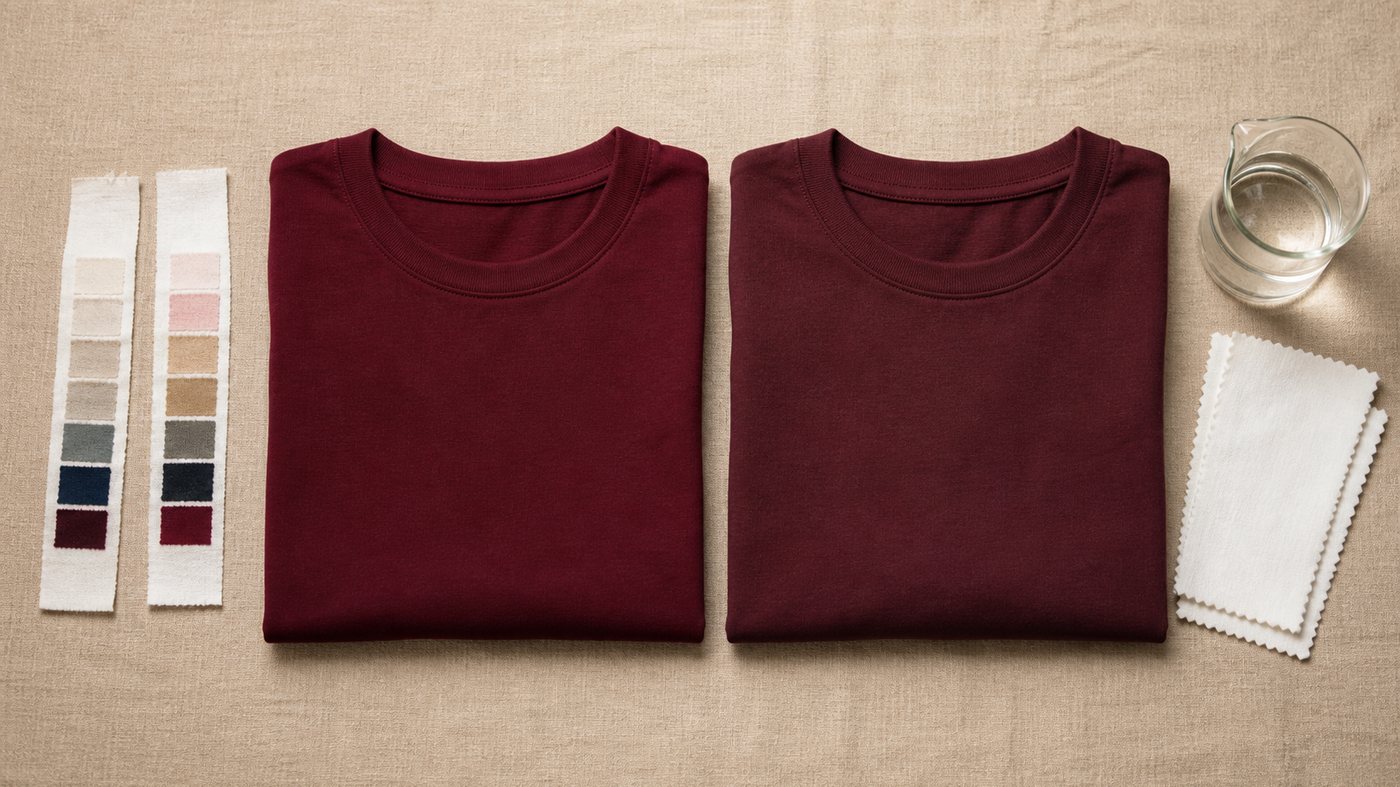
In a controlled wash test, the colored specimen is placed with standardized adjacent fabric and exposed to an agreed combination of detergent, temperature, mechanical action, time, and sometimes bleaching conditions. After rinsing and drying, the laboratory grades both the specimen's shade change and the staining on the adjacent cloth.
AATCC TM61 is one commonly referenced accelerated laundering method. It is designed to approximate the color loss and surface change caused by repeated hand or home laundering under defined conditions. Brands may instead specify an ISO method or a retailer's own protocol. The method name alone is not enough: the exact option and acceptance level must appear on the test request.
4. Dry and Wet Crocking
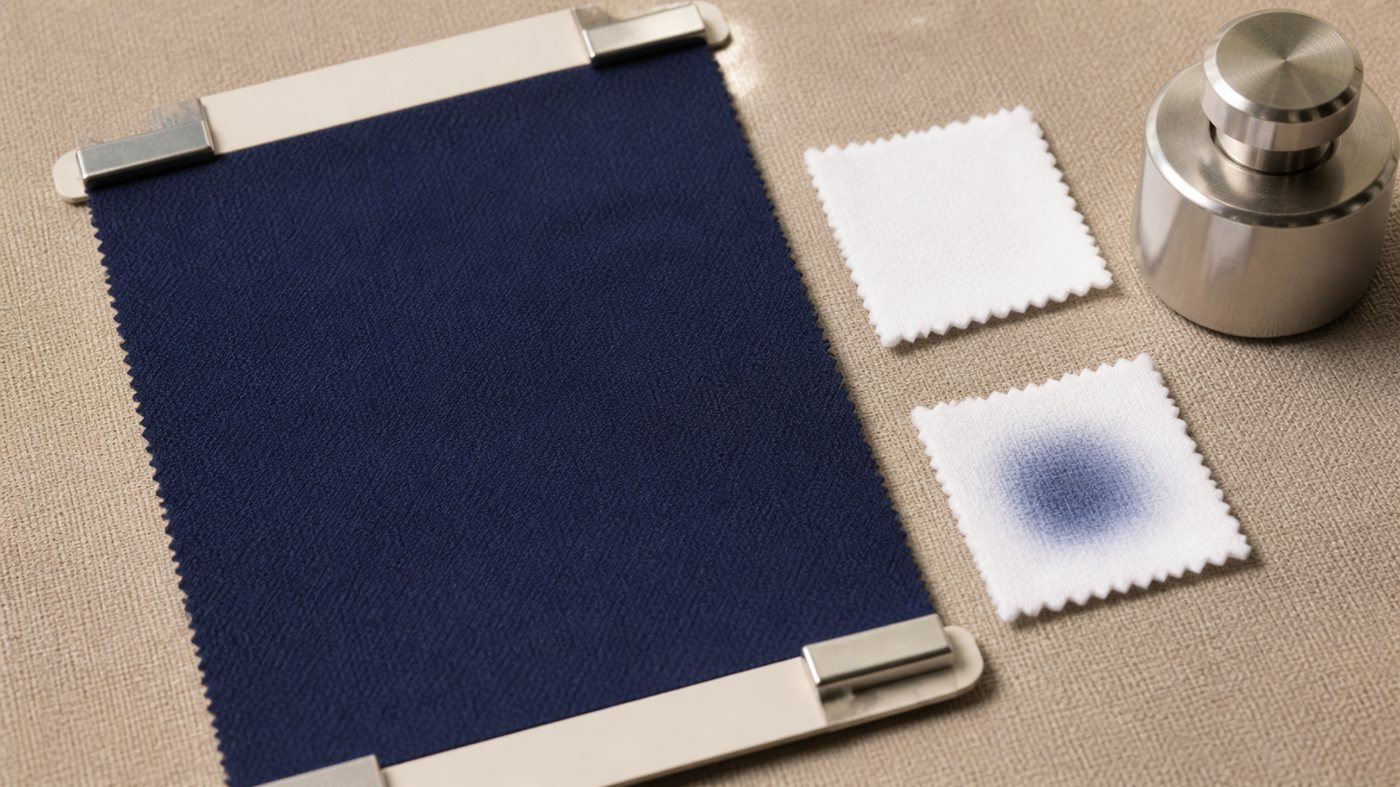
Crocking measures color transfer caused by rubbing. A standardized white cloth rubs across the colored surface for a controlled number of cycles and pressure. The white cloth is then graded for staining.
Dry and wet results must be recorded separately. Wet crocking is usually the tougher condition because moisture helps mobilize dye. Deep navy, black, burgundy, denim indigo, pigment-dyed garments, and heavy surface prints deserve extra attention.
Do not test only the base fabric when the garment includes screen print, heat transfer, flocking, garment dye, or a wash effect. The finished surface may behave differently. For decoration-specific approval, connect the result to the relevant decoration technique and its real production recipe.
5. Light and Perspiration
Light exposure
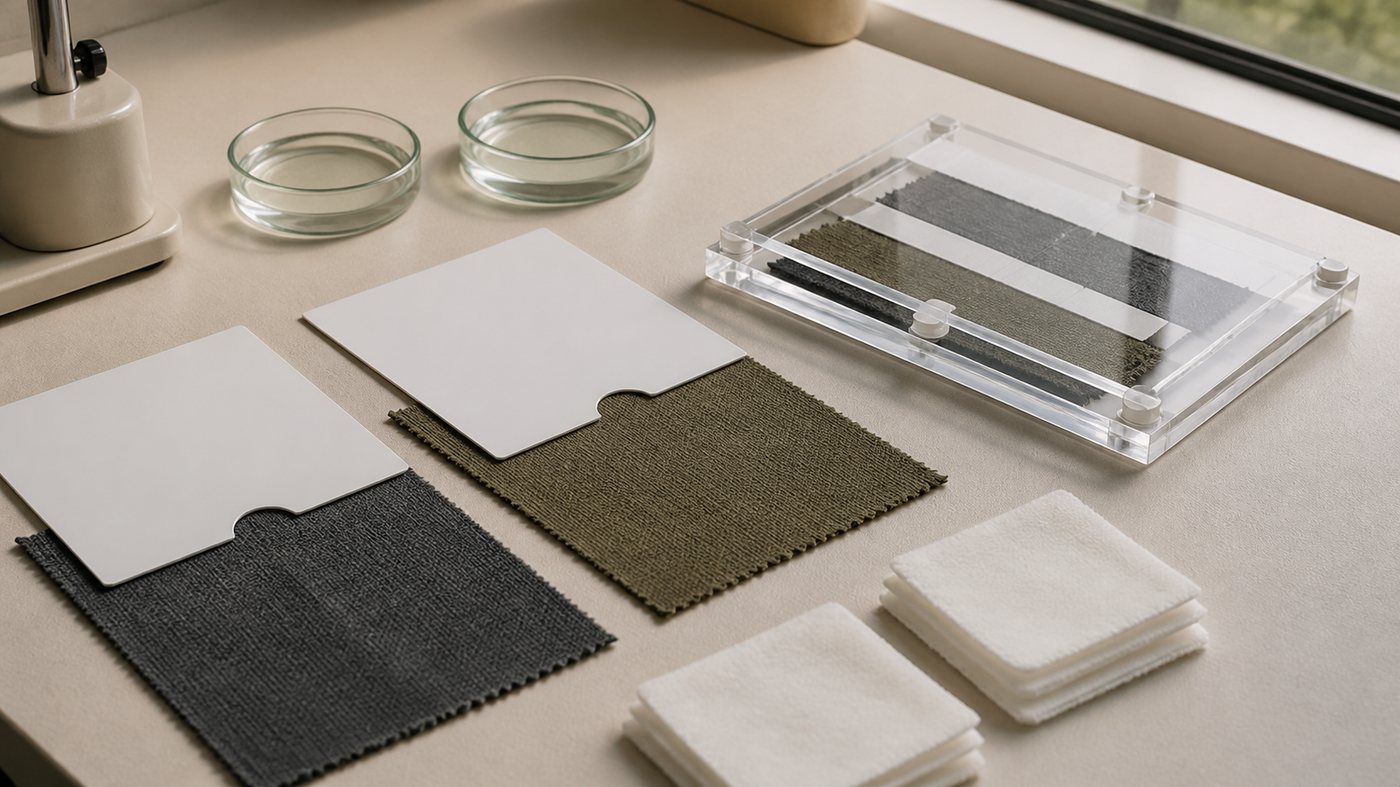
A controlled lightfastness test exposes specimens beside reference standards, then evaluates fading after a defined exposure. This is not the same as leaving fabric on a windowsill: laboratory equipment controls the light source and exposure conditions so results can be compared.
Perspiration
Perspiration testing places treated specimens against adjacent fabric under pressure, typically using separate acidic and alkaline solutions. This checks both color change and staining. It is particularly important where the product stays close to the body or is worn during exercise.
For activewear, combine perspiration testing with wash, crocking, and—where relevant—light or pool-water testing. Passing one condition does not predict performance in another.
6. How Colorfastness Ratings Work
Many color-change and staining assessments use grey scales. A common scale runs from Grade 5, meaning little or no visible change, down to Grade 1, meaning severe change. Half grades such as 3–4 may also be reported. Lightfastness can use a different reference system, so do not assume every test has the same scale.
| Rating | General interpretation | Action |
|---|---|---|
| 5 | Little or no visible change or staining | Strong result under that test condition |
| 4 | Slight change | Often acceptable, subject to product standard |
| 3 | Noticeable change | Review buyer requirement and end use |
| 2–1 | Major to severe change | Usually requires correction or rejection |
These descriptions are planning guidance, not universal pass limits. A retailer, market, fiber type, shade, and product category may set different minimums. Put the agreed requirement in writing before lab testing.
7. Why Fabrics Fail
- Dye and fiber mismatch. The dye class or fixation process is not suitable for the fiber blend.
- Insufficient washing-off. Unfixed surface dye remains and transfers later.
- Deep shade loading. Very dark colors need tighter process control and may struggle in wet crocking.
- Finishing changes. Softener, resin, garment wash, heat, or enzyme treatment alters the final surface.
- Wrong test condition. A low-temperature development pass does not cover a warmer care label.
- Lot variation. The approved lab dip and bulk dye lot do not share identical processing.
- Decoration not tested. The blank fabric passes, but the print or pigment layer transfers.
Corrective action may involve better fixation, additional washing-off, a revised dye recipe, a different fabric source, a surface treatment, or an adjusted care instruction. The factory should re-test after the correction; visual approval alone is not enough.
8. What to Approve Before Bulk
- Define the end-use test matrix and named methods.
- State the care condition and minimum rating for color change and staining.
- Test the approved development fabric in the final shade.
- Repeat critical tests after printing, garment dyeing, washing, or finishing.
- Approve the bulk dye lot or shade band before all fabric is cut.
- Keep the report, tested swatch, lot number, and care label together.
- Confirm any failure correction with a new report.
Color approval begins with the lab dip and shade band process. Performance approval continues with colorfastness testing. Dimensional stability is a separate check covered in our fabric shrinkage test guide.
FAQ
What is a good colorfastness rating?
Grade 4 or above is a common planning target for many color-change and staining checks, but it is not universal. Use the buyer's specified method and minimum rating for the product and market.
What is the difference between fading and staining?
Fading is a change in the tested fabric's own shade. Staining is dye transfer from that fabric onto an adjacent material.
Why is wet crocking often worse than dry crocking?
Moisture can help mobilize surface dye, so a damp white rubbing cloth may pick up more color than a dry one.
Should prints and garment washes be tested separately?
Yes. Printing, pigment dye, enzyme wash, softener, heat, and other finishing steps can change surface performance even when the base fabric passed.
When should bulk fabric be tested?
Test before bulk cutting, with enough time to correct or replace a failing lot. Critical tests should reflect the final color and finishing process.
Need a colorfastness test plan?
Send us your fabric composition, color, finish, care label, and target market. We will map the required checks before bulk cutting.
Get a Free Quote →