
Adult Streetwear · Hoodie Development
Hoodie Hem Design: Ribbed vs Straight for a Boxy Fit
A short, wide hoodie can finish in a gathered band or hang in a straighter line. Both can belong in a streetwear collection, but they give the lower body a different outline. Asking a factory for “a boxy hoodie with tight rib” leaves open where the garment should sit and how much fabric should gather above the band.
Choose the intended silhouette first, then describe the body length, hem construction and opening separately. A clear reference helps the sample team discuss those choices without guessing which part of the drawing matters most.
1. Choose the bottom silhouette before the trim
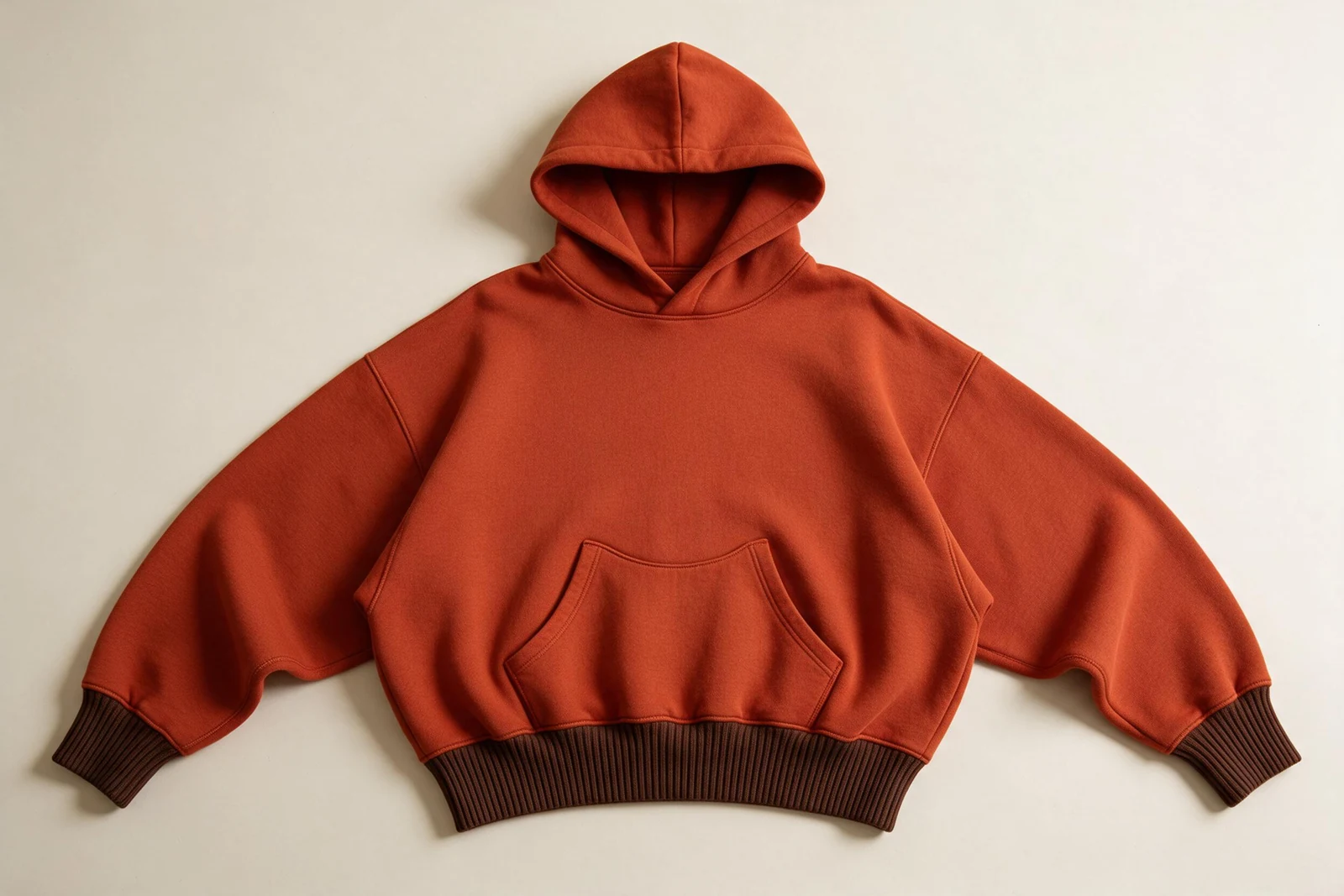
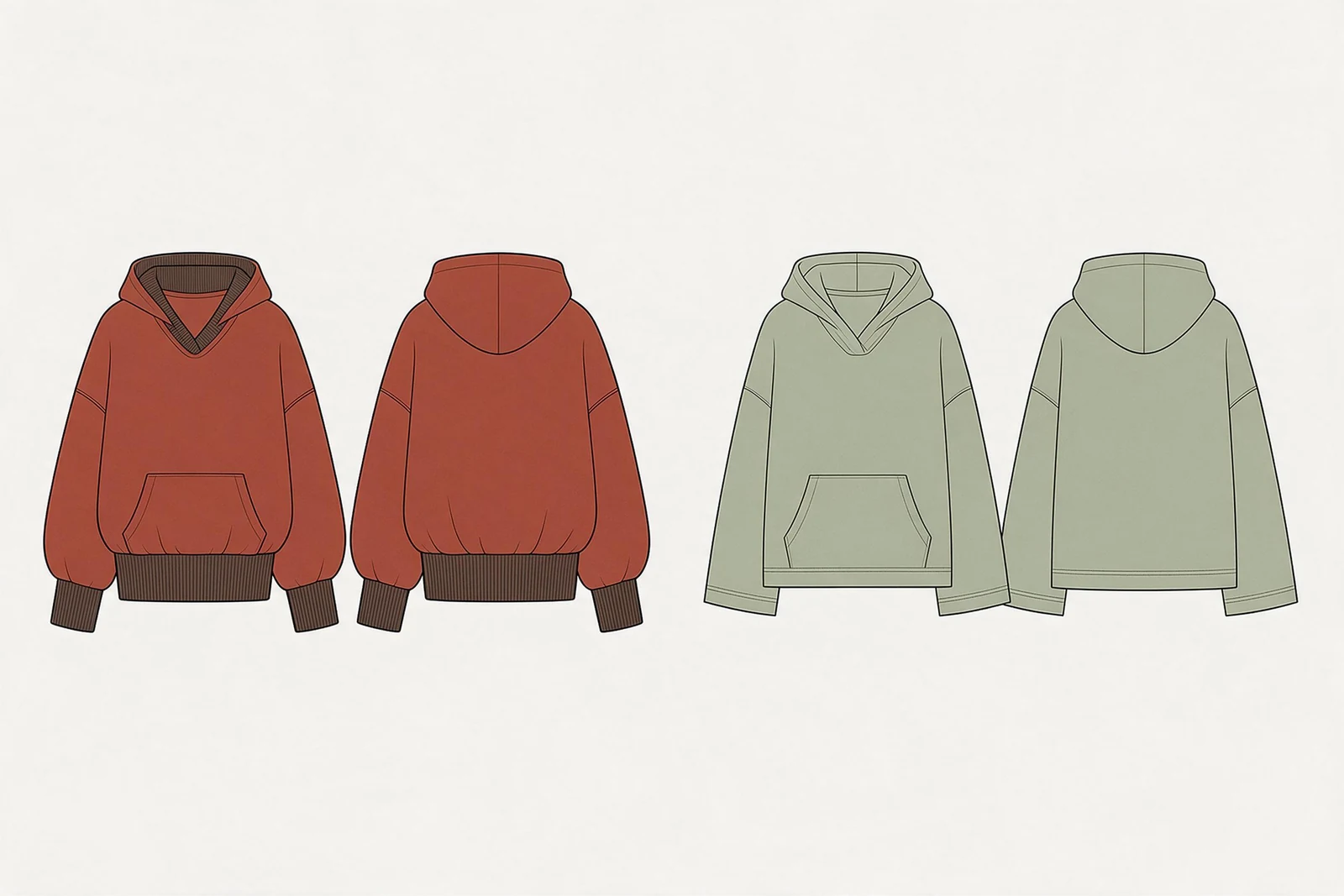
Choose the hem construction and intended outline together. In this comparison, a straight hem means a turned-up body-fabric finish without a separate rib band. A rib band can draw the bottom inward and leave volume above it, but ribbed hems can also have a straighter outline. The result depends on body width, length, fabric and where the hem meets the wearer.
For a gathered look, explain whether the band should sit near the waist, rest lower on the body or tuck slightly underneath the garment. For a straighter look, show the desired side outline and whether the back should finish at the same level as the front. “Oversized” does not answer those questions.
A split hem is a further design decision. A side opening may be added to a straight hem, with equal or stepped front and back lengths. Show the top of the opening and its edge finish. Do not let a side split appear in a reference image but disappear from the development brief.
Use the design comparison below to identify the kind of bottom outline you want. The drawings describe design directions; the final dimensions and construction belong in the specification for your own garment.
2. Separate body length, band height and opening
Record body length, finished band height and relaxed opening as separate measurements. An instruction to “make the bottom smaller” can otherwise be interpreted as shortening the garment, reducing the opening or narrowing the band. Those changes do different jobs.
Name the starting point for body length, such as a defined high shoulder point, and show the route on the drawing. State whether the endpoint is the finished bottom edge or the body-to-band seam. When the back is longer than the front, record the two endpoints rather than using one unexplained length.
| Field | What to define |
|---|---|
| Finished body length | Starting point, route and endpoint; whether the band is included |
| Finished band height | Visible height after attachment, not the unfolded strip or cut-piece height |
| Bottom opening | Flat width or circumference, measured in a stated relaxed condition |
| Attachment line | Where the body joins the band; distinguish it from the free lower edge |
| Split or stepped hem | Front and back endpoints, opening position, height and finish |
A flat opening width is not the same entry as the full circumference. Label the convention in every size. Likewise, the visible height of a folded rib band does not tell the pattern team its cut height without the folding and seam allowances.
There is no single rib-to-body ratio that this guide can prescribe for every hoodie. The material, seam, intended gathering and size all matter. Ask the technical team to propose the pattern relationship, then judge the assembled sample against your reference. Use the hoodie measurement-tolerance guide to agree how each finished dimension will be checked.
3. Review the joined body and hem materials
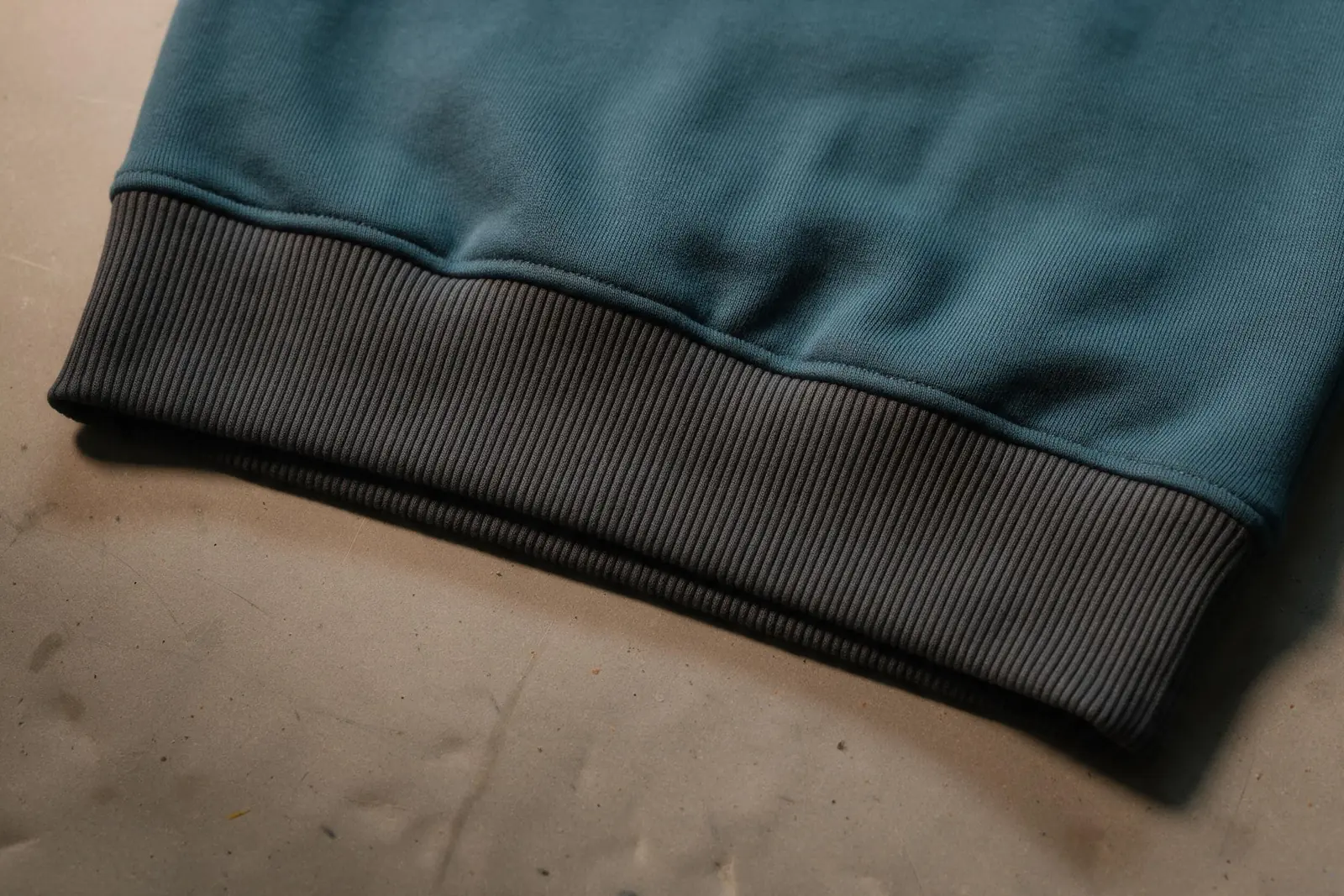
Review the body, band and attachment seam together on the garment. A loose rib swatch does not show how the finished bottom will sit. Its thickness, stiffness and response to stretch interact with the body fabric and the way the components are joined.
Identify the intended body fabric and rib reference separately. If you only know the desired feel, describe it and provide a reference; leave the unconfirmed composition or weight open. A fibre percentage alone does not establish recovery, and a photograph cannot verify fabric weight or shrinkage.
For a straight hem, discuss the fold, stitch line and corner treatment as well as the opening. A heavy folded edge can sit differently from a lighter one. At a side split, look at the transition into the opening and whether its finish pulls the neighbouring fabric.
When reviewing a sample, separate appearance before care from the result after an agreed care procedure. Record the actual materials and any substitutes used. If the body and band change differently, ask the sample team to investigate the combination instead of assuming the band simply needs to be tighter.
Cuff and hem approval remain separate. The cuff has to accommodate hand passage and wrist fit; the hem has a different location and purpose. The hoodie cuff review covers that separate decision. Approving one opening does not approve every ribbed part of the garment.
4. Check the intended outline in wear and across sizes
Review the full hoodie in the intended size and with the agreed underlayer. Start with where the hem rests before movement. Compare the front, back and side outline, including the amount of body fabric sitting above the band.
Ask whether that volume is the desired shape or an unwanted fold. Then observe ordinary dressing, sitting and arm movement within the wearer's comfortable range. Record whether the hem returns to the intended position or needs repositioning. This is a development observation, not a laboratory recovery test.
Do not automatically correct every riding-up hem by widening the band. Body length, opening, fabric, the layer underneath and the relationship to the wearer can all be relevant. Record what happened first, then ask which change would address it while preserving the approved shoulder and body proportions.
A size label does not define the finished garment dimensions. If you have no chart, the US, UK and European size reference can help identify a starting size and measurement context. The intended ease and hoodie dimensions still need agreement.
For the size range, specify which design features should remain visually consistent. Do not silently carry one band's dimensions through every size or apply the same change to body width, length and hem opening. Note which sizes were actually reviewed and which remain open.
5. Send a hem brief the sample team can act on
Show the intended outline, identify the reference size and separate confirmed details from open decisions. GoVoloom needs front and back views at minimum; front, back and side views are preferable. A front-only image is insufficient because it leaves the back design and construction unresolved.
You can begin with those views, a reference size, the fabric requirements and the fit requirements. You do not need to invent a full measurement chart or prepare every pattern instruction yourself. The factory can help clarify technical details from that starting brief before sampling is agreed.
Use the project brief builder to organise the overall request, and add the hem notes below. For a revision, describe both what should change and what should stay. “Reduce the gathering while keeping the approved finished length” is clearer than “make it less baggy.”
Style / drawing version / sample revision:
Front and back views attached / side view attached:
Reference size and intended wearer or reference garment:
Desired outline and resting hem position:
Body fabric direction / rib reference / open material questions:
Finished body length and band inclusion:
Finished band height / relaxed bottom opening / measurement convention:
Straight or split hem details, if applicable:
Intended underlayer and conditions for fit review:
Observed difference / annotated photo reference:
Features to preserve / requested change:
Confirmed items / pending items / person confirming:
Add these details to your hoodie development brief. GoVoloom's MOQ is 100 pieces. Quantities, colour and size allocation, sample scope, costs and timing need project-specific written confirmation. Agreement on the hem appearance alone does not release the garment for production.
6. Questions before approving a hoodie hem
Keep silhouette, measurements and material approval as separate decisions. These common questions help make the brief more precise.
Can a ribbed hem still give a hoodie a boxy fit?
Yes. Body width and length can create a short, wide shape while the rib controls the bottom opening. Describe how much gathering you want and where the hem should sit, then review the full sample rather than judging from the word “boxy.”
What percentage smaller should the rib be than the body?
There is no universal percentage for every hoodie. Rib behaviour, construction, intended gathering and size affect the pattern relationship. Agree the proposed dimensions and confirm the result on the assembled garment.
Is making the rib band taller the same as cropping the hoodie?
No. Band height and finished garment length are different dimensions. Changing the band's height may alter the garment length unless the body is adjusted. State the required total length and band height separately.
Can I start without a finished size chart?
Yes. Supply front and back views at minimum, preferably with a side view, plus a reference size, fabric requirements and fit requirements. GoVoloom can use those inputs to clarify the specification; a front-only image is insufficient.
Ready to discuss the lower-body shape? Send your hoodie views and starting brief, including the parts of the hem design you want to keep and the details that still need advice.