
Fabric Sourcing / Hoodie Development
Brushed Fleece vs French Terry for Hoodies: How to Choose
Compare inside feel, drape and care appearance, then turn the fabric choice into a clear sample brief.
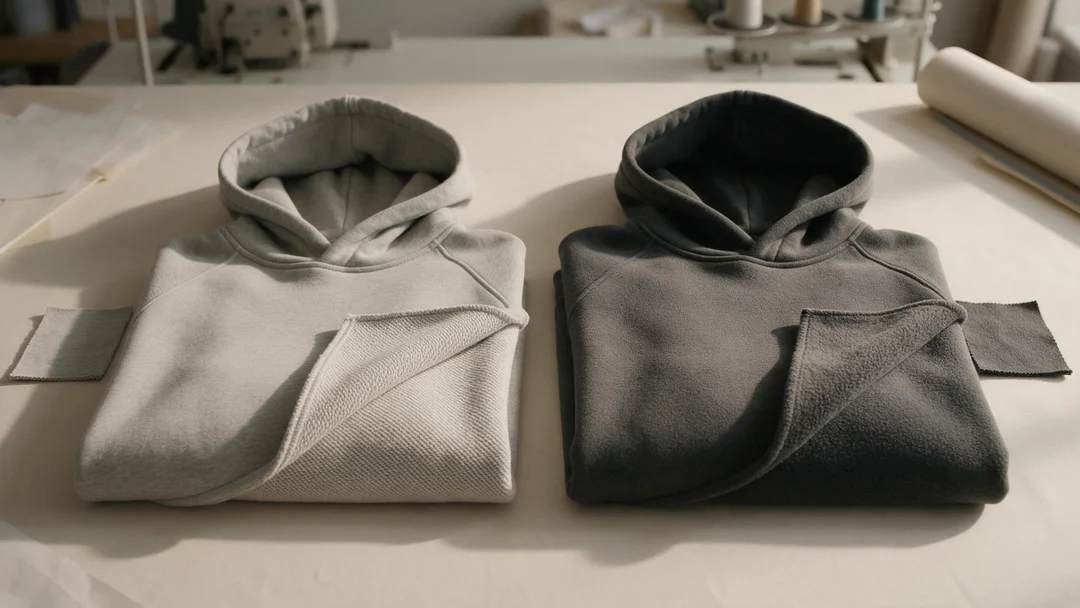
Two fabric swatches can carry the same weight label and still produce different hoodies. One may feel dry and compact inside; the other may have a soft, raised surface. The difference matters when a buyer pulls the garment over a T-shirt, folds back the cuff or wears it after washing.
Choosing between brushed fleece and French terry starts with those details. A useful comparison connects the fabric to the fit, decoration and care instructions you intend to sell with the garment.
French terry or brushed fleece: which should you choose?
Choose French terry for a looped inner surface, or brushed fleece for a raised, softer-feeling inner surface; confirm the finished hoodie through sampling.
Neither name establishes a quality level. A well-specified fabric in either construction can suit a hoodie collection. The decision is whether its feel and behaviour match your product brief.
Start with the inside surface, then check the fibre blend
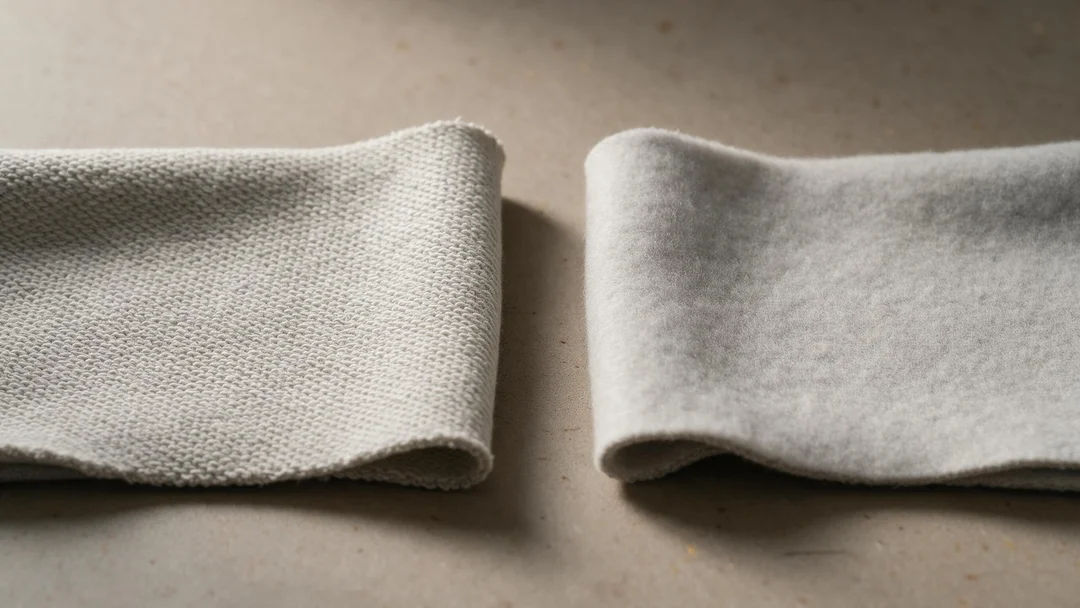
French terry usually has a relatively smooth outer face and visible, unbrushed loops on the inside. Brushed sweatshirt fleece has an inner surface raised into a fuzzy pile. Here, “fleece” means that sweatshirt fabric, rather than every fabric sold under the fleece name, such as polar fleece.
These terms describe construction and finishing. They do not tell you whether the fabric is cotton, polyester or a blend. Ask for the full composition and intended finish alongside the fabric name. Check both sides of the swatch: the face may need to carry a print, while the inside determines much of the immediate contact feel.
Compare the decisions, not just the fabric names
| Decision | French terry direction | Brushed fleece direction | What to confirm on a sample |
|---|---|---|---|
| Inner surface | Visible loopback texture | Raised, fuzzy inner surface | Texture, softness and comfort against the intended underlayer |
| Bulk and drape | Can offer a less lofty inner feel | Brushing can add perceived loft | How the fabric hangs at the hood, sleeve and hem |
| Warmth | Construction may suit lighter layering briefs | Raised backing may suit a warmer-feeling brief | The complete garment in its intended use; the name is not a warmth rating |
| Care appearance | Inspect loops, distortion and surface change | Inspect matting, fuzzing and loose fibres | Appearance after the agreed washing and drying procedure |
| Decoration | The outer face still needs approval | The outer face still needs approval | Print or embroidery on the actual base, with the planned finishing |
Treat this table as a sampling guide. It does not prove that French terry always breathes better, that fleece always pills, or that one construction shrinks less.
Compare fabrics at the same GSM
Equal GSM means equal mass per unit area, not equal thickness, drape, warmth or finished-garment performance.
For example, a hypothetical comparison between two 320 gsm fabrics controls one specification. It does not control the fibre blend, yarn, knit density, finishing or the condition in which that weight was measured. This is an illustrative comparison, not a specification for available stock.
Make the comparison fair
Ask the supplier to identify each swatch with a fabric reference, composition, construction, finishing description and weight measurement condition. If one fabric is presented after a garment wash and another before that treatment, note the difference before choosing.
Where possible, compare candidates with similar compositions and intended finishes. When that is impractical, list what changed. A cotton-rich loopback fabric and a polyester-rich brushed fabric may both be valid options, but their differences cannot be attributed to brushing alone.
Use the existing hoodie GSM guide for weight terminology. The fabric sourcing guide places composition and construction within the wider material brief.
Check the hoodie, rib and decoration together
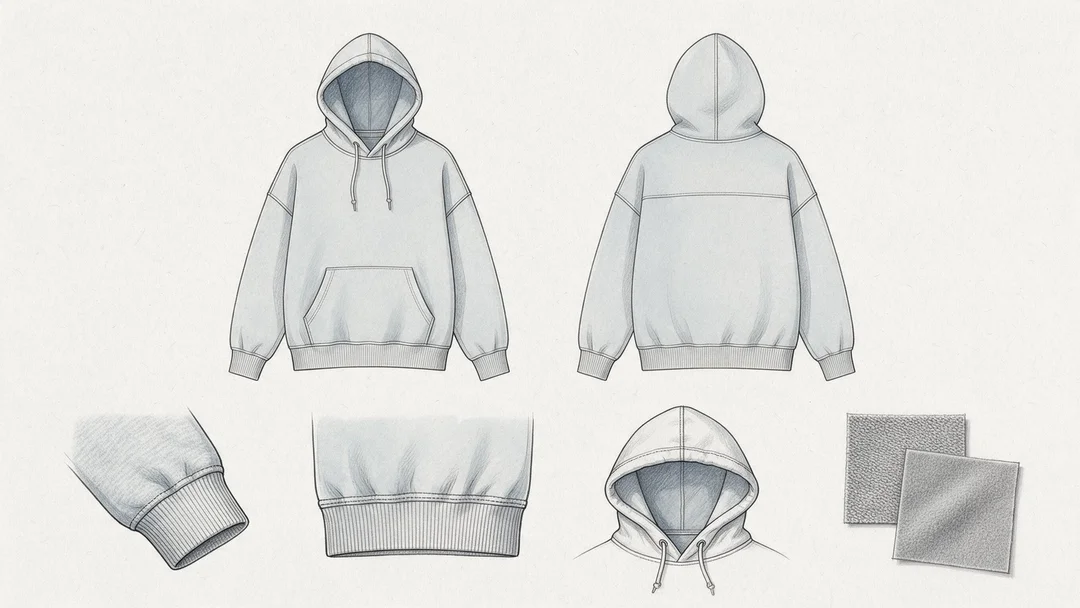
A small swatch cannot show whether a hood collapses, a pocket pulls the front downward or a cuff feels bulky. Compare the fabrics in the same intended fit where feasible, keeping the hood, pocket and trim choices visible in your notes. A change of fabric can require pattern or construction adjustments even when the weight stays the same.
Approve the rib with the body fabric. Look at colour matching, recovery, thickness and the transition at cuffs and hem. A satisfactory body fabric does not automatically make the rib suitable.
For a cuff that remains loose after use, review the finished opening with our hoodie cuff checks before requesting a change.
For printing or embroidery, the outer face, backing and finishing matter alongside the inner construction. Request decoration on the selected base and inspect the result after care. A sample on an unrelated blank cannot settle how your chosen fabric will behave.
Check the sample after care, not only on arrival
Keep an unwashed reference and compare the selected fabric and hoodie after an agreed care procedure before approving the specification.
An arrival inspection captures colour, initial handfeel and fit. Washing and drying can change those impressions. The useful question is how the whole hoodie changes under the care instructions intended for the customer.
Keep an unwashed reference
Identify the samples so washed and unwashed pieces cannot be confused. Agree the wash and dry settings, number of cycles and measurement conditions before comparing results. Record those choices with the fabric references. This makes later feedback reproducible instead of relying on “washed normally.”
Use the same garment measurement points before and after care. Our fabric shrinkage guide explains dimensional-change checks in more detail. Avoid assigning one universal shrinkage tolerance to every hoodie; the agreed product specification should define acceptance.
Use this checklist during the review:
- Dimensions and twisting: compare body length, chest, sleeves and visible seam movement against the agreed measurement record.
- Inner surface: look for changes to loops, brushed pile, loose fibres, matting and contact feel.
- Outer appearance: inspect fuzzing, pilling, crease marks and changes that affect the intended look.
- Rib and joins: check whether cuffs and hem recover, ripple or behave differently from the body.
- Colour and decoration: compare shade, visible transfer, print appearance and embroidery distortion.
- Fit and use: wear the hoodie over the intended underlayer, operate the zipper if present, and check hood and pocket behaviour.
Write feedback that leads to a specific correction
Describe the location, condition and expected result. For example: “After the agreed wash, the left cuff ripples at the sleeve join; please review the rib and attachment against the retained sample.” That gives a clearer next step than “the fleece quality is poor.”
Separate observations from causes. A twisted body does not establish which material or production step caused it. A supplier may need to review fabric stability, cutting and sewing before proposing a correction. Ask for the revised sample or supporting evidence that closes the issue.
Informal wear and wash observations also differ from laboratory testing. If your specification requires pilling, colourfastness or other performance evidence, agree the method, sample, report and acceptance criteria. The colourfastness guide explains why different exposure conditions need separate consideration.
Before approving the selected fabric, use our hoodie pilling test brief to agree the sample reference, assessment method and acceptance criteria.
Record unresolved issues and the sample version approved for production. The clothing sampling process guide helps place those decisions within development, so an attractive first sample is not mistaken for a completed approval.
Put the choice into your collection and sample plan
Choose the fabric for a defined garment role, then carry the approved material and sample references into the production brief.
Give each hoodie a defined role
A hoodie worn under a jacket has a different brief from a roomy sweatshirt sold for its inner softness. Define the intended layering, fit and contact feel before choosing between candidates. These descriptions help a supplier propose a material; “premium hoodie fabric” leaves too much open.
For a seasonal range, the Fall/Winter collection development guide connects material choices to the collection and approval plan. Sharing a colour across styles may simplify the brief, but it should not force unrelated garments onto an unsuitable fabric.
Use a brief the supplier can answer
Copy these fields into your sample request:
Garment and use: hoodie style, fit reference, intended underlayer and market.
Fabric direction: French terry or brushed sweatshirt fleece; composition, target weight and desired face/inside feel.
Construction: hood, pocket, zipper, rib and seam details.
Decoration and care: artwork, placement, finishing and proposed washing/drying instructions.
Order plan: colours, quantity by style and size, delivery destination and required timing.
Approval evidence: retained swatch, sample version, measurements, appearance comments and any required test reports.
Ask which details are confirmed and which depend on sourcing. Stock colour and custom colour options may have different order conditions. Request those conditions in the quote instead of assuming that the fabric name determines price or timing.
Use the tech pack guide to turn the agreed choices into a specification. If the base fabric, finish or rib changes later, identify the substitution and confirm what needs another approval before proceeding.
Discuss your hoodie fabric brief
Send a reference and the fabric questions you need answered so the next discussion can focus on suitable sample options.
Explore the custom hoodie development page for fit, material and decoration directions. Include the inside feel you want, the intended silhouette, colour and size quantities, artwork and delivery destination in your project enquiry.
If you are still deciding between French terry and brushed fleece, say which details matter most. A clear question about drape, cuff bulk or appearance after care gives the sample review something specific to resolve.