
Apparel Quality Control / Hoodie Development
Hoodie Pilling Tests: What to Agree Before Production
Before approving a hoodie fabric, agree which material and surface will be tested, the test method and conditions, and how the result will be accepted. A fabric name, GSM or soft handfeel is not a pilling pass criterion. Ask for a report tied to the relevant material reference, then record the approval decision before production proceeds.
This guide helps clothing brands prepare that discussion. It is not a laboratory procedure, a universal pass standard or a claim that GoVoloom has tested a particular fabric.
1. Describe the surface change before choosing a test
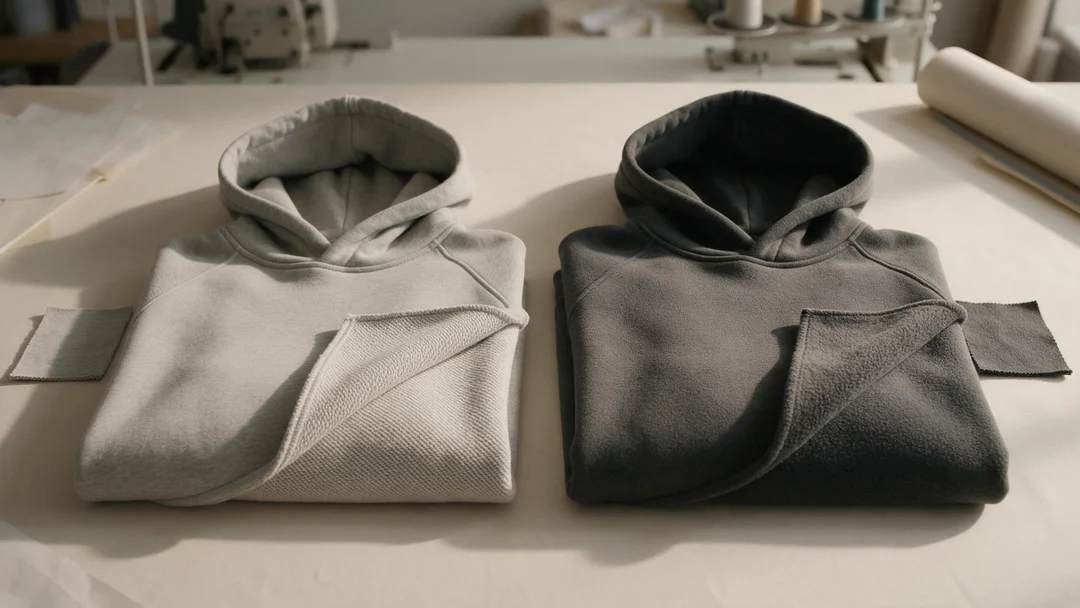
Separate pilling, loose fuzz and matting so everyone knows what appearance is being assessed. In everyday descriptions, pilling means small entangled fibre balls on the surface; fuzz is a raised layer of fibres; matting is a change in which surface fibres become flattened or tangled together. Use the laboratory's formal definitions when commissioning a test.
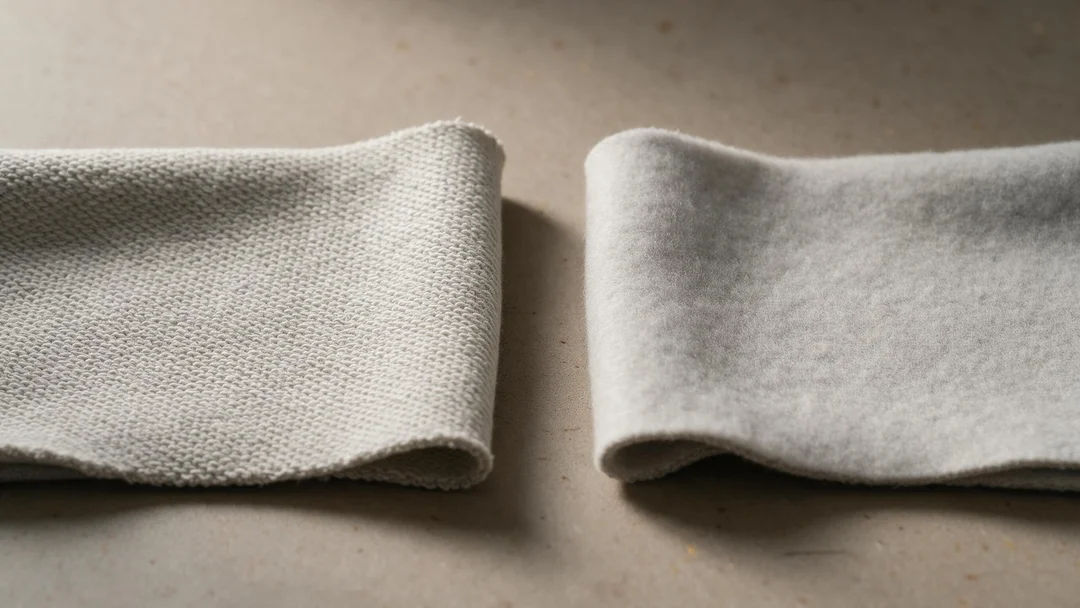
A soft brushed hoodie interior is deliberately raised. Its texture alone does not show that the fabric has failed a pilling test. Equally, an attractive photograph of a smooth outer face does not establish how that fabric will look after wear or washing.
Identify whether the concern is the outward-facing body fabric, the brushed or looped inside, the rib cuffs, or another material. Do not treat a result for the main fabric as an automatic approval of every component in the hoodie. Photograph the area of concern and label its location, while keeping the physical sample available for review.
Does French terry pill less than brushed fleece?
The construction name alone cannot settle the comparison. Yarn, fibre blend, construction and finishing can affect surface behaviour. Compare the actual candidate materials using an agreed assessment rather than declaring all French terry better than all brushed fleece.
Our French terry and brushed fleece comparison covers construction and handfeel choices. This article focuses on the next decision: what evidence is needed before accepting a chosen material.
2. Identify exactly what the report will represent
Tie the assessment to a traceable fabric reference and processing stage. “Grey hoodie fabric” is too vague if the sample room, mill and buyer are looking at different materials. Give the laboratory the available reference information and ask it to flag anything missing before testing.
Use the following brief to align the buyer, supplier and laboratory. Blank fields are questions to resolve, not permission to choose a convenient value later.
| Brief field | What to record or confirm |
|---|---|
| Material identity | Supplier fabric code, declared composition, construction, colour and available lot reference |
| Sample identity | Swatch or garment reference, date received and the person supplying it |
| Surface and component | Outer face, inner face, main fabric, rib or another specified component |
| Processing stage | Whether dyeing, brushing, washing and other intended finishes are complete |
| Preparation | Conditioning and any laundering pretreatment required by the agreed method or assessment plan |
| Method and settings | Standard number and edition, applicable procedure, test exposure and assessment stages |
| Acceptance agreement | Required result for each agreed stage, how observations are reported and who approves |
| Evidence and follow-up | Report, labelled images where appropriate, retained samples and action for disputed results |
Development swatch or production material?
A development swatch can help shortlist fabrics. It does not automatically represent a later production lot or a material changed during sourcing. Record what the tested specimen represents. If the selected yarn, construction or finishing route changes, ask whether the existing evidence still applies and whether a new assessment is needed.
For a garment-washed hoodie, an unfinished swatch and the finished garment may represent different stages. State the intended finishing sequence, then let the laboratory and supplier confirm a suitable sampling plan. Do not assume a test on an untreated fabric answers a question about the final washed surface.
Keep this material record with the tech pack and quotation brief. A file name, photo and sample label that point to the same reference make later discussions much easier.
3. Agree the method and acceptance criteria together
A test name without its conditions and acceptance criteria is an incomplete purchasing requirement. One example is ISO 12945-2:2020, whose public scope describes assessing textile resistance to pilling, fuzzing and matting using a modified Martindale method. That scope identifies an assessment method; it does not give your hoodie order a universal pass requirement.
Ask the laboratory to confirm that the proposed method is suitable for the material and intended assessment. Record the standard edition, specimen preparation, applicable settings, exposure or assessment stages, reporting approach and any deviations. The relevant standard and laboratory procedure should govern how the test is performed.
Why “Martindale tested” is not enough
The word Martindale can appear in discussions of both pilling and abrasion. A report describing abrasion resistance is not interchangeable with a report assessing pilling. Read the actual standard number and measured property instead of relying on the equipment name or the headline of a supplier's sales sheet.
Likewise, do not compare two ratings as though they mean the same thing when the methods, preparation or assessment stages differ. If a buyer receives reports that cannot be matched, ask the laboratory to explain the differences before using them to choose a fabric. Avoid inventing a conversion between unrelated results.
What pilling rating should a hoodie pass?
There is no single rating we can responsibly set for every hoodie from the garment name alone. The buyer's requirements, intended use and agreed assessment plan need to determine acceptance. Put those requirements in writing before testing so a disappointing result does not lead to a retrospective change of the goalposts.
If a brand already has a testing manual, share the relevant requirements and revision. If it does not, discuss an appropriate specification with the testing laboratory and supplier. A simple at-home wash or hand-rubbing exercise can raise a question about a sample; it should not be presented as a standardised laboratory result.
4. Review the report before approving the material
Check that the report answers the agreed question for the correct material. A report can be useful yet insufficient for the decision in front of you. An earlier swatch report, for example, may not resolve a concern about a changed finish on the production fabric.
Work through these four checks before recording approval:
- Match identity. Compare the report's sample description and reference with the fabric or garment under review. Resolve mismatched codes, colours or processing stages.
- Match the plan. Check the method, edition, preparation and assessment stages against the written brief. Ask about omitted information or deviations.
- Read the result and observations. Review each reported stage or surface that your requirement covers. A headline “pass” should be traceable to the agreed criteria.
- Record the decision. Save the report reference, approval owner, date and any unresolved conditions alongside the sample record.
Labelled photographs can help explain a concern, but lighting, scale and image processing affect what a viewer sees. Do not assign a formal grade from an unstandardised phone picture. If visual evidence conflicts with the report, use the laboratory's assessment process and the retained specimens to investigate.
If a result is disputed
First check sample identity and the test conditions. Then document the specific disagreement: the wrong material, a missing assessment stage, a result below the agreed requirement, or an appearance concern that the chosen test did not address.
Agree any repeat assessment or material revision in writing. Keep the first report rather than replacing it with the most favourable result. If a fabric or finish changes, record that change and decide what needs reassessment before approval. Do not infer a single manufacturing cause from a photograph alone.
Our sampling process guide explains how to keep revisions and approvals connected through development. Pilling review belongs within that record, alongside separate fit, measurement and appearance decisions.
5. Put the requirement into your hoodie development brief
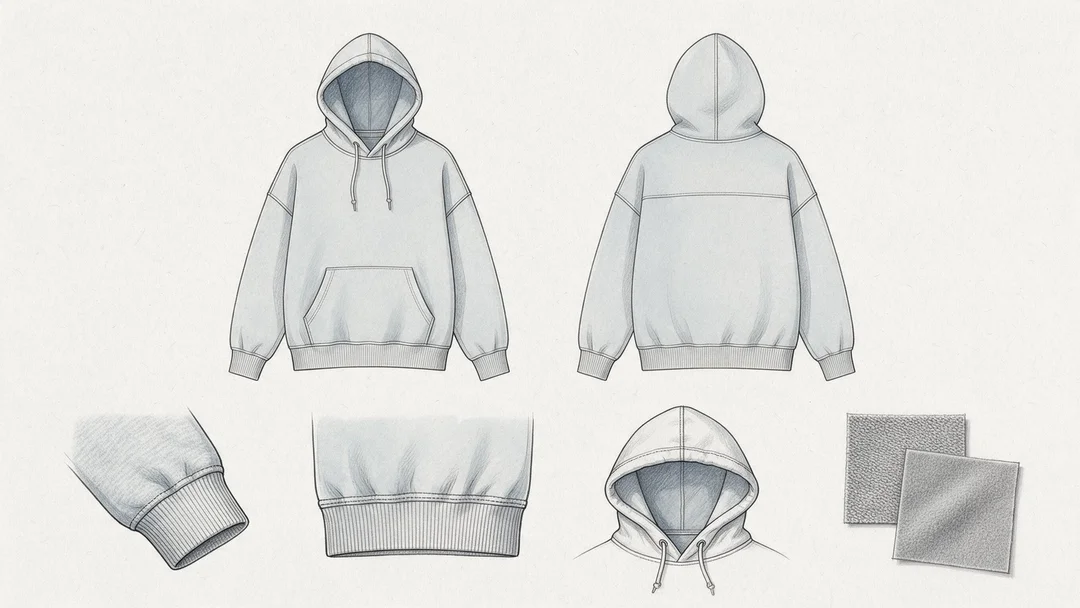
Send the intended use, material reference and assessment requirement with your hoodie enquiry. Include the style reference, preferred construction and composition, target handfeel, intended finish, quantity and any existing test specification. If you have a report, identify which sample it covers and what decision you need help making.
For broader material selection, use the clothing fabric sourcing guide. For a hoodie project, review the hoodie manufacturing page and its quotation brief. Bulk production timing is confirmed for each order in the written quotation. Testing scope, feasibility and any charges also need confirmation for the project.
Can a passing result guarantee that a hoodie will never pill?
No. A result describes performance under the reported test conditions. It does not reproduce every combination of wear, friction and care. Keep claims tied to the evidence rather than turning an agreed result into an “anti-pilling forever” promise.
Can one report cover every colour and later order?
Do not assume so. Check which material, colour, finish and lot the report represents. Ask the laboratory and supplier what additional sampling is appropriate when those inputs change.
Is pilling covered by a shrinkage test?
No. Dimensional change and surface appearance are different assessment questions. Coordinate any laundering preparation, but specify the properties and reports you need separately.
You can send a hoodie development enquiry with your material references and unresolved questions. Clearly marking what is decided and what still needs review is more useful than a brief that only says “good quality, no pilling.”
Technical reference: ISO 12945-2:2020, public title and abstract checked on 15 September 2026. The linked standard's full procedure is not reproduced here.