
Size & Fit
Clothing Size Grading Guide: Build a Size Chart That Survives Production
Grade rules, body vs garment measurements, and the exact size chart format factories need before they cut a single panel.
August 12, 2026 · 11 min read
Table of Contents
- 1. What Size Grading Actually Is
- 2. Body vs Finished Garment Measurements
- 3. Standard Grade Rules by Garment Type
- 4. Example: A Unisex T-Shirt Size Chart
- 5. How Grading Changes Cost and Fabric Use
- 6. What to Put in Your Tech Pack Size Chart
- 7. Six Grading Mistakes We See on Every Second Tech Pack
- FAQ
1. What Size Grading Actually Is
Size grading is the process of taking one master pattern and scaling it up or down into a full size range without redrawing every piece from scratch. The master pattern is usually the fit sample you approved. Graders then move every pattern point by a controlled amount along the width and length axes, following a set of grade rules.
Before grading a boxy or oversized T-shirt, define the base silhouette with the width, length and sleeve fit brief, then review how the intended proportions should carry across sizes.
Before grading a relaxed pants block, use the streetwear pants fit review to define the intended waist position, rise, thigh volume and hem shape in the base size.
Grade rules are the numbers that define those moves, usually per size step:
- Chest or bust: the width changes by roughly 1 inch (2.5 cm) per size for most tops.
- Length: the body length grows about 1/2 to 1 inch (1.3-2.5 cm) per size.
- Sleeve: the sleeve length grows about 1/4 to 1/2 inch (0.6-1.3 cm) per size.
- Waist and hip: usually 1 inch (2.5 cm) per size for bottoms.
- Inseam: often 1/2 inch (1.3 cm) per size, depending on the style.
These are starting points, not laws. A boxy streetwear hoodie grades differently from a slim fit dress shirt, and a stretch activewear legging grades differently from a rigid denim jean. The job of the grader is to keep the fit intent consistent across the range, not to blindly apply a template.
2. Body vs Finished Garment Measurements
If you do not yet have a size chart, use the adult US, UK and European size reference to identify a target body-size range. Then define the finished-garment measurements and intended fit before sampling.
The most common size chart mistake is mixing these two sets of numbers.
Body measurements describe the person: chest, waist, hip, height, sometimes arm and leg length.
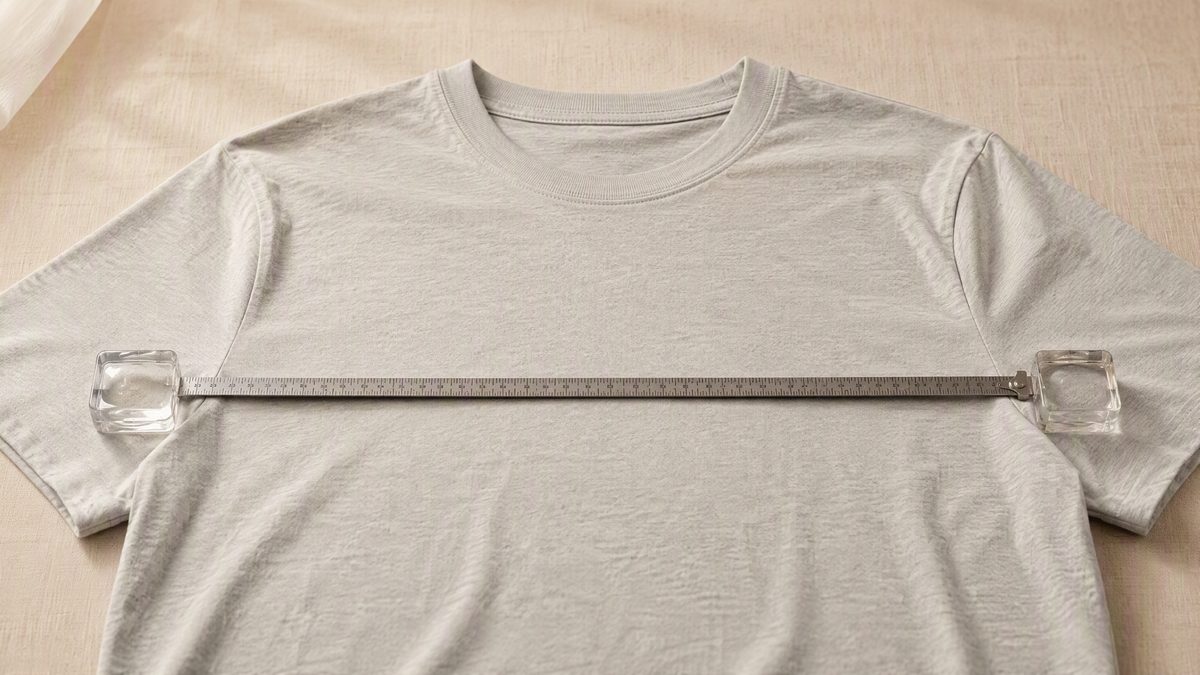
Finished garment measurements describe the product: the actual chest width of the garment lying flat, the waistband, the body length, the sleeve length.
Factories cut and sew to finished garment measurements. Your size chart in the tech pack must therefore be a garment measurement chart, with ease already built in.
Ease is the difference between the body and the garment. A relaxed t-shirt might have 2-4 inches of chest ease. A fitted activewear top might have negative ease, meaning the fabric stretches to fit. If you send only body measurements, the factory has to guess your intended ease, and every guess is a risk.
For most first orders, write the finished garment measurements first and add a short note on intended ease. That removes the ambiguity without turning the chart into an essay.
3. Standard Grade Rules by Garment Type
| Garment type | Grade point | Typical per-size increment | Notes |
|---|---|---|---|
| Knit t-shirt / top | Chest | 1 in (2.5 cm) | Fabric stretches; width grading dominates |
| Knit t-shirt / top | Body length | 1/2-1 in (1.3-2.5 cm) | Longer grades for oversized fits |
| Hoodie / sweatshirt | Chest | 1 in (2.5 cm) | Keep sleeve drop consistent or the armhole shifts |
| Hoodie / sweatshirt | Sleeve length | 1/4-1/2 in (0.6-1.3 cm) | Raglan and set-in sleeves grade differently |
| Woven dress | Bust / waist / hip | 1 in (2.5 cm) each | Waist can grade less if the style is fitted |
| Woven dress | Length | 1 in (2.5 cm) | Hem design changes the number |
| Pants / jeans | Waist | 1 in (2.5 cm) | Stretch fabric may grade less |
| Pants / jeans | Hip | 1 in (2.5 cm) | Higher rise styles often need more hip room |
| Pants / jeans | Inseam | 1/2 in (1.3 cm) | Cropped styles grade near zero |
Two practical notes:
- Knit fabrics are forgiving, so a simple width-and-length grade works for most basic tees and hoodies.
- Woven, tailored, and fitted garments need more careful grading because there is no stretch to absorb error.
If your brand targets plus sizes or children's sizes, grade rules often change at size boundaries rather than staying linear. State the size range clearly in the tech pack and ask the factory to show you the grade rule sheet before cutting.
4. Example: A Unisex T-Shirt Size Chart
Here is a simplified finished-garment chart for a unisex midweight t-shirt, XS-XXL. These are garment measurements, not body measurements.
| Size | Chest (in) | Body length (in) | Sleeve length (in) | Shoulder (in) |
|---|---|---|---|---|
| XS | 36 | 26 | 7.5 | 16 |
| S | 38 | 27 | 8 | 16.75 |
| M | 40 | 28 | 8.5 | 17.5 |
| L | 42 | 29 | 9 | 18.25 |
| XL | 44 | 30 | 9.5 | 19 |
| XXL | 46 | 31 | 10 | 19.75 |
The grade increments are simple: chest 2 inches per size (1 inch each side), length 1 inch, sleeve 1/2 inch, shoulder 3/4 inch. Every number in the chart is a target for the sewing line, not an optional suggestion.
For a hoodie, you would follow the same logic but with more length and a relaxed chest. Our hoodie GSM guide covers the fabric side of the same decision.
5. How Grading Changes Cost and Fabric Use
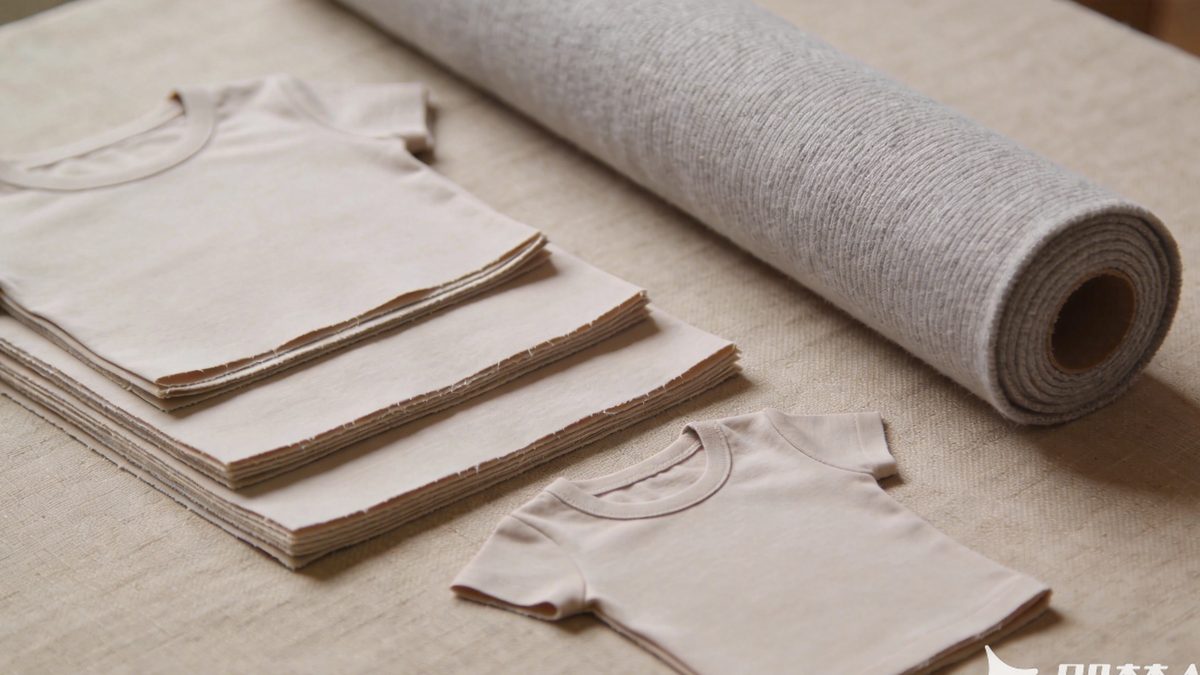
Grading affects more than fit. It changes how efficiently fabric is consumed, which affects material planning and the unit price.
- Fabric consumption is measured per size, not per style. Larger sizes use more fabric, so the average cost of a mixed-size order is higher than the cost of an all-S order.
- Marker efficiency. The factory lays out all pattern pieces together on a fabric spread. A range with sensible grade increments lays tighter, wasting less fabric. Random or inconsistent increments create gaps that increase fabric waste.
- Size plan. Confirm the size breakdown and grade rules in the written quote before sampling.
- Sampling. Grade a size range before bulk only after the fit sample is approved. Skipping graded samples and going straight to bulk is the fastest way to get a whole range of returns.
The cost effect is usually a few percent, not a few dollars. But when you see a surprising price jump between S and XXL in a quote, ask for the fabric consumption per size. That number explains most of the difference.
6. What to Put in Your Tech Pack Size Chart
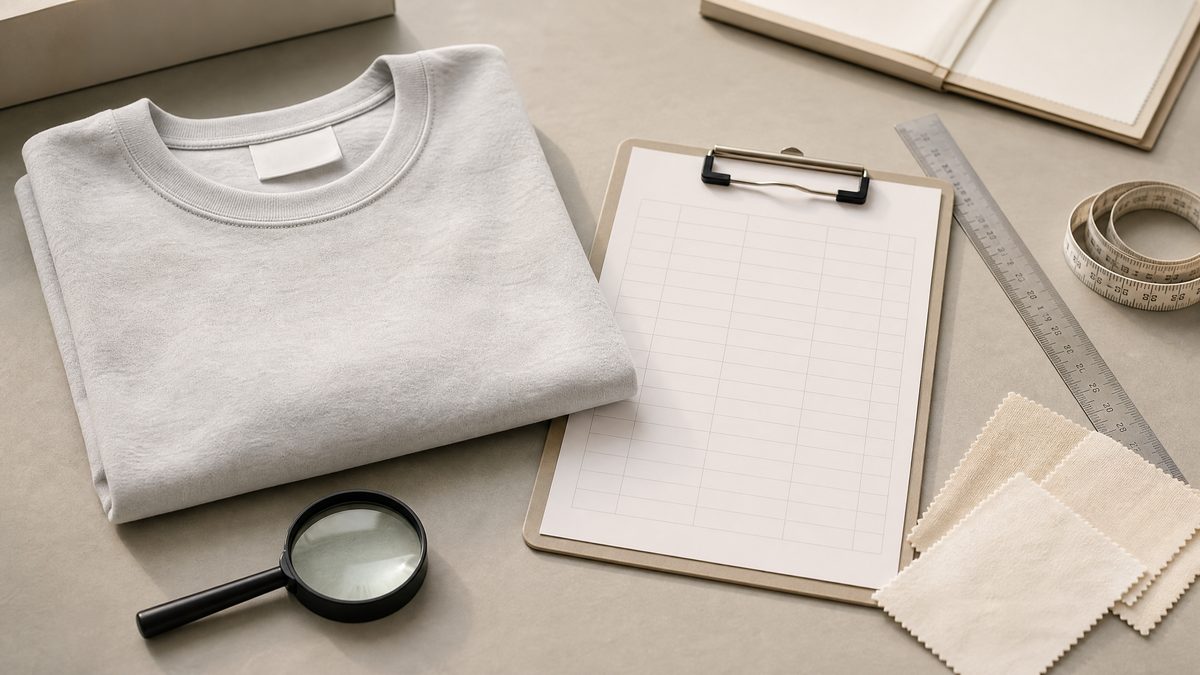
A production-ready size chart has five parts:
- Size range - XS-XXL, numeric sizes, or both. State whether it is unisex or gender-specific.
- Finished garment measurements - chest, waist, hip, length, sleeve, shoulder, inseam as relevant, with units.
- Tolerance - the agreed lower and upper deviation for each measurement point, using the defined method and garment condition. Confirm these limits during sampling.
- Grade increments - the per-size change in each measurement, so the factory can check the pattern before cutting.
- Ease note - one line on intended fit, for example "relaxed fit, 4 in chest ease" or "form fit, 0.5 in negative ease".
Our tech pack template guide shows how the full document comes together. The size chart is one page of that document, and it should never be a screenshot of a brand you copied.
7. Six Grading Mistakes We See on Every Second Tech Pack
- Copying a supplier's chart without checking it. The chart may be for a different fit, different fabric, or different market. Verify every number against the approved sample.
- Mixing body and garment measurements. The factory cuts one, you think you specified the other.
- No tolerance. Perfect is not achievable in sewing; without a tolerance, QC becomes an argument.
- Grading stretch fabric like woven. A stretch legging and a rigid jean cannot share the same grade rules.
- Only one sample size. A size M sample tells you nothing about whether the XXL is wearable.
- Changing the size chart after bulk starts. Every change after pattern approval can require a new pattern, new samples, and a revised schedule. Bulk production timing is confirmed in the written quote for each order.
None of these are dramatic failures on their own. Together they are how a brand ends up with 400 pieces that fit nobody.
FAQ
What is the difference between size grading and pattern grading?
They are the same process. Pattern grading and size grading both mean scaling a master pattern into a size range using grade rules.
How much does size grading cost?
Most factories include standard grading in the sampling and development fee. Major fit changes or a new size range may add a small pattern development charge. Ask for the grade rule sheet when you approve the fit sample.
How should I confirm my size breakdown?
Send your planned size breakdown and measurement chart so the grading scope can be reviewed and confirmed in the written quote.
What tolerance should my size chart use?
Agree the measurement method, garment condition and permitted lower and upper deviation for each point using the approved fit and construction. Confirm the limits during sampling. A dimensional tolerance does not determine the sample size or the shipment decision; use the agreed inspection plan for those decisions.
For hoodies, agree the measurement method and point-by-point limits before bulk production.
Do I need a graded sample before bulk?
Yes, if you are ordering more than one size. Approve the fit sample first, then request a graded sample of at least the smallest and largest sizes. That catches the two ends of the range where grading errors are most visible.
Planning a size range?
Send us your size chart and fit sample - we will check the grade rules, quote sampling, and flag anything that will not survive production.
Get a Free Quote →