
Garment Dyeing & Wash Finishes
What Is Garment Dyeing? Process, Dye Types & Production Risks
Garment dyeing colors a garment after it has been sewn. Fabric, colorant and finishing determine whether the result is a clean solid shade or a washed appearance; the completed garment also needs measurement and trim review.
August 22, 2026 · Updated October 9, 2026 · 13 min read
Related dyeing guides
This guide supports our garment dyeing service and production page. Related controls are explained in the color matching, shrinkage, and colorfastness guides.
Table of Contents
1. What Garment Dyeing Means
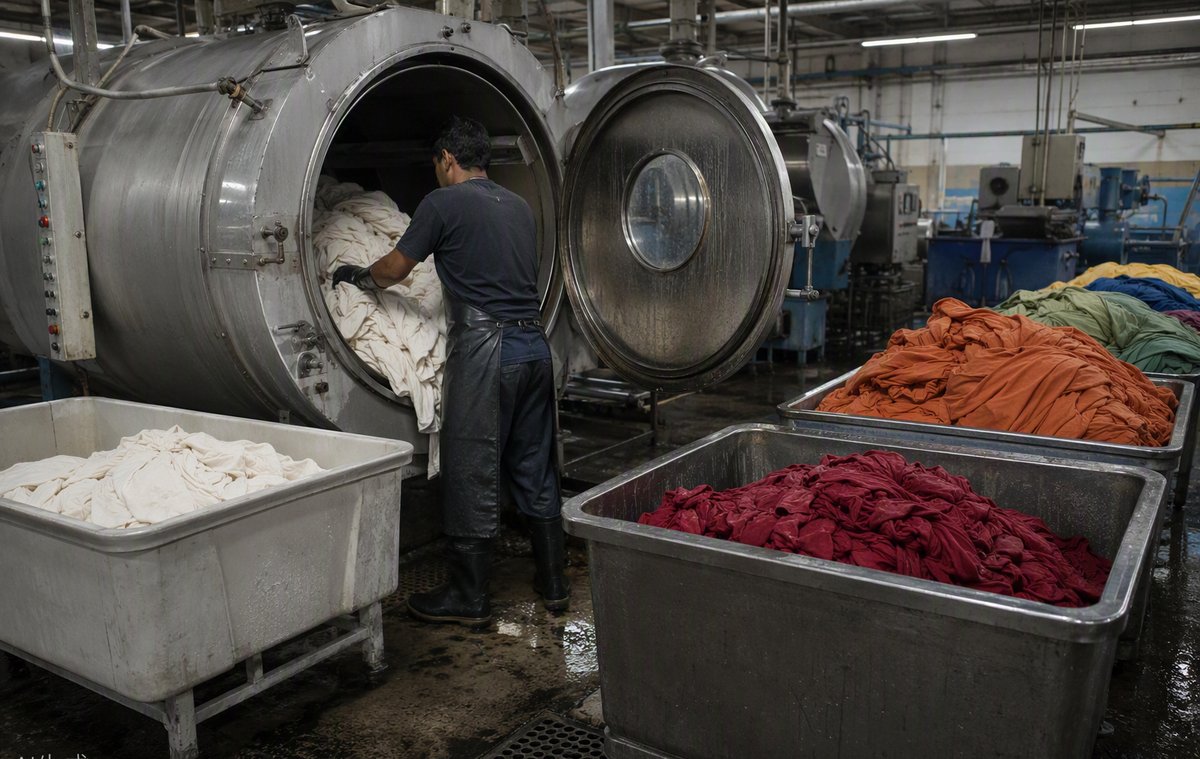
Garment dyeing means sewing a garment from undyed or prepared fabric first, then coloring the completed product in a dye bath. The dye reaches the body fabric, seams, rib, labels and exposed trims after construction.
The term describes when color is applied, not a guaranteed vintage finish. Reactive garment dyeing can produce clean solid shades; pigment color and later washing can create a faded effect. Fabric, colorant, components and finishing must be reviewed together. A standard white garment is not automatically prepared to dye evenly or finish at the intended measurements.
2. Garment Dye vs Piece Dye
Piece dyeing colors fabric before cutting and sewing. Garment dyeing reverses the sequence. Neither method is automatically better; they solve different product and supply-chain problems.
| Decision | Garment Dye | Piece-Dyed Fabric |
|---|---|---|
| Color timing | After sewing | Before cutting |
| Appearance | Clean or washed shades, depending on colorant and finishing | Shade is developed on fabric; later garment washing can still alter the look |
| Color flexibility | Undyed inventory can be split into later color decisions | Color commitment happens before garment production |
| Construction risk | Threads, rib, trims and interlinings may take color differently | Components can be selected to match the known fabric color |
| Measurement risk | Dyeing and drying occur after sewing | Main wet processing happens before sewing |
| Best use | Premium basics, vintage color and flexible color allocation | Programs demanding tighter repeatability and large replenishment |
Choose the dyeing stage around construction, color allocation and reorder needs. Then choose the colorant and finishing route for the desired appearance. Neither route guarantees an exact shade match or a washed handfeel without sample review.
For a full decision framework covering color commitment, sourcing, trims, size control and reorders, continue to garment dye vs piece dye.
3. The Garment Dye Process
- Product review: confirm fiber content, fabric weight, seams, thread, rib, labels, hardware, color reference and target appearance.
- Prepare the substrate: use clean, absorbent fabric without finishes that block dye uptake. Knits should be relaxed and dimensional behavior understood before cutting.
- Sew the PFD garment: construct the product with dye-compatible thread and trims. The pre-dye measurements include planned process shrinkage.
- Develop the color: formulate the dye on the actual substrate. A lab dip helps establish direction, but a full dyed garment remains the production standard.
- Dye a sample garment: check shade, seam puckering, rib behavior, print or label reaction, handfeel and post-dye measurements.
- Run the bulk batch: control machine load, liquor ratio, time, temperature, pH and chemical additions according to the approved recipe.
- Wash off and finish: remove unfixed color, apply the agreed after-treatment, extract water and dry under controlled conditions.
- Measure and inspect: compare shade to the approved garment, record batch variation, verify measurements and complete the required colorfastness tests.
For a factory-facing overview of production options, sourcing and common defects, see our custom garment dyeing page.
4. PFD and RFD Garment Rules
PFD usually means prepared for dyeing. RFD is often used to mean ready for dyeing. Suppliers do not always use these terms identically, so the abbreviation alone is not a specification.
A suitable garment-dye base should be clean, absorbent and free from incompatible finishes. Cotton Incorporated notes that preparation helps both clean and relax the material; resins and some softeners can interfere with dyeing. Knitted fabrics also need relaxation to reduce torque, seam puckering and uncontrolled shrinkage during later wet processing.
- Confirm fiber composition for body fabric, rib and thread.
- Remove or avoid optical brighteners when they conflict with the target shade.
- Do not apply water-repellent, resin or heavy softener finishes before dye approval unless the process has been tested.
- Check fabric absorbency and residual shrinkage before bulk cutting.
- Keep one approved PFD garment and one approved dyed garment as physical standards.
5. Reactive Dye vs Pigment Color
Most cotton garment-dye programs discuss two broad visual directions: reactive dye and pigment color.
Reactive garment dyeing
Fiber-reactive dyes form chemical bonds with cellulosic fibers such as cotton. They are used when the goal is a cleaner, more saturated solid color with good wash performance. The dye chemistry, fixation and wash-off stages must be controlled so hydrolyzed or unfixed dye does not remain on the garment.
Pigment garment color
“Pigment dye” is common commercial language, but pigments are technically insoluble colorants rather than fiber-reactive dyes. They remain near the surface and require a binder. This surface character is useful for faded, chalky and vintage effects, but binder level and curing affect handfeel, crocking and how the color ages.
| Factor | Reactive | Pigment |
|---|---|---|
| Visual direction | Cleaner and more saturated | Washed, faded and vintage |
| Color location | Bonded with cotton fiber | Held mainly on the surface by binder |
| Handfeel risk | Usually softer when properly washed off | Too much binder can create a firmer surface |
| Aging | Designed to retain a more stable solid shade | Expected to develop visible wear and fading |
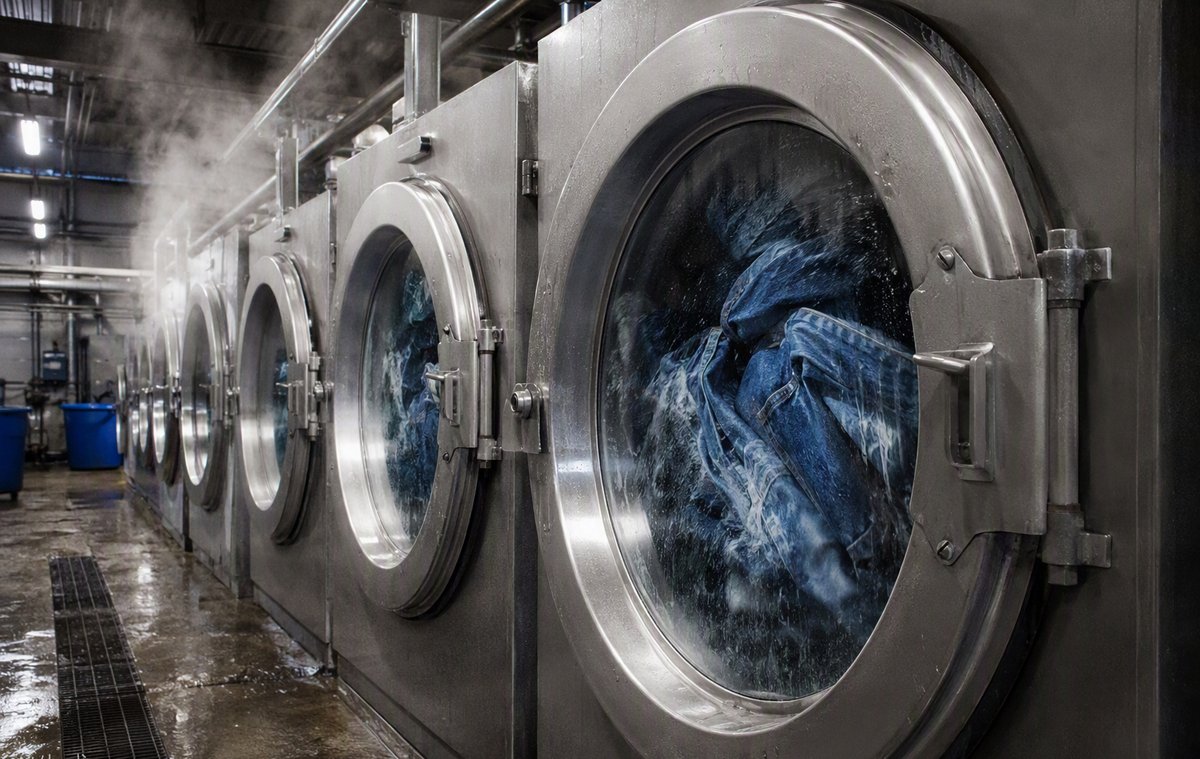
Garment dyeing can be followed by an enzyme wash to soften the surface, or combined with more aggressive effects such as stone wash and snow or acid wash. Each added wet process changes shade, strength, measurements and variation, so the full finish sequence must be sampled together.
6. Construction and Trim Risks
The dye bath exposes every component to heat, water, chemicals and mechanical action. A garment can match color in the body fabric and still fail because its thread, rib, label or zipper behaves differently.
- Sewing thread: cotton or dye-compatible corespun thread can be selected when tonal seams are required. Standard polyester may stay lighter and create contrast.
- Rib and elastic: blended rib can take color differently from the body. Elastic heat tolerance and recovery should be checked after processing.
- Interlinings: shrinkage or matting inside waistbands and plackets can create puckering even when the outside fabric looks acceptable.
- Zippers and hardware: tape color, metal finish and chemical resistance must match the dye route. Confirm whether hardware is attached before or after dyeing.
- Labels and prints: woven labels, heat transfers and screen prints may change color or adhesion. Test the final sequence rather than approving each component separately.
7. Shrinkage and Size Control
Garment dyeing occurs after the garment is assembled, so the product must land on the finished size chart after dyeing and drying. The factory may need to relax or compact the fabric, adjust the pattern, control drying and measure the dyed sample before grading is finalized.
A practical approval sequence is:
- Test residual shrinkage on the prepared fabric.
- Sew the sample using a provisional compensation allowance.
- Dye and dry it with the intended production recipe.
- Measure every point against the finished garment specification.
- Correct the pattern and repeat when critical points fall outside tolerance.
- Apply the approved logic across the size range and verify core sizes.
Use the fabric shrinkage test guide for calculation and tolerance planning, and the size grading guide when the post-dye block must be scaled across sizes.
8. Color Approval and Quality Control
Color control starts with a physical standard and continues at batch level. A lab dip helps approve the formula direction, but the bulk reference should include an approved dyed garment because seams, thickness and finishing change the visual result.
| Checkpoint | What It Protects |
|---|---|
| Lab dip and dyed sample | Target shade and process direction |
| Batch shade comparison | Lot-to-lot and piece-to-piece consistency |
| Dimensional change | Finished measurements and later home laundering |
| Wash fastness | Color change and staining during laundering |
| Dry and wet crocking | Surface color transfer during rubbing |
| Perspiration fastness | Color change and transfer in wear conditions |
| Appearance after laundering | Seams, puckering, twisting and overall garment condition |
AATCC publishes recognized test methods including TM8 for crocking, TM15 for perspiration, TM150 for dimensional change and TM143 for appearance after home laundering. The buyer and factory should agree the exact method, care condition and acceptance criteria for the destination market.
For the approval workflow, read the lab dip and shade band guide. For test selection and rating logic, use the fabric colorfastness guide.
9. What to Send for a Garment Dye Quote
- Garment reference, design views or an existing tech pack; mark details that still need development.
- Target fiber composition, fabric construction and GSM.
- Color reference, ideally a recognized physical standard.
- Reactive solid color or pigment vintage direction.
- Reference size and fit requirements; include a measurement chart and tolerances if already agreed.
- Thread, rib, zipper, elastic, label and print requirements.
- Destination-market and buyer test requirements, including wash, crocking, perspiration or dimensional checks where applicable.
- Quantity by style, color and size.
- Destination market and target delivery date.
Garment-dyed programs are common for custom T-shirts and custom hoodies. Start with the details you know and identify open questions. Use the clothing project brief to organize them; the base garment, dye route, measurements, test scope and costs must be agreed before sampling and production approval.
FAQ
What is a garment-dyed T-shirt?
It is a T-shirt sewn from prepared fabric and colored after construction. Its final shade and handfeel depend on the fabric, colorant and finishing, so garment-dyed does not automatically mean faded or vintage.
Does garment dyeing make clothes shrink?
The wet process and drying can change measurements. A production-ready program accounts for this with prepared fabric, pattern compensation, controlled drying and post-dye measurement approval.
What is the difference between PFD and RFD?
PFD usually means prepared for dyeing and RFD often means ready for dyeing. Because suppliers may use the terms differently, confirm absorbency, preparation, finishes, residual shrinkage and compatibility rather than relying on the abbreviation alone.
Is pigment dye the same as reactive dye?
No. Reactive dye bonds with cellulosic fiber. Pigment is an insoluble colorant held mainly on the surface with a binder. Reactive color is generally cleaner and more saturated, while pigment color is chosen for a faded vintage effect.
Can a factory match an exact garment-dye color?
Color matching feasibility depends on the fabric, components and dye route. Review a physical color reference, approve a dyed garment and agree the acceptable tolerance before bulk. A color code alone does not guarantee an exact match across batches.
Which fabrics are best for garment dyeing?
Cotton and other cellulosic fibers are the most common because suitable dye systems are well established. Blends, polyester and mixed-component garments require separate compatibility review and may not produce a tonal result.
Planning a garment-dyed collection?
Send your garment, fabric, target shade, finish direction and quantity. We will review PFD construction, sampling, shrinkage and the bulk QC plan together.
Request a Garment Dye Quote →Technical References
- Cotton Incorporated: Garment Dyeing of Cotton Apparel
- CottonWorks: Dyeing Basics
- CottonWorks: Lab Dip Process
- AATCC: Standard Test Methods and Procedures