
Garment Dyeing & Wash Finishes
Garment Dye vs Piece Dye: Which Is Better for Your Clothing Line?
Compare when color is applied, how components are assembled and when quantities are split by color. The dyeing stage alone does not determine a washed look, exact shade matching or reorder consistency.
August 23, 2026 · Updated October 9, 2026 · 14 min read
Related dyeing guides
This comparison belongs to our garment dyeing and wash finishes cluster. Start with what garment dyeing means, then use the color approval, shrinkage, and colorfastness guides to build the control plan.
Table of Contents
1. Garment Dye vs Piece Dye: The Short Answer
Garment dyeing colors the completed sewn garment. Piece dyeing colors fabric in roll or rope form before cutting and sewing. The best route depends on the product promise, the required color character, the order plan and how much variation the brand can accept.
Consider garment dye when
You plan to divide compatible prepared garments into colors after sewing and can review the complete garment through dyeing and finishing. Confirm shade, component response and final measurements on a sample.
Consider piece dye when
You want to review the colored fabric before cutting, select components against it and plan repeat fabric orders. Retained color standards and agreed tolerances are still needed.
Neither process guarantees low cost or fast delivery by itself. Dye machine suitability, fabric availability, color count, testing, trims and the factory's production plan determine the commercial result. Treat the dye route as a development decision, not a styling label.
2. What Each Dyeing Route Means
Garment dyeing
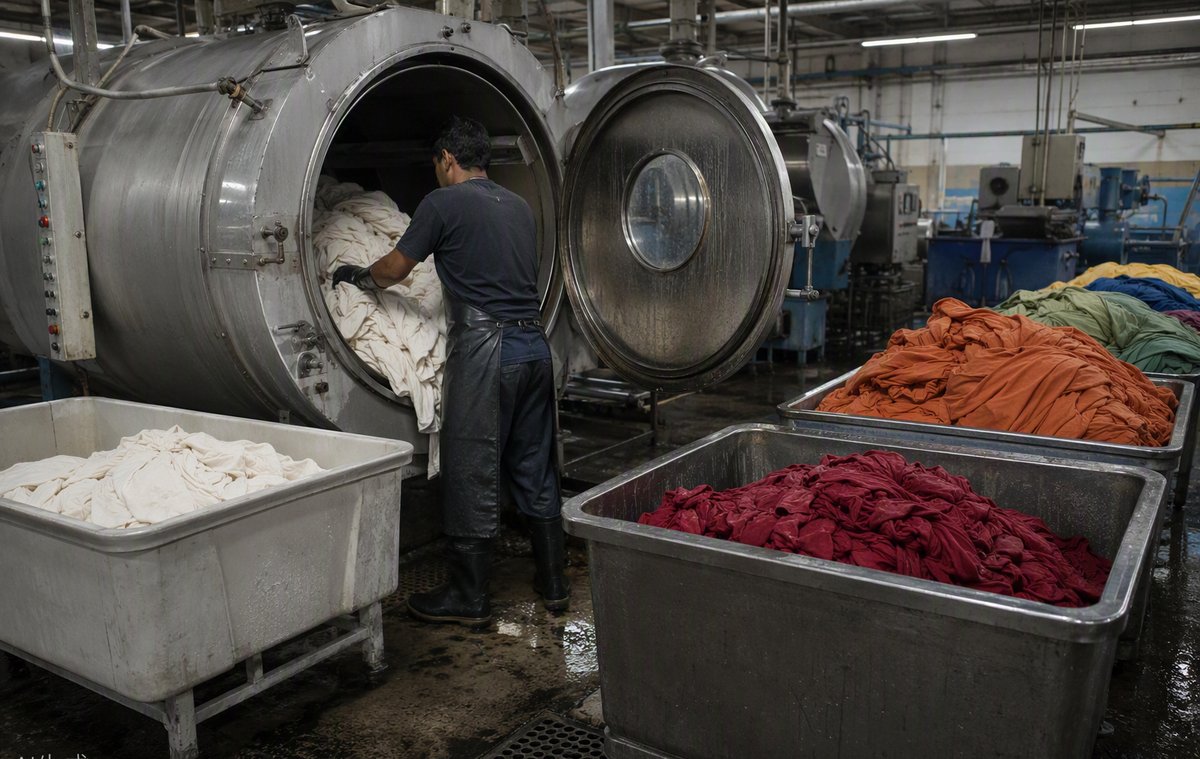
In garment dyeing, a factory first cuts and sews a PFD garment, then places the finished product into a dyeing machine. PFD commonly means prepared for dyeing. The body fabric, rib, seams, thread and exposed trims go through the wet process together. Washing, extraction and drying happen after assembly.
This sequence exposes seams, edges and components to the same wet process. The appearance depends on colorant and finishing; differences can emerge because not every fiber or component absorbs color in the same way. Our complete garment dyeing process guide explains PFD preparation, reactive and pigment routes, and bulk controls in detail.
Piece dyeing
Piece dyeing means coloring fabric rather than fiber, yarn or finished garments. The mill dyes the fabric before garment cutting. The colored fabric can then receive finishing, inspection and dimensional stabilization before it reaches the sewing line.
Because the main wet process occurs before assembly, the garment factory can choose thread, rib, zippers and labels against a known fabric shade. However, the brand commits to fabric colors earlier, so each shade needs sourcing and dyehouse review.
3. Garment Dye vs Piece Dye Comparison
| Decision Factor | Garment Dye | Piece Dye |
|---|---|---|
| Color stage | After cutting and sewing | Before cutting and sewing |
| Appearance | Clean or washed shades, depending on colorant and finishing | Color is developed on fabric; later garment washing can change the finish |
| Color commitment | Prepared garment inventory can be divided into colors later | Fabric color is committed before garment production |
| Reorder matching | More batch character and a greater need for retained standards | Usually better suited to repeat solid-color programs |
| Trim matching | Every attached component must survive and react correctly in the dye bath | Components can be selected against dyed fabric |
| Measurement risk | Dyeing and drying occur after sewing, so the pattern must account for the process | Main fabric shrinkage can be evaluated before cutting |
| Surface effects | Strong option for seam highs, fading and washed effects | More dependent on later garment washing for surface effects |
| Best product fit | Cotton T-shirts, sweatshirts, hoodies and casual separates | Core replenishment styles, tailored products and many technical fabrics |
The comparison is not absolute. A piece-dyed garment can be washed for softness, while a well-controlled reactive garment-dye program can produce clean shades. The approved sample and written tolerance define the result more reliably than the process name alone.
4. When to Choose Each Route
Garment dye is usually stronger for
- Premium cotton basics with a soft, casual identity.
- Collections built around faded, mineral or vintage color.
- Programs that hold prepared garments before the final color split.
- Designs where seam and edge character supports the product story.
- Small color capsules that can share the same PFD garment construction.
Piece dye is usually stronger for
- Core colors that must be reordered across seasons.
- Products needing a clean, uniform appearance.
- Styles with complex trims, contrast components or structured construction.
- Performance knits with specific moisture, stretch or surface finishes.
- Large programs where fabric can be planned efficiently by color.
A brand can use both routes in one collection. For example, a core black tee may use piece-dyed fabric for repeatability, while a seasonal washed color uses garment dyeing for character. Keep the specifications and approval standards separate so production does not treat them as equivalent color programs.
5. Color, Handfeel and Appearance
Garment dyeing exposes the sewn product to dye, water, heat and mechanical movement. Seams, hems and thicker areas can develop subtle tonal differences. A subsequent enzyme wash can reduce surface fuzz and soften cotton, while more aggressive washes create stronger highs and lows.
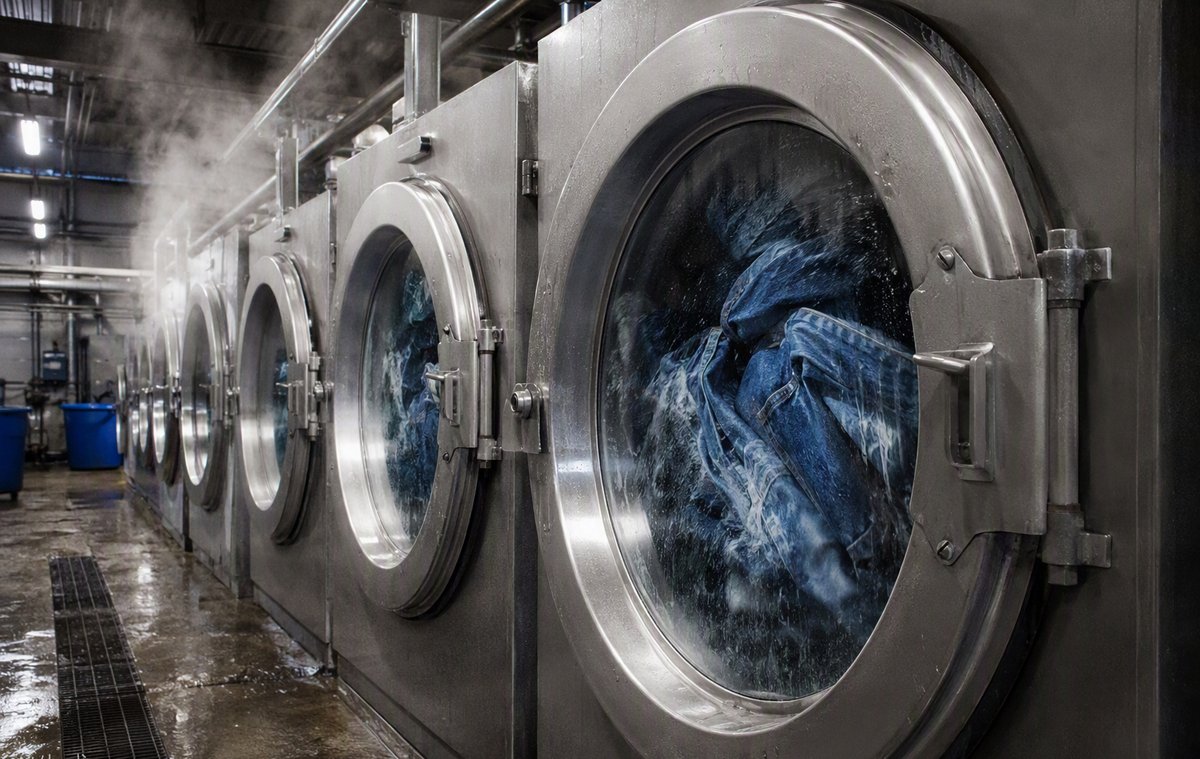
Piece-dyed fabric normally gives the garment factory a more uniform starting material. Handfeel then depends on fabric construction and the mill's finishing route. A soft piece-dyed jersey can still feel relaxed, but it will not automatically show the same seam character as a garment dyed after construction.
Dye chemistry also changes the result. Fiber-reactive dyes bond with cellulosic fibers and are often chosen for cleaner cotton shades. Pigments are insoluble and require a binder, which places color closer to the surface and supports a faded appearance. These are separate decisions: garment dye versus piece dye concerns the stage of production, while pigment versus reactive color concerns the colorant and its behavior. Confirm both choices in the development brief.
6. Sourcing, Cost and Lead Time
One PFD garment base can be developed into several colors, but each shade still needs a suitable dye process, compatible construction and approval. Discuss machine suitability, possible surcharges and shade risk with the dyehouse.
Piece dyeing commits the project to fabric colors before assembly. It can suit repeat programs because the fabric mill processes a planned yardage, the garment factory works with a stable shade, and reorders follow an established fabric specification.
| Cost Driver | Questions to Ask |
|---|---|
| Dyehouse batch | Which machine and process will be used for each color? |
| Base material | Is PFD fabric in stock, or must it be knitted, woven and prepared? |
| Color development | How many lab dip or garment sample rounds are included? |
| Wet processing | Does the quote include wash-off, softener, enzyme treatment and controlled drying? |
| Testing | Which colorfastness, dimensional and appearance tests are required? |
| Sorting and rework | How are off-shade pieces, stains and measurement failures handled? |
Lead time should include color approval, sample dyeing, measurement correction and bulk shade review. Compare full approved processes, not an undyed garment price against a finished piece-dyed garment price. Our clothing cost breakdown shows how fabric, labor, trims, finishing and testing combine in a factory quote.
7. Construction and Trim Risks
Garment dyeing makes construction part of the dye specification. Standard polyester thread may remain lighter than a cotton body, blended rib may absorb differently, and elastic can lose recovery under heat. Interlining can shrink inside a placket, zipper tape can shift shade, and pre-applied prints or transfers may lose adhesion.
- Thread: specify tonal, contrast or intentionally undyed seams before sampling.
- Rib: test the actual body and rib combination for shade and shrinkage.
- Elastic: confirm chemical and temperature resistance after the full cycle.
- Hardware: decide whether zippers, snaps and metal trims are installed before or after dyeing.
- Labels and decoration: test woven labels, care labels, prints and heat transfers in the intended sequence.
Piece dyeing moves many of these decisions after fabric color approval, which makes matching easier. It does not remove risk. Separate fabric lots, mismatched rib suppliers and different trim dye lots can still create visible shade differences.
8. Shrinkage and Size Control
With garment dyeing, the product must reach its finished size after the dye and drying cycle. The factory needs residual shrinkage data for the prepared fabric, a provisional pattern allowance, post-dye measurements and a corrected size set before bulk.
Piece-dyed fabric is wet processed before cutting, so the mill can finish and stabilize it first. The garment still needs laundering tests because home care can change length, width, spirality and seam appearance. Use the fabric shrinkage testing guide to calculate dimensional change and connect the result to pattern decisions.
9. Sampling and Quality Control
Color development for either route starts with a defined physical standard. CottonWorks describes lab dipping as the first stage of developing and approving a product color. The formula is tested on the prepared substrate, measured against master spectral data, adjusted when needed and then scaled for production.
For garment dye, add a full dyed garment approval after the lab dip. It shows seam color, handfeel, trim reaction and finished measurements together. For piece dye, approve the lab dip and bulk fabric shade before cutting, then retain roll and garment references.
- Define the color standard, fiber composition, substrate and viewing conditions.
- Approve the lab dip on the correct prepared material.
- Approve a full garment or finished fabric reference for bulk.
- Set the shade tolerance and rules for within-piece and piece-to-piece variation.
- Test wash fastness, dry and wet crocking, perspiration and dimensional change as required.
- Inspect bulk by dye lot and keep retained samples for reorders.
AATCC lists TM8 for crocking, TM61 for accelerated laundering, TM15 for perspiration, TM135 for fabric dimensional change and TM150 for garment dimensional change. The buyer and supplier must agree the current test edition, care procedure and pass criteria for the destination market. See our colorfastness test guide for a buyer-facing control plan.
10. Buyer Decision Checklist
- Is the product promise clean and repeatable, or soft and visibly washed?
- Will the color be reordered, or is it a limited seasonal shade?
- Can every thread, rib, label, elastic and trim follow the garment dye process?
- Does late color allocation create real inventory value for this program?
- What fabric and dye-process details need approval for each color?
- How will the factory correct measurements after the full wet process?
- Which physical sample becomes the bulk shade and appearance standard?
- Which tests and tolerances apply before shipment?
For custom T-shirts and custom hoodies, send both the visual reference and the commercial plan. A factory needs the target appearance, fiber, GSM, color count, quantity, reorder expectation, trims and test requirements to recommend the correct route.
FAQ
Is garment dye better than piece dye?
Neither is universally better. Garment dyeing can allow color allocation after sewing; piece dyeing lets the colored fabric be reviewed before cutting. Choose around construction, fabric availability and reorder needs, then approve the required shade and finish on a sample.
What is the main difference between garment dye and piece dye?
The difference is production sequence. Garment dyeing colors a sewn garment, while piece dyeing colors fabric before it is cut and sewn.
Which route gives better color consistency?
Piece-dyed fabric is generally easier to manage for clean repeat solid colors. Garment dye can also be controlled, but brands should expect a defined level of batch and surface character.
Can polyester garments be garment dyed?
Polyester requires different dye chemistry and higher processing temperatures than cotton. Mixed fibers, thread and trims need compatibility testing, so a standard cotton garment-dye route should not be assumed.
Should I approve a lab dip or a full garment?
Approve both when using garment dye. The lab dip controls color direction, while the full dyed garment confirms seams, trims, handfeel, shrinkage and finished appearance.
Need help choosing the dye route?
Send the product reference, fabric, colors, quantities and finish target. We will review sampling, component risk, shrinkage and the bulk QC plan.
Request a Dyeing Review →Technical References
- CottonWorks: Piece Dyeing
- Cotton Incorporated: Garment Dyeing of Cotton Apparel
- CottonWorks: Lab Dip Process
- AATCC: Standard Test Methods and Procedures