
Garment Dyeing & Wash Finishes · Design Journal
Pigment Dye vs Reactive Dye for Clothing: Which Color Direction Fits Your Design?
A visual and production-focused comparison of the faded character of pigment dye and the clean saturation of reactive dye.
August 31, 2026 · 8 min read
Topic Cluster
This comparison belongs to our garment dyeing and wash finishes cluster. Start with the garment dyeing process guide, then use this article to choose the color direction before sampling.
In This Guide
1. The Short Answer
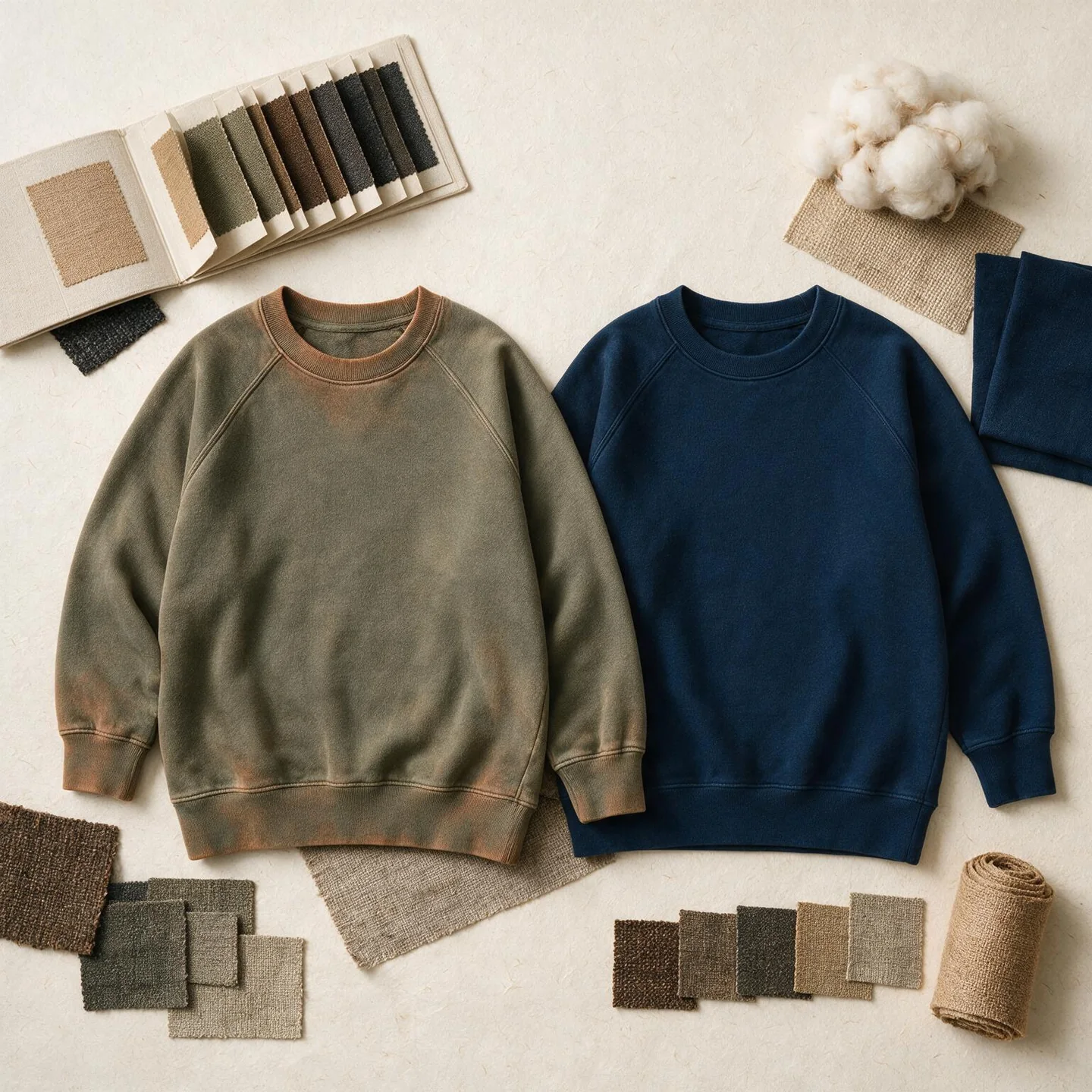
When a clothing design depends on color, dye choice is part of the product concept. Pigment dye is associated with a soft, weathered and vintage surface. Reactive dye is chosen for cleaner, more saturated color that bonds with cellulosic fibers.
Choose pigment dye when the design needs a chalky, faded or lived-in appearance that develops more character with wear. Choose reactive dye when the design needs a clean, even and relatively saturated shade with strong wash durability on cotton.
Neither route is automatically better. The right choice depends on the visual story, target handfeel, fiber content, wash behavior, colorfastness requirement and reorder plan.
2. What Pigment Dye Does to a Garment
Pigments are insoluble colorants held near the fiber surface with a binder. That surface position creates a useful design language: muted or mineral color, lighter highs on seams and folds, and a naturally aged appearance after washing.
- Soft, chalky or vintage color direction.
- Visible tonal highs at seams, hems and abrasion points.
- Useful character for washed basics and casual capsules.
- Variation that must be defined and approved, not treated as a defect by default.
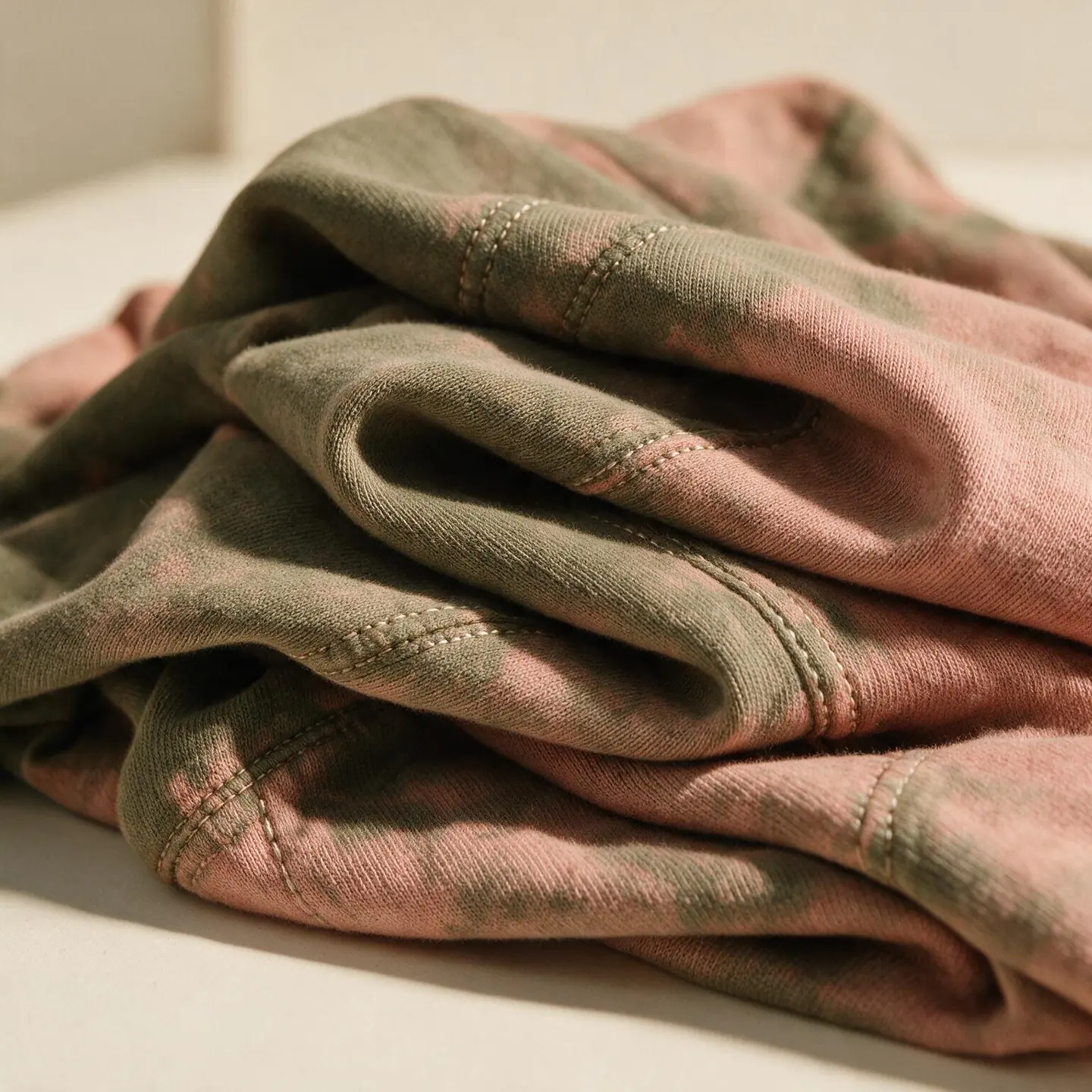
Binder level, curing temperature, fabric preparation and mechanical action affect handfeel and crocking. Dark pigment colors can transfer during rubbing if the process is not fully cured and tested, so approve the actual dyed garment rather than a digital color reference alone.
3. What Reactive Dye Does to a Garment
Reactive dyes form a chemical bond with cellulosic fibers such as cotton. They are commonly selected for clearer, more even and more saturated color, especially when the product needs a reliable solid shade.
- Strong fit for core T-shirts and sweatshirts that will be reordered.
- Clean background for precise artwork and color-block collections.
- More predictable solid color across panels when the substrate is controlled.
- Requires fixation, wash-off, shade and laundering checks.
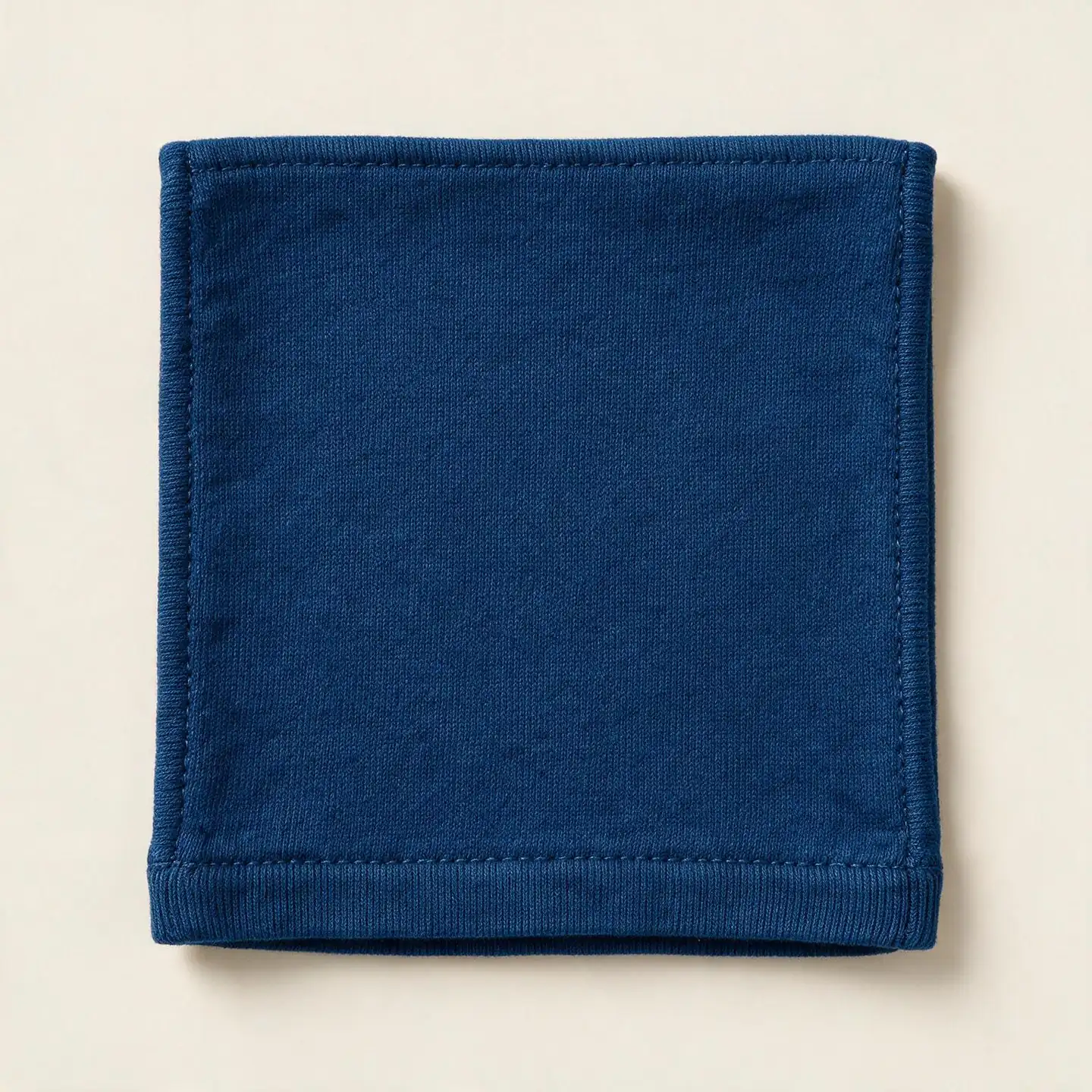
Reactive color is not automatically perfect. Fiber preparation, dye fixation, wash-off, water quality, drying and the actual substrate all affect the result. A shade can also look different under different light sources, so the lab dip and final garment need defined approval conditions.
4. Side-by-Side Design Comparison
| Design factor | Pigment dye | Reactive dye |
|---|---|---|
| Visual character | Washed, chalky and vintage | Clean, even and saturated |
| Color position | Mainly near the surface with binder | Chemically bonded to cellulosic fiber |
| Aging | Fades and softens visibly with wear | Usually holds a more stable solid shade |
| Handfeel | Depends strongly on binder and wash | Often cleaner and more even after wash-off |
| Seam effect | Stronger tonal highs and edge variation | More consistent across the garment |
| Best design role | Vintage basics and washed graphics | Core colors and repeat programs |
| Approval priority | Appearance, handfeel, crocking and aging | Shade accuracy, fixation and washfastness |
The same silhouette can tell two different stories. A pigment-dyed sweatshirt can make seams and folds part of the design. The reactive version gives the shape, artwork or trim a cleaner background. A collection can use both, but each color program needs its own standard.
5. Sampling and Approval
The first sample should answer five questions: does the color match the physical reference; is the handfeel right after the intended wash; are seams, rib, thread, labels and prints compatible; does the finished garment measure correctly; and does the tested surface performance meet the buyer's tolerance?
For pigment dye, focus on dry and wet crocking, binder handfeel, shade variation and the way the garment changes after repeated washing. For reactive dye, focus on fixation, wash-off, shade consistency, staining and color change after laundering.
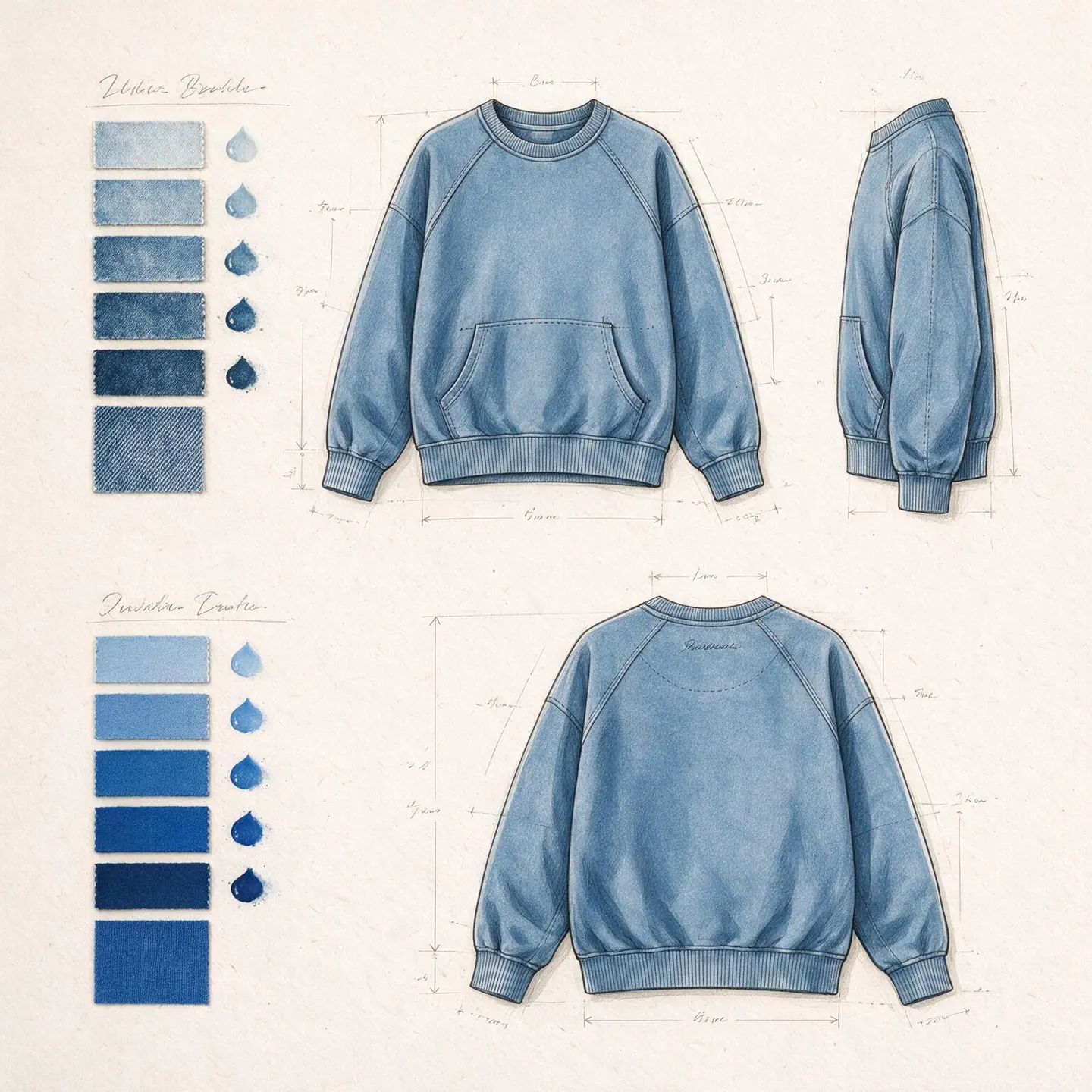
Use the lab-dip and color approval guide to define the physical standard and viewing conditions. Then connect the decision to the colorfastness testing guide before approving bulk.
6. Reorders and Buyer Checklist
Pigment dye can be attractive for limited drops because small visual variation becomes part of the product character. That same variation can complicate reorders. Keep a retained garment standard, record the recipe and define acceptable within-piece and piece-to-piece variation.
Reactive dye is often easier to position as a repeatable core color, but it still needs lot control. Record fiber composition, preparation, dye route, wash-off, drying conditions and approved shade tolerance. Reorder matching is a production system, not a promise made by the dye name.
- Is the target appearance clean and uniform, or visibly aged and varied?
- Does the design need a saturated shade or a muted mineral color?
- Which components will be exposed to dye, heat and curing?
- What crocking, laundering and dimensional tests apply?
- What physical sample becomes the bulk standard?
- How much batch variation is acceptable for a reorder?
The separate garment dye vs piece dye comparison covers when fabric is colored in the production sequence. Keep that timing decision separate from pigment versus reactive chemistry in the tech pack.
FAQ
Is pigment dye better than reactive dye?
No. Pigment dye supports a faded, surface-led appearance. Reactive dye supports cleaner, more saturated and more stable cotton color. The product story and performance requirement should decide.
Does pigment dye fade faster?
Pigment color is designed to age visibly, but the rate depends on pigment load, binder, curing, fabric construction, wash method and abrasion. Approve a washed sample and agree the expected change.
Which dye is better for core colors?
Reactive dye is often easier to manage for clean repeat colors. Pigment dye can work when the brand wants a deliberately weathered identity and has a clear variation tolerance.
Can both dyes be used in one collection?
Yes. Use separate samples, test plans, standards and reorder tolerances for each color program.
Need help choosing a color direction?
Send the design reference, fiber content, target handfeel and quantity. We can review pigment versus reactive dye, sampling requirements and the bulk color-control plan.
Request a Dyeing Review →