
Adult Streetwear · Pants Development
Streetwear Pants Waistband: Fixed, Elastic or Half-Elastic
Choose a fixed waistband for a defined opening without an elastic insert, a fully elasticated waistband for gathering around the waist, or a partly elasticated waistband to combine a smooth section with stretch in selected areas. Then specify the construction and measurement method: the phrase “elastic waist” is not enough to brief a sample.
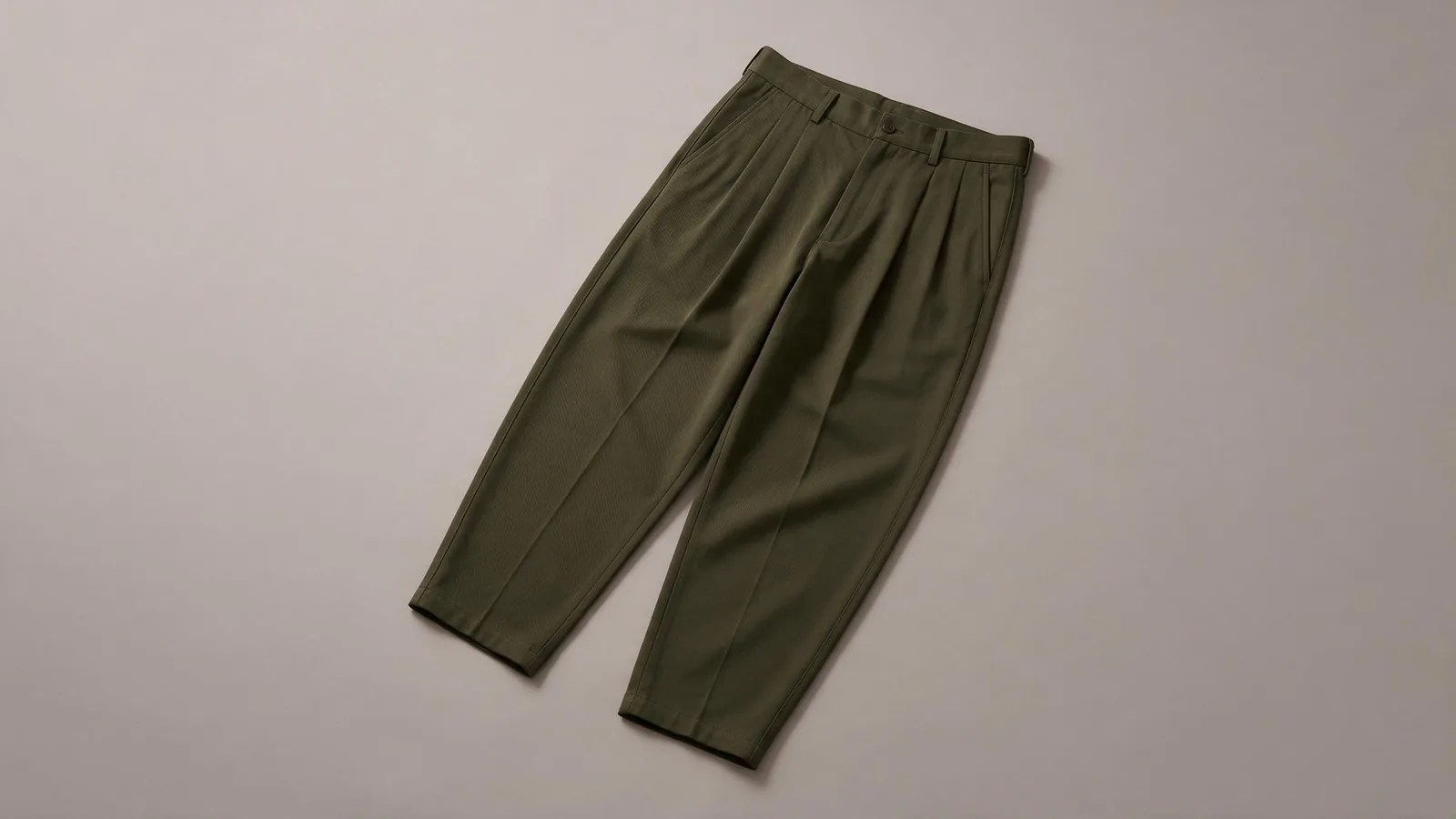
This guide covers waistband decisions for adult streetwear pants. The garment references show separate designs; appearance alone cannot establish their stretch, comfort or care performance.
Choose the construction around the intended fit
Decide which parts of the waist should stay smooth and which should gather before choosing the elastic.
A fixed waistband can support a clean, tailored front, often with a fly and fastener. “Fixed” describes the absence of an elastic insert here; it does not prove that the fabric itself has no stretch. The waistband shape, support layers and finished opening still need specification.
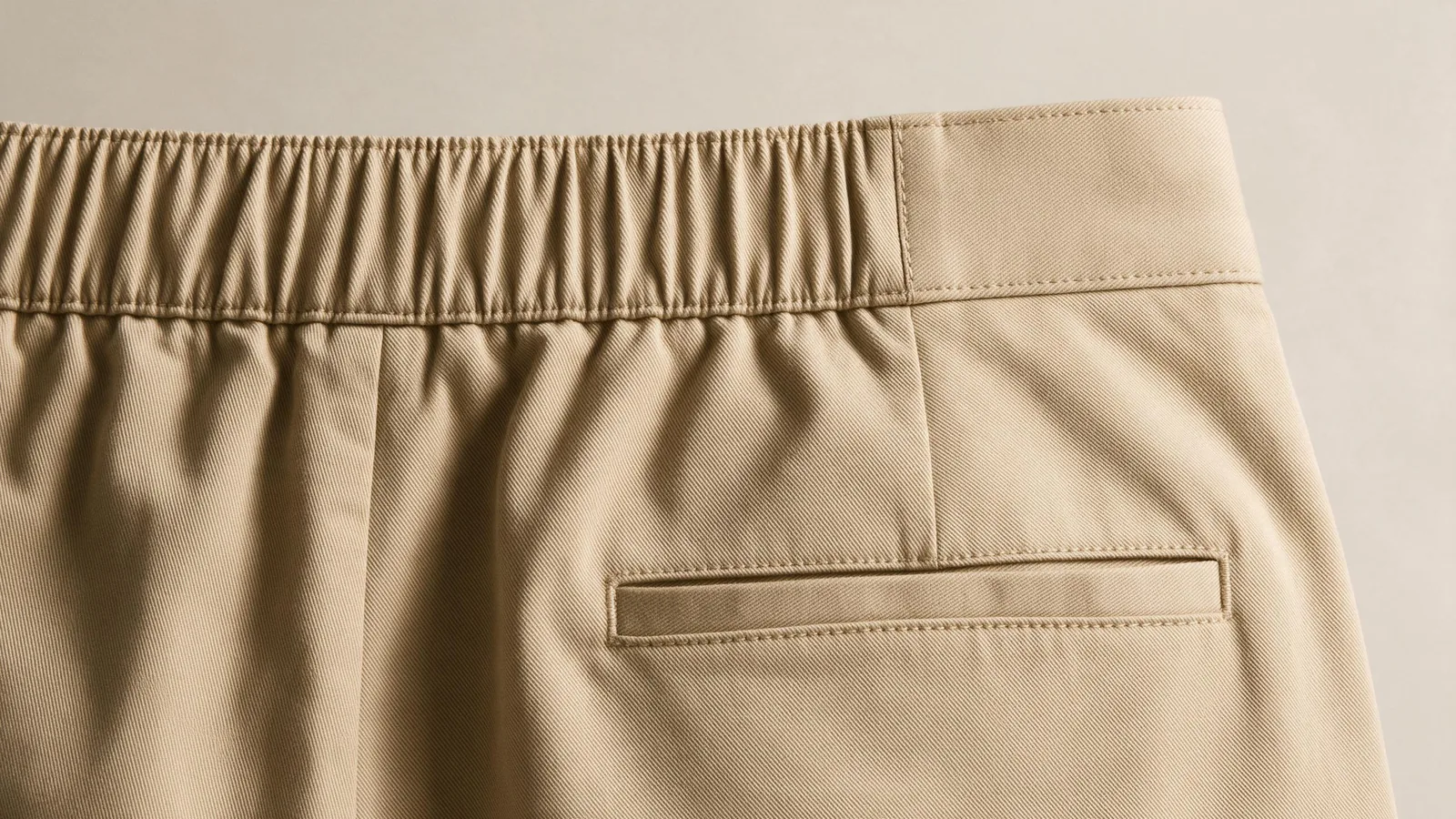
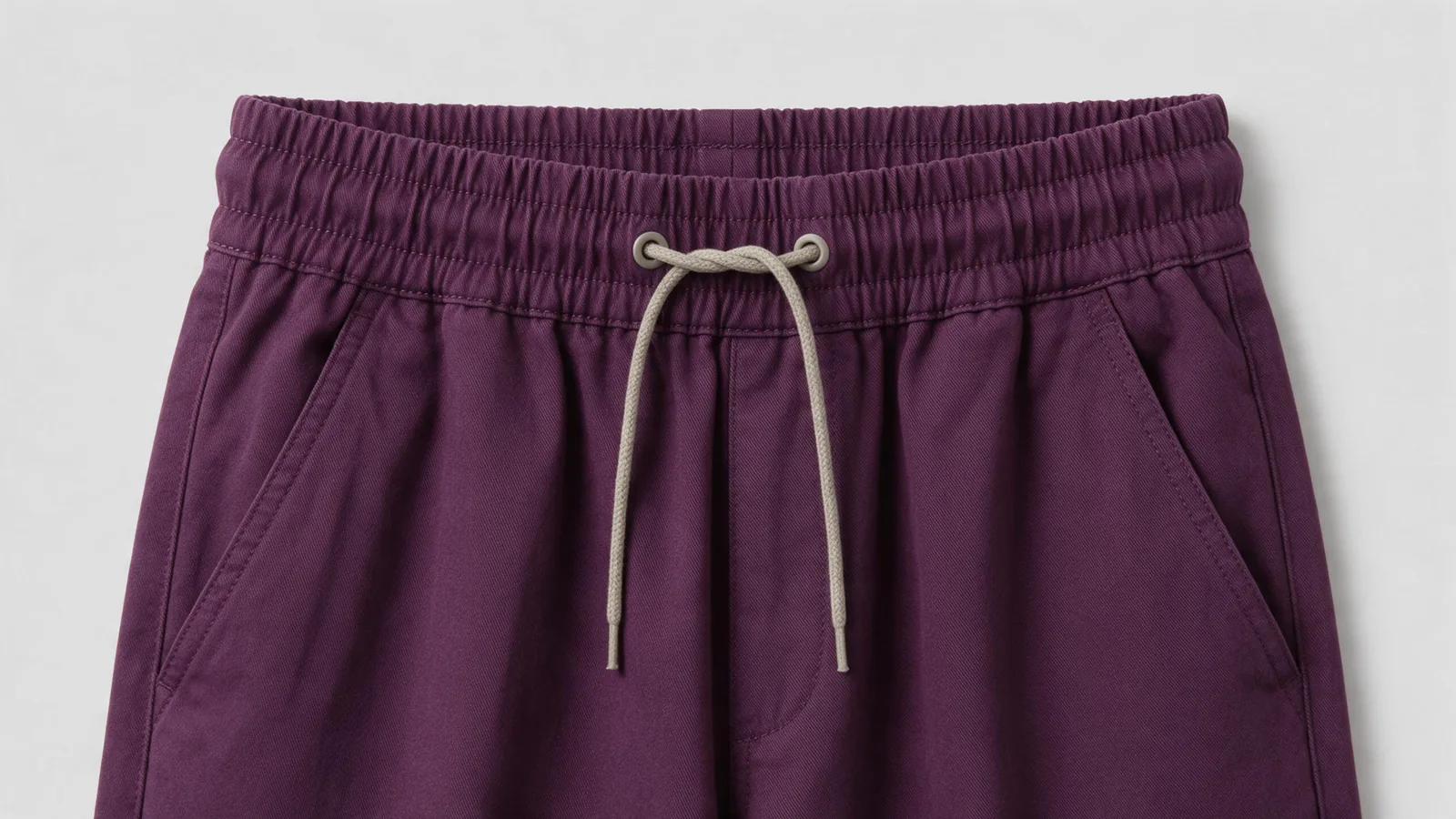
A fully elasticated waistband gathers the garment around most or all of the waist. The elastic, fabric casing and attachment method work together. A partly elasticated design may keep the front smooth and gather the back or side sections. “Half-elastic” does not reliably mean an exact half of the circumference: draw the actual start and end points.
| Construction | Design decision | Sample question |
|---|---|---|
| Fixed | Define the shaped or straight band, opening and closure. | Does the closed waistband sit at the intended position without gaping or pressure? |
| Fully elasticated | Define the gathered appearance, casing and elastic attachment. | Can the wearer put the pants on and move comfortably without the band rolling or slipping? |
| Partly elasticated | Mark the smooth and gathered sections and their junctions. | Does the front stay as intended while the gathered section accommodates movement? |
Keep the wearing position consistent with the streetwear pants fit brief. A waistband revision should not silently change the approved rise or leg outline.
Separate waist measurements from wearing checks
Record a repeatable garment measurement and assess wearing comfort separately.
State the sample size, garment condition, units and whether the recorded value is a flat width or a circumference. Mark the measurement route on a drawing. A straight flat width and a tape measurement following a curved waistband are different methods; do not convert between them without agreement.
For an elasticated waist, record the relaxed opening without deliberately stretching the band. Define a separate extended measurement with an agreed endpoint or controlled method. “Pull it as far as possible” varies between operators and can distort the sample. Note the closure and drawcord settings used for each measurement.
The extended opening helps describe the garment but is not a promised body-size range. For pull-on pants, check passage over the hips on the intended fit reference. For a fly-front style, check entry with the closure open. Then assess the closed waistband at the intended wearing position.
Include these definitions in the tech pack measurement and construction notes. Agree tolerances for each measurement and confirm how the waistband and elastic specification change across sizes.
Specify the elastic, casing and closure together
Identify the components and their attachment instead of judging the waistband from its outer width.
Record the finished waistband height separately from the elastic width. Name the proposed elastic reference, its placement and whether it is enclosed, exposed, free within a casing or stitched through. Show joins and attachment points. Do not prescribe tighter elastic as a universal fix for slipping; the garment fit and construction also need review.
For a partly elasticated waist, mark where gathering begins, where elastic ends are secured and how each transition meets the smooth section. Check those junctions on the actual sample. A back-view reference alone cannot define the front closure or prove how the band behaves when worn.
If the design includes a drawcord, show whether it exits inside or outside, its channel, exit positions and end treatment. Confirm whether it shares space with the elastic or follows a separate channel. Review access, adjustment and contact with the wearer. A cord can provide adjustment, but it should not hide an unresolved waistband fit.
For a fly, button, hook or snap, mark the overlap and fastening position. Review the closed front with the pockets and pleats: a closure under strain can change their appearance even when the leg measurements are unchanged.
Review entry, movement and care on the sample
Check the complete pants in recorded conditions and describe the location of any problem.
Start with the identified sample, actual fabric and elastic, and the agreed fit reference. Record any substitutes. Check dressing, standing and comfortable sitting with the waistband at the intended position. Observe pressure, gaping, folding, twisting or movement of the band, without repeatedly repositioning it between observations.
Inspect the inside as well as the front and back. Note rough joins, bulky transitions or a cord that is difficult to reach. These practical checks do not establish durability or a formal performance rating. Agree any required testing and acceptance criteria separately.
When care review is part of the approval, use the agreed washing, drying and conditioning procedure. Repeat the same measurement method and wearing observations afterwards. The garment shrinkage review explains why the before-and-after conditions must be comparable. A change in opening or gathering calls for investigation; it does not identify the fabric or elastic as the cause by itself.
Turn the findings into a waistband brief
Keep construction, measurements and sample comments tied to the same drawing revision.
Include the waist position, smooth and gathered sections, band height, elastic reference and attachment, closure, drawcord route and measurement definitions. Add the sample size, actual materials, observed issue and intended result. Identify features to preserve when requesting a change.
For example: “The back waistband folds while seated at the agreed waist position; review the band and attachment while preserving the approved smooth front.” This is a revision-note format, not a customer case or a prescribed technical fix. Keep unresolved substitutions and unreviewed sizes separate from the approved details, following the sample review sequence.
Questions before approving a pants waistband
Confirm the construction and measurement conditions before treating a waist dimension as approval.
Does half-elastic mean exactly half the waistband?
No. The term can describe different partly elasticated constructions. Mark the smooth and gathered sections, elastic endpoints and attachment points on the drawing.
Does the extended waist measurement show which body sizes will fit?
No. It records the garment under an agreed measurement condition. Entry, pressure, wearing position and movement still need review on the intended fit reference.
Should a slipping waistband always use tighter elastic?
No. Record where and when it slips, then review the opening, elastic, attachment, fabric and garment fit together. Tightening one component can create pressure without resolving the cause.
Start a pants development brief with front and back views, preferably a side view too, plus a reference size, fabric requirements and fit direction. Add your waistband notes to the project brief builder, or send the references and open questions. GoVoloom's MOQ is 100 pieces; sample scope, materials, costs and timing require written confirmation for the project.