Design Journal · Autumn Womenswear
From Moodboard to Sample: An Autumn Apparel Design Process
A visual record of how color, materials, silhouette and functional details come together before a garment reaches the sample room.
August 30, 2026 · 7 min read
Design Journal
This article shares the thinking behind an autumn collection. The images communicate design direction; final production specifications and material performance still require confirmation.
In This Study
1. Start with One Design Question
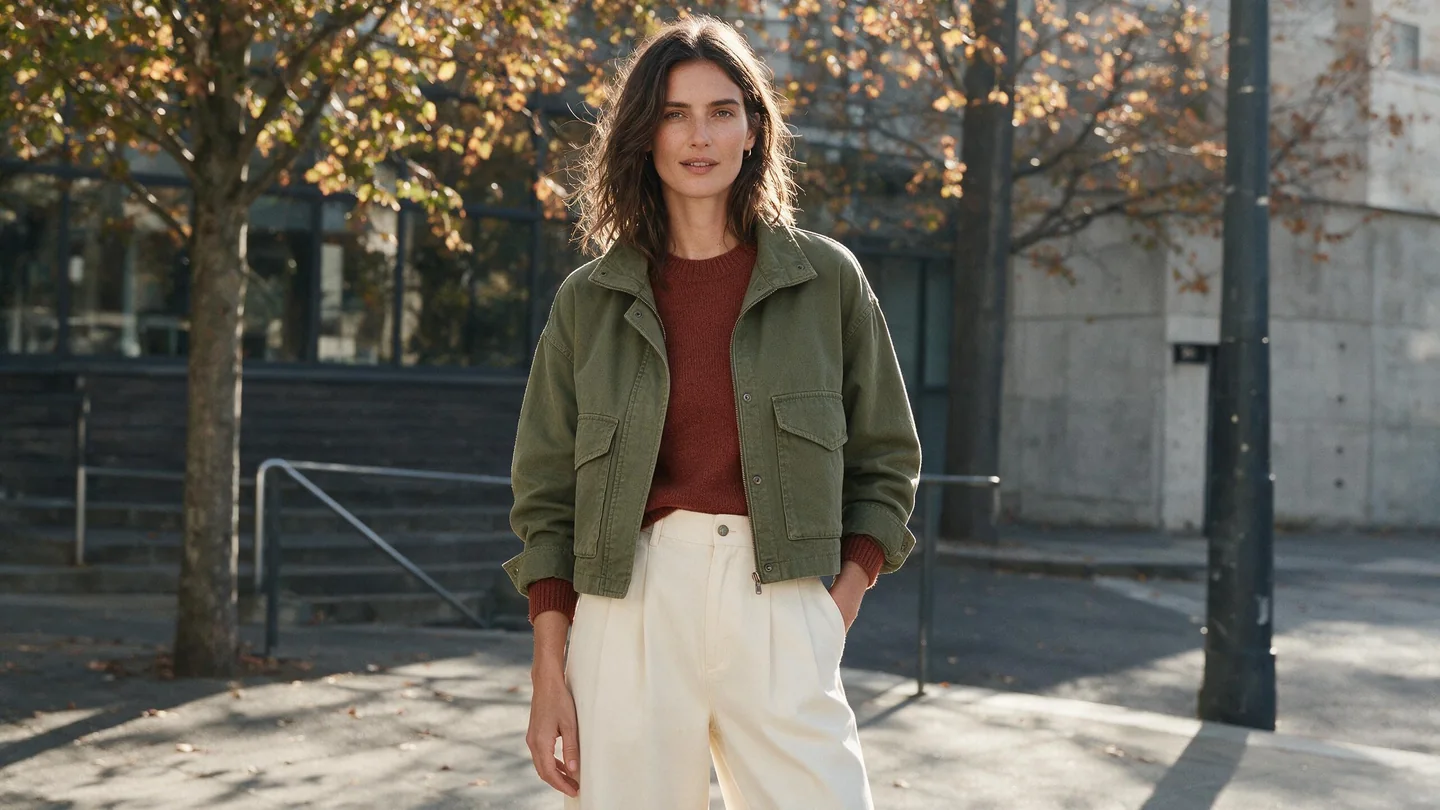
A useful collection does not have to begin with a long list of products. It can begin with one clear question: how can an autumn outfit feel practical without looking purely utilitarian? That question shaped this direction.
The answer was a compact wardrobe story built around an olive utility jacket, a warm rust knit and relaxed cream trousers. Each piece has a familiar purpose, but the combination feels softer and more considered than a traditional workwear uniform.
2. Build a Color and Material Story
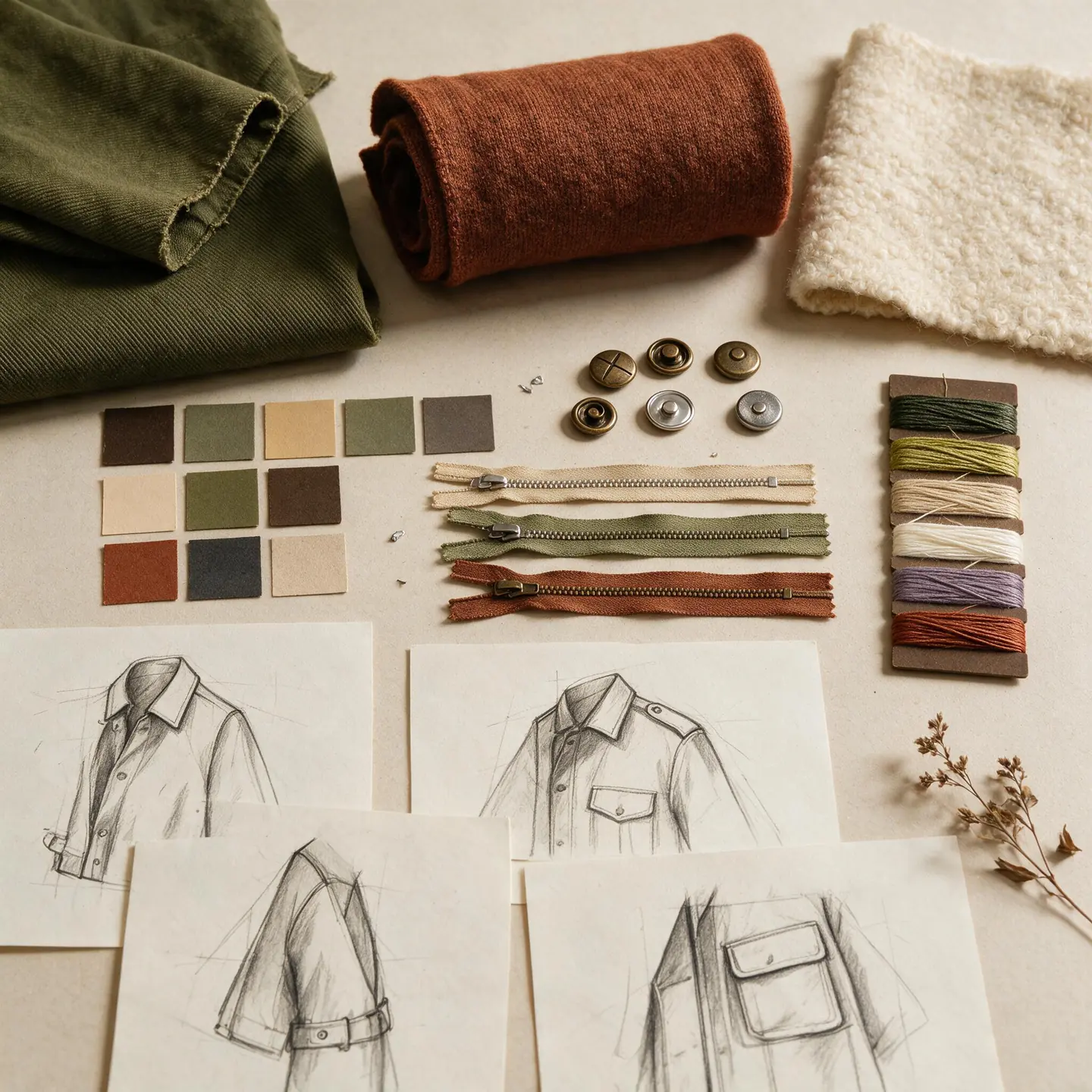
Color is doing more than making the outfit look seasonal. Olive gives the outer layer a grounded, functional character. Rust brings warmth close to the face. Cream opens up the lower half of the look and stops the darker colors from becoming heavy.
Material choices follow the same logic. A sturdy-looking woven surface supports the jacket's utility details, while a softer knit balances it. The trouser direction stays clean and quiet so the eye returns to the jacket and the color relationship.
3. Establish the Silhouette
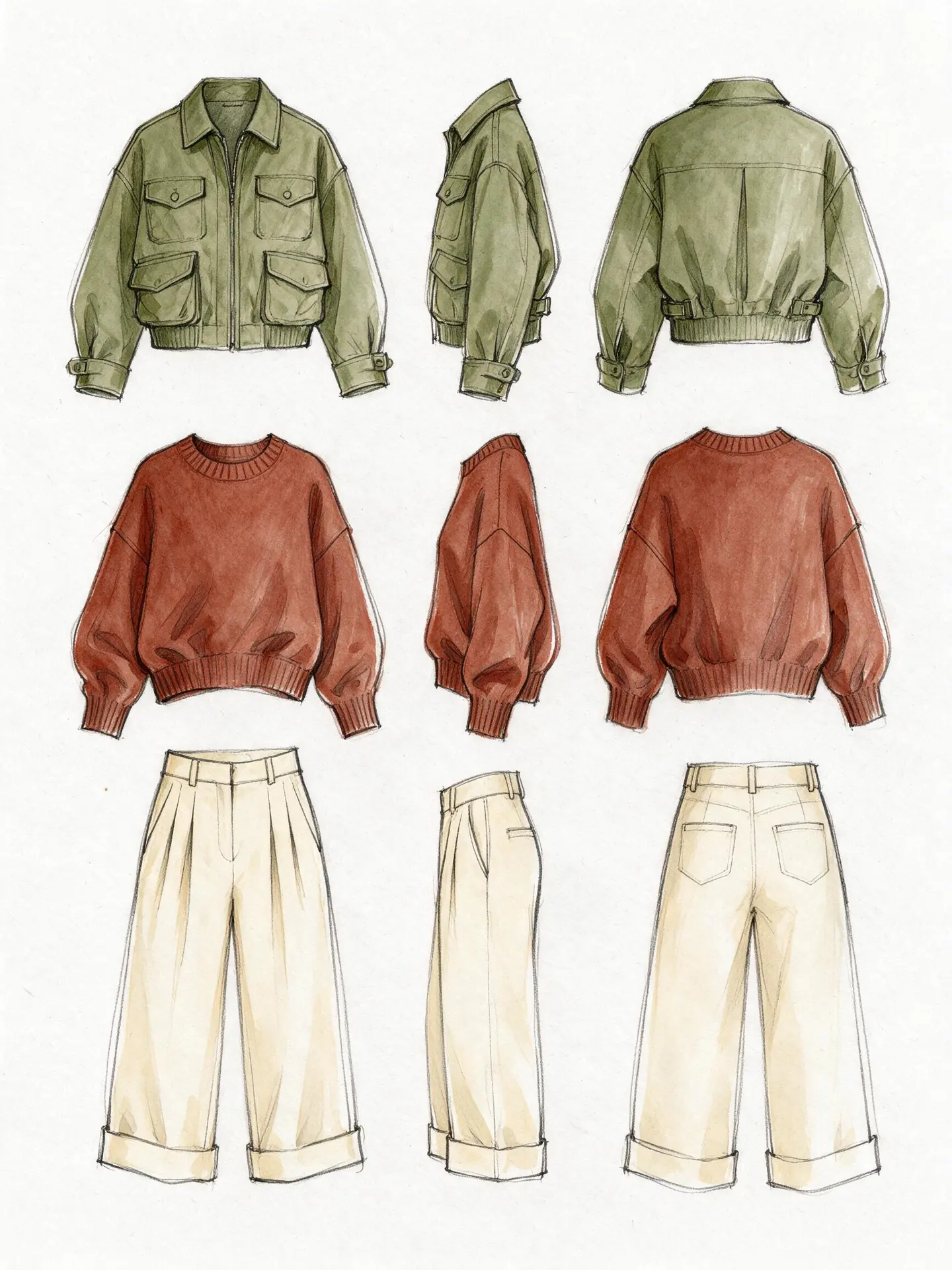
The jacket is intentionally short and slightly relaxed. That proportion gives the outfit a clear waistline and leaves room for the wide-leg trousers to create movement below. The knit is close enough to the body to act as a visual bridge between the two volumes.
Silhouette decisions should be visible from a distance. Pocket placement, the hem position and the width of the trouser leg all contribute to the first impression before a viewer notices any individual stitch or button.
4. Refine Details That Change the Garment
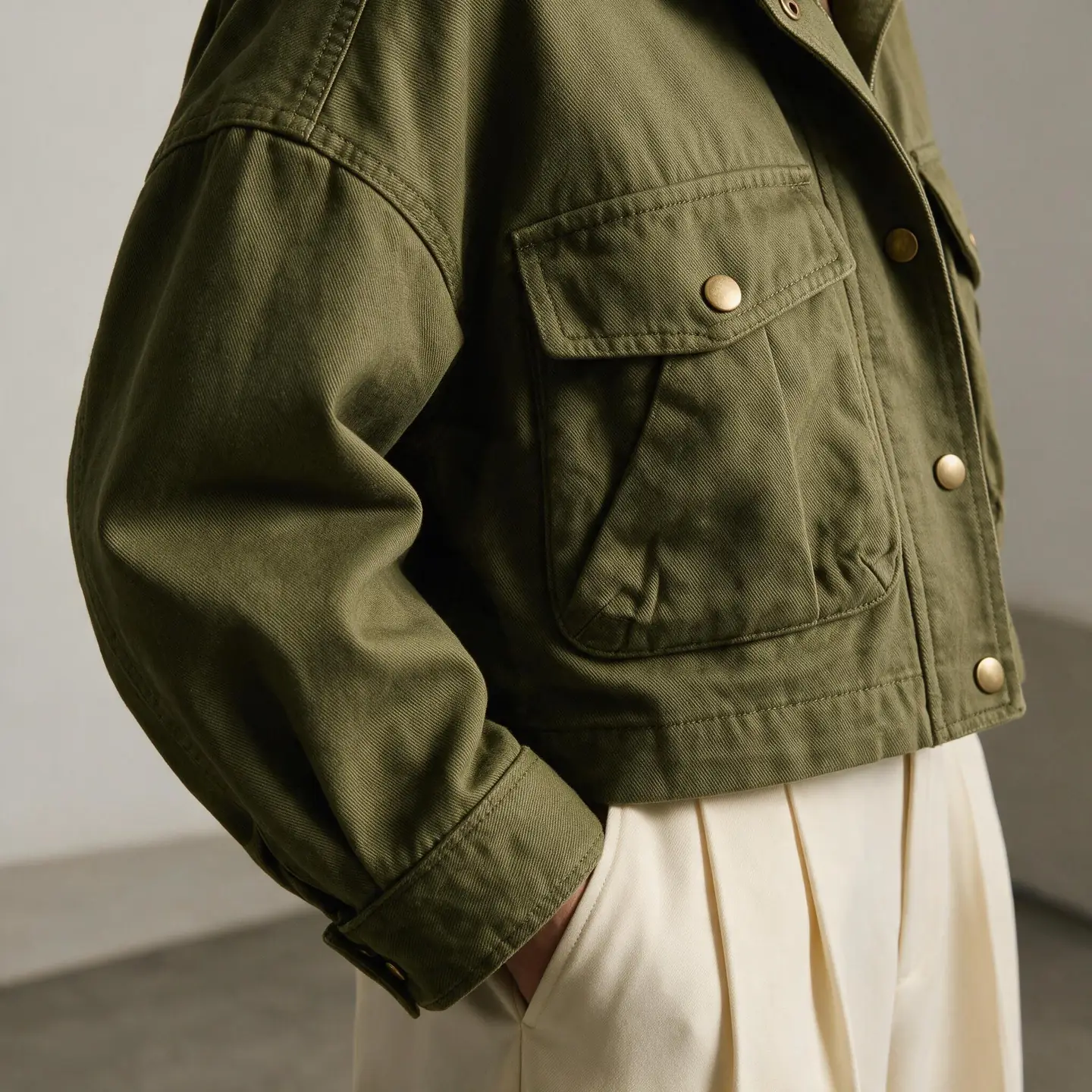
Utility pockets are not only decoration. Their size, flap shape and position change the balance of the jacket and affect how the wearer uses it. The shoulder seam, cuff tab and front closure do the same: they define structure, movement and the level of visual formality.
For this concept, the details stay functional and restrained. Metal snaps add a small point of contrast, while the pocket construction gives the jacket its identity. The goal is to make the garment feel designed without covering the fabric in unnecessary features.
5. Prepare the Concept for Sampling
If you are developing the direction with AI, the AI clothing design workflow connects the selected front-and-back view set with a reference size, fabric requirements and fit requirements for development.
A moodboard and a sketch communicate the idea. A sample brief makes the idea testable. Before a first sample, the design team should turn the visual direction into a short list of decisions that can be checked.
For a multi-style Autumn/Winter range, use those decisions to turn the concept into a seasonal development roadmap with a backward calendar, material system and named approvals.
Fit and proportion
Define the base size, intended ease, jacket length, pocket position and trouser volume.
Material behavior
Confirm weight, drape, stretch, surface character and how each fabric should respond after finishing.
Construction
Clarify seam types, closure, lining, pocket build, cuff adjustment and reinforcement points.
Approval points
Record what must be checked at proto, fit and pre-production sample stages.
The earlier these decisions are written down, the easier it is to tell whether a sample is solving the design question. For a more technical handoff, see our tech pack guide and sampling process guide.
The Takeaway
Good apparel design is not only the final image. It is the chain of decisions behind the image: one clear question, a focused color story, a readable silhouette and details that support how the garment is meant to be worn.
That chain gives a design team something useful to discuss, revise and eventually test. The first sample is not the end of the creative process; it is where the visual idea meets real fabric, movement and proportion.
Design is a conversation
Which part would you develop first in this concept: the pocket construction, the fabric contrast or the trouser volume?
FAQ
What is the purpose of a fashion moodboard?
A moodboard aligns color, material, atmosphere and silhouette before detailed development begins. It helps a team discuss the direction using the same visual references.
Can a fashion sketch be used as a production specification?
A sketch communicates design intent, but production also needs verified measurements, construction details, material information and fit standards.
What should be confirmed before making a clothing sample?
Confirm the base size, ease, fabric direction, trims, closures, pocket construction, finishing plan and the fit points that must be reviewed.