
Adult Streetwear · Cap Development
Streetwear Cap Fit: Crown Depth, Brim and Closure
A cap can close around the intended head size and still sit too high, press at the temples or cover the ears. For an adult streetwear collection, approve the crown shape, opening, brim and adjustment system as separate decisions. “Low profile” and “one size” are useful starting descriptions, but neither gives a technical team enough information to reproduce the fit.
This brief explains what to record before requesting a cap sample, how to compare revisions and which questions belong in the development quote. Use the images for the visible design details described in their captions; confirm measurements, materials and construction on the actual sample.
1. Specify crown shape before calling a cap “one size”
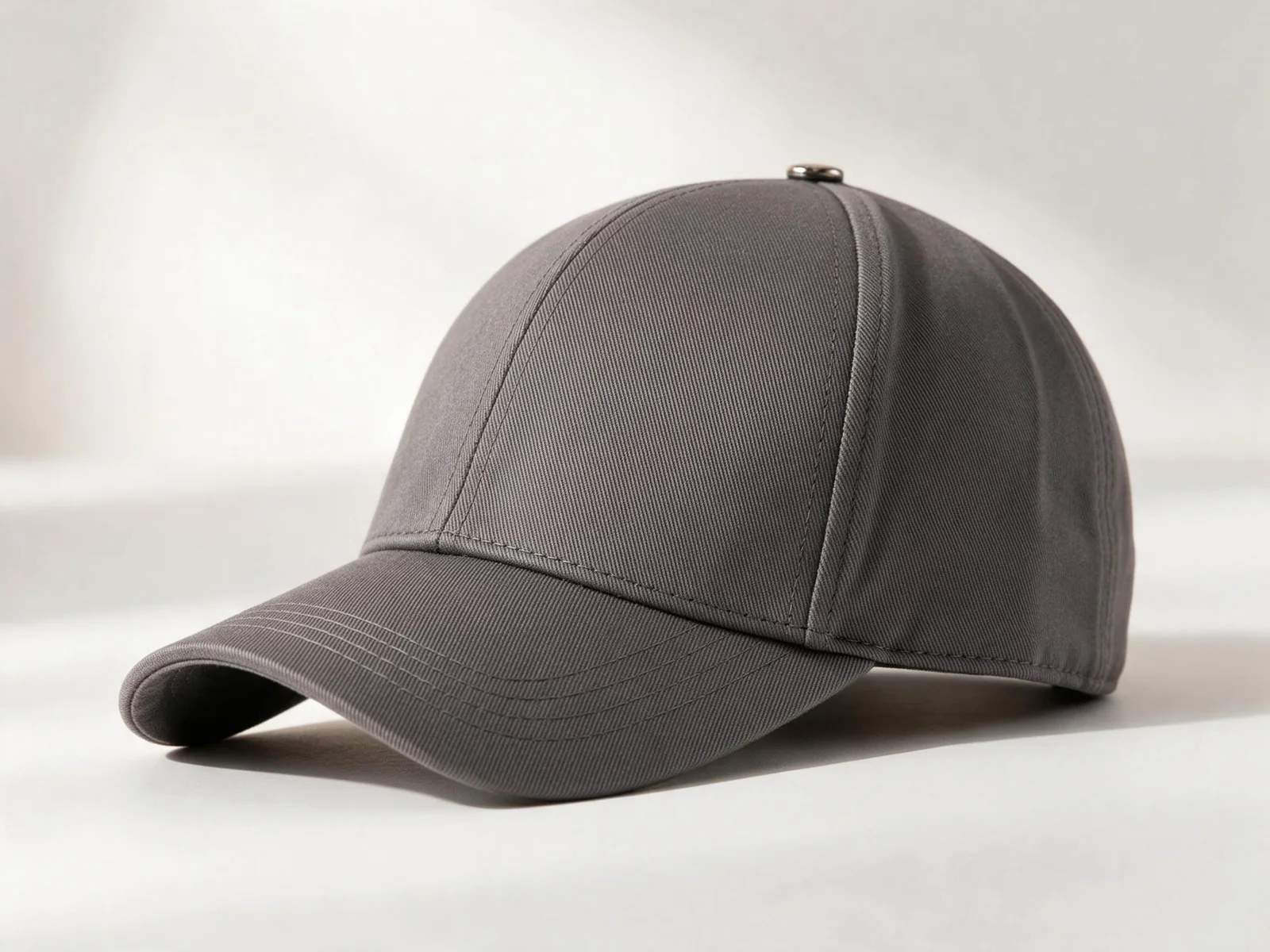
Crown depth and head opening need separate approval. The opening describes the fit around the head; depth influences how far the cap sits down. Tightening a strap changes the opening, but does not automatically correct a crown that is too shallow or too deep for the intended wearer.
Start with a front and side silhouette reference. Mark whether the front should stand upright or settle closer to the head, where the lower edge should sit near the ears, and the intended brim position above the eyes. Record these as desired outcomes. Do not ask the pattern maker to infer an internal stiffener, fabric weight or panel shape from the appearance alone.
A five-panel or six-panel description does not settle the fit either. Panel shape, joining seams, fabric behavior and internal components contribute to the finished crown. Agree the panel layout and the required support with the technical team. If two references disagree, identify which feature to take from each instead of sending both as interchangeable instructions.
For a coordinated collection, consider the cap beside the intended clothing silhouette. A taller crown and a lower crown can give different proportions with the same oversized jacket. This is a design choice to review, not a reason to copy another cap's measurements without checking the target wearer.
2. Give every cap measurement a repeatable route
Record endpoints, cap condition and closure position for every measurement. A number called “crown height” can mean a vertical height, a measurement over the curved surface or a seam length. Those values cannot be compared until the route is defined.
Use labelled photos or sketches in the tech pack. Keep one unit system throughout. Record whether the cap is supported on an agreed form or resting naturally, whether the fabric is relaxed, and which closure setting is used. Avoid pulling the fabric just to make it reach the target.
| Item | Define before measuring | Record with the result |
|---|---|---|
| Head opening | Route around the inside contact line | Closure setting and whether tension is applied |
| Front crown depth | Marked lower crown edge and marked top point | Straight distance or route following the surface |
| Side crown depth | Marked lower edge and upper point on each side | Left and right results using the same route |
| Brim projection | Brim attachment point to front edge at centre | Flat or curved condition and the measurement route |
| Rear opening | Defined width and height endpoints | Closure position and cap support condition |
For example, a project could define front depth from P1 at the crown shell's lower centre-front edge, excluding the brim, to P2 at a marked crown-top point. Support the cap on the agreed form, then follow the marked centre-front surface with a flexible tape without stretching it. This is an example, not a universal standard. Show both endpoints on a photo, distinguishing the shell edge from the inner band edge. For side depth, mark a separate lower and upper point on each side and use the same support condition.
Set target values and tolerances with the technical team for the chosen materials and construction. There is no universal cap tolerance in this checklist. If you provide an existing cap as a reference, identify it with a version or reference code and record its condition; an already worn or reshaped cap may not represent the intended new product.
Keep the wearer's head measurement separate from the finished cap's opening measurement. Their relationship needs fit review; they are not interchangeable entries in a size sheet.
3. Approve brim shape and the closure together
Brim curve and closure setting both affect the worn result. Review them on the same identified sample, rather than approving the brim from a flat image and the adjustment from a different cap.
Specify whether the brim should arrive flat, gently curved or with another agreed profile. A tape following a curve measures an arc; a straight distance between endpoints measures a chord. Label the route used for width and projection, and retain a side view to show curvature. A photograph without a scale or controlled perspective cannot provide reliable dimensions.
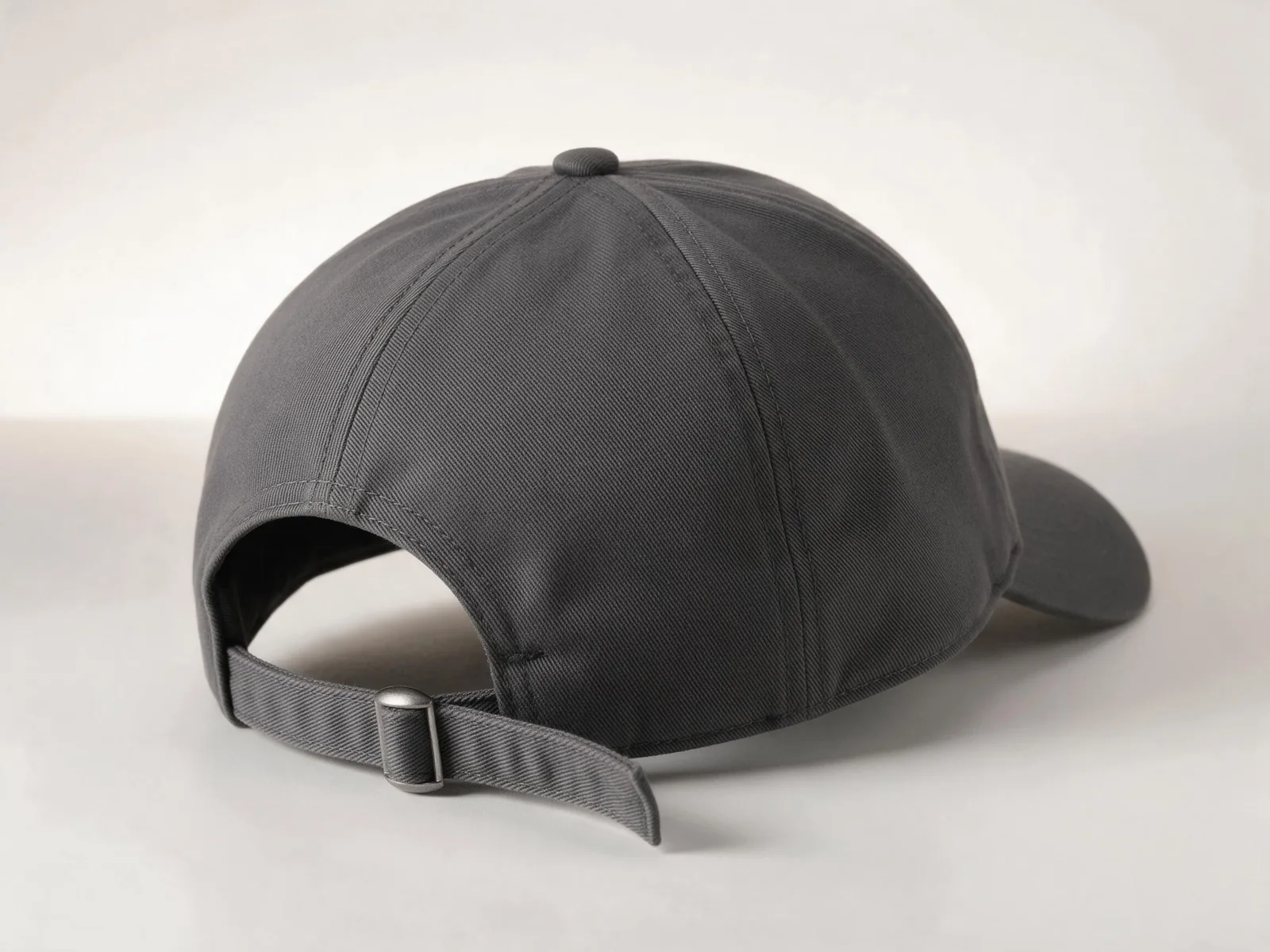
For an adjustable closure, check the smallest and largest settings proposed for use, plus the intended reference setting. Observe rear-panel gathering, strap-tail handling and whether the closure remains comfortable against the head. The available adjustment range is not automatically the range you should advertise: the extremes may distort the crown or leave insufficient engagement.
Check the adjuster, attachment points and any exposed edges on the physical sample. Agree any strength, retention or repeated-use tests and their acceptance criteria separately; opening and closing a sample by hand is a practical review, not a verified durability result. Confirm the actual trim and finish in the quote before approving an alternative buckle or fastening.
4. Review the interior and record the fit observations
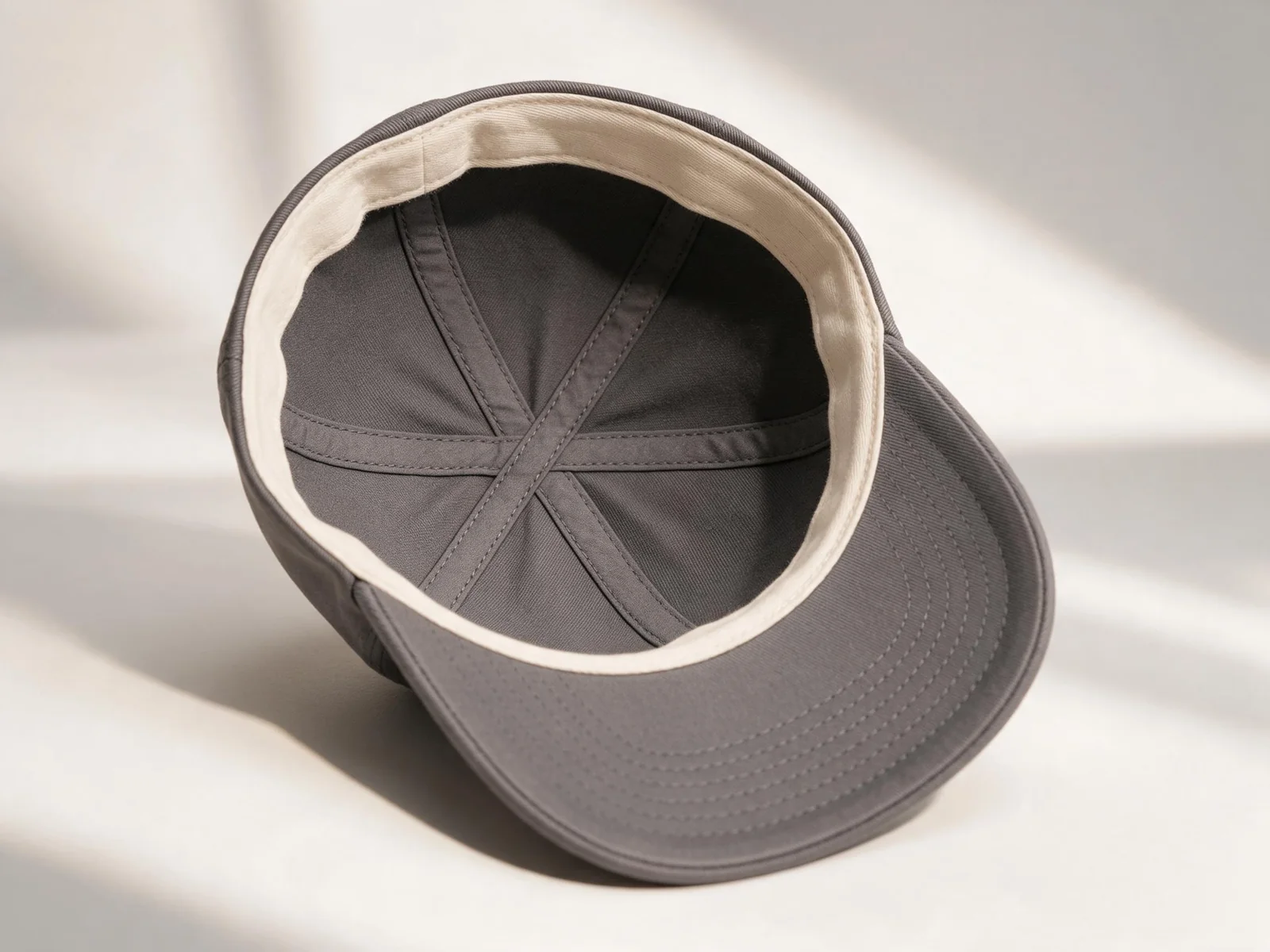
Check contact points and movement on the intended wearers. The exterior silhouette cannot show every source of pressure or rubbing. Examine the lower inside band, seam coverings, rear opening and areas behind decoration before asking a wearer to compare versions.
Use the same sample condition and agreed closure setting for the first comparison. Record where the cap sits, pressure locations and whether the brim obstructs the intended view. Ask the wearer to turn the head and look up and down. Note any slipping, lifting or contact with the ears. These observations describe the result; they do not, by themselves, prove that a particular pattern piece or material caused it.
If several people represent the intended size range, retain separate observations for each. Do not turn one person's comfortable fit into a claim that everyone in the range is covered. A wearer record can use a code and relevant measurements without collecting unnecessary personal information.
For an embroidered cap, inspect the internal backing and the effect of decoration on the crown. Approving logo placement does not approve fit, and approving an undecorated cap does not establish the finished decorated result. The logo and name placement brief covers position and artwork questions separately. Repeat affected checks if the backing, decoration size or placement changes.
5. Send a revision brief that preserves approved features
Separate the observed issue, requested outcome and proposed construction change. “Make the cap fit better” does not tell the technical team what to preserve. A useful comment identifies the sample, the review conditions and the feature that needs another decision.
For example, “the lower edge contacts the left ear at the reference closure setting” is an observation. “Raise the lower edge while preserving the approved front silhouette” is a requested outcome. Shortening a specific panel is a proposed solution that needs technical review. Keeping those statements separate makes it easier to assess a revision without introducing a second unwanted change.
| Brief field | Information to supply |
|---|---|
| Sample identity | Style code, version, review date and substituted materials |
| Fit reference | Intended wearer range, closure setting and measurement method |
| Preserve | Approved front shape, brim profile or decoration position |
| Revise | Marked location, observed issue and desired outcome |
| Approval scope | Accepted features, unresolved items and checks to repeat |
Return this brief with annotated front, side, rear and interior views where relevant. Keep the previous version available for comparison. Follow the sampling process to distinguish a fit decision from approval of final materials and production details.
Request written confirmation of the sample-development scope: pattern work, materials, trims, decoration preparation, revisions and shipping. Ask what is included and what needs a separate quotation. GoVoloom's MOQ is 100 pieces; sample charges, size arrangements and production details require confirmation for the project. No cap sample fee or delivery date is established by an illustration or this checklist.
6. Questions brands ask before cap sampling
A useful cap brief connects the intended appearance to measurable, reviewable decisions. These questions help resolve common gaps before development starts.
Does a tighter closure fix a cap that sits too high?
Not necessarily. Tightening reduces the opening, while a high sitting position may involve crown depth, shape or another fit factor. Record the position and pressure points before choosing a correction.
Is head circumference enough to approve cap fit?
No. Review crown depth, shape, brim position, the interior contact areas and the closure setting as well. Head circumference alone does not describe how the finished cap sits or feels.
Can I confirm a structured crown from a photograph?
A photograph can show the visible shape, but it cannot confirm hidden support materials or their specification. Ask for the construction details and assess the actual sample in the intended material.
Does an adjustable cap fit every adult?
No. Adjustable describes the closure; it does not establish universal fit. Define the intended range and review the relevant settings and wearers before making a size claim.
Use the custom hats page to frame the product brief, then send your design and planned quantity. Include the crown direction, measurement routes and closure preference so the development discussion starts with decisions the team can evaluate.