
Adult Clothing · Starting a Brand
How to Choose Stock or Custom Fabric for Your First Clothing Collection
Choose stock fabric when a verified available material meets your product brief; choose custom development when a necessary specification cannot be met that way. For your first adult clothing or streetwear collection, the decision is about what you must commit to before you know how the garment will sell. A swatch can help you choose a fabric, but it does not confirm the quantity, production slot or repeat supply available for your order.
Start with the garment's needs and compare the actual offers. A stocked cloth that fails your fit or appearance requirements is not a useful shortcut. A custom cloth that creates more material commitment than your first collection can support is not automatically a better brand decision.
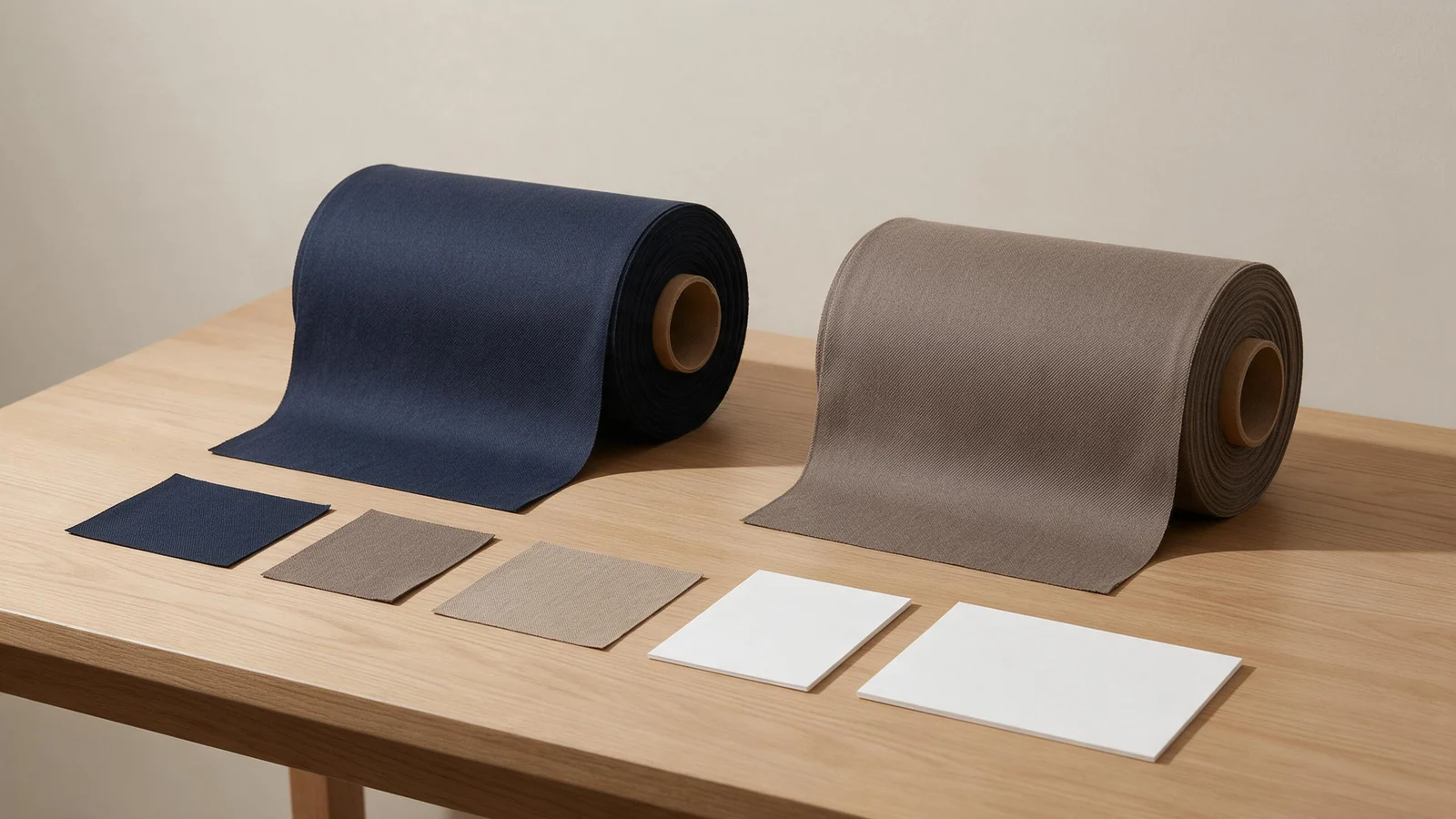
1. Separate three different sourcing routes
Ask which manufacturing stages are already complete, rather than relying on the word “custom.” A supplier may mean an existing cloth in a selected color, a known base that still needs processing, or a fabric construction that has not yet been made. These routes leave different work and commitments ahead.
| Route | What may already exist | What to confirm before committing |
|---|---|---|
| Stocked finished fabric | A specific construction, color and finish in available rolls | Current quantity, lots, usable width, condition, reservation terms and replenishment |
| Existing base with custom color or finish | A known construction, possibly held as greige or prepared fabric | The base's processing state, preparation, dyeing or finishing minimums, approvals and capacity |
| Custom fabric construction | A design requirement or development specification | Yarn availability, weaving or knitting development, trials, finishing, testing and total commitment |
Greige fabric has not completed the finishing route needed for the final garment. Do not treat it as ready for cutting, or assume that every greige base is already prepared for dyeing. For example, CottonWorks describes bleaching as a preparation process used to give greige material a white base for light or bright shades. The necessary preparation depends on the selected material and intended result.
These categories are a conversation aid, not three standard service packages. Ask the supplier to write down what is already available and what must still be developed, purchased or processed.
2. Define what the garment genuinely needs
Separate essential fabric requirements from preferences before comparing stock and custom offers. Record the composition, construction, finished weight, usable width, color, surface finish and the behavior needed for the garment. Use the existing clothing fabric guide for terminology; this decision does not require learning every fiber category again.
Write a reason beside each essential requirement. An opaque trouser fabric, a particular stretch direction or a surface suitable for the intended decoration has a product purpose. A preferred color may be negotiable if a stocked alternative still supports the collection. Record who can approve a substitute and which checks must be repeated.
Keep total width and usable cutting width distinct. The public scope of ASTM D3774 addresses fabric width and usable width, and notes that measurements include selvages unless otherwise specified. Ask which width appears on the offer and which width the cutting plan will use. Do not assume the full advertised width can be allocated to garment panels.
For a hypothetical plan of 120 garments using 1.4 meters each, the initial arithmetic is 168 meters. That is only a planning example, not an order quantity or consumption recommendation. Have the production team recalculate for the actual pattern, size mix, usable width, fabric direction, matching requirements and agreed allowances before buying.
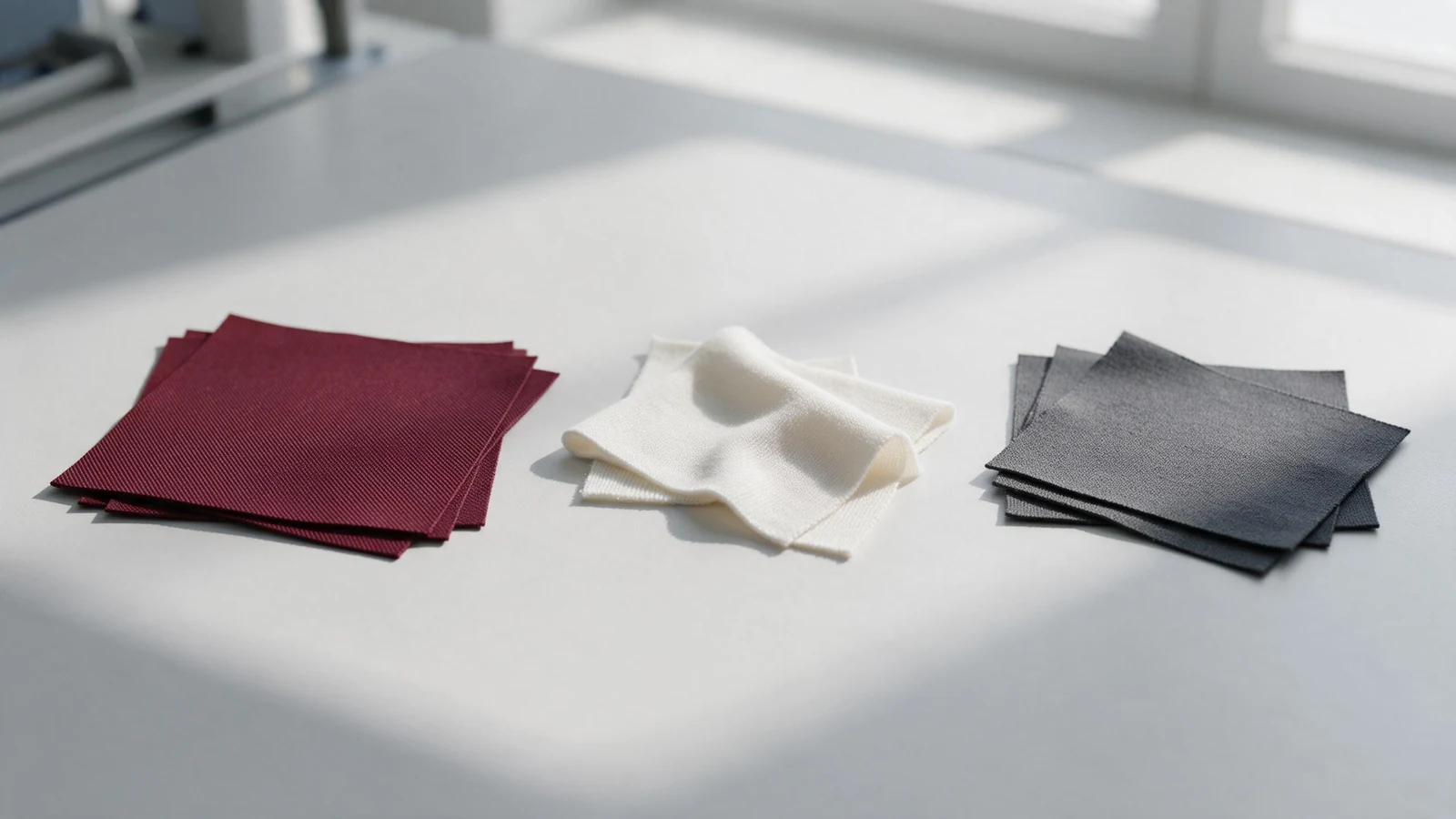
3. Verify what “in stock” means for this order
Confirm identifiable, available material and a reservation arrangement before building your launch around stock fabric. A catalog swatch can remain in a supplier's collection after the quantity you need has changed. Ask for a dated stock response tied to the article code, color code and relevant batch or roll identification.
Check the amount available to purchase, the unit of sale, any minimum cut or whole-roll requirement, and whether the proposed quantity spans multiple lots. Ask whether the sample came from the offered stock. If it did not, establish what comparison is needed before accepting that material for production.
Make the reservation terms explicit: quantity, expiry, payment required, release conditions and what happens if approval is delayed. Neither receiving a swatch nor approving its appearance automatically reserves stock. Equally, paying to reserve fabric should not be described as approval of every technical characteristic.
Ask what repeat supply means. Is this a continuing article, an available batch with uncertain replenishment, or a finite remainder? A limited batch may suit a deliberately limited collection. It creates a different risk for a core item you intend to replenish. Confirm the next-order process, rather than treating a repeat article code as a promise of identical future stock.
4. Compare the whole custom-material commitment
Compare total cash exposure and unresolved steps, not just the quoted price per meter or kilogram. Obtain a written offer that separates the base material, development or trial work, processing, testing, transport and any remaining material. Confirm the units used; a price by weight cannot be compared directly with a price by length without a supported conversion.
Ask where minimums apply. The fabric supplier may set requirements at the yarn, construction, dyeing or finishing stage. An available base can remove one development step while leaving another minimum unresolved. Request the actual quantity and allocation conditions for your selected material; do not substitute a general online minimum.
GoVoloom's current garment manufacturing MOQ is 100 pieces. This does not establish a fabric mill's minimum or promise that every custom cloth can support that garment quantity. Material feasibility and allocation need confirmation in the project quote.
Assign responsibility for excess or unused cloth, including ownership, storage, future use and any agreed disposal. If two styles could share a base fabric, verify that the same finished specification works for both before combining their demand. A shared color name or fiber description alone is not enough.
Use a milestone schedule with dependencies: material availability, development, approval, processing, inspection and delivery to the garment producer. The manufacturing timeline guide explains how this fits the wider order. Obtain current dates and their start conditions; “custom” does not supply a universal duration.
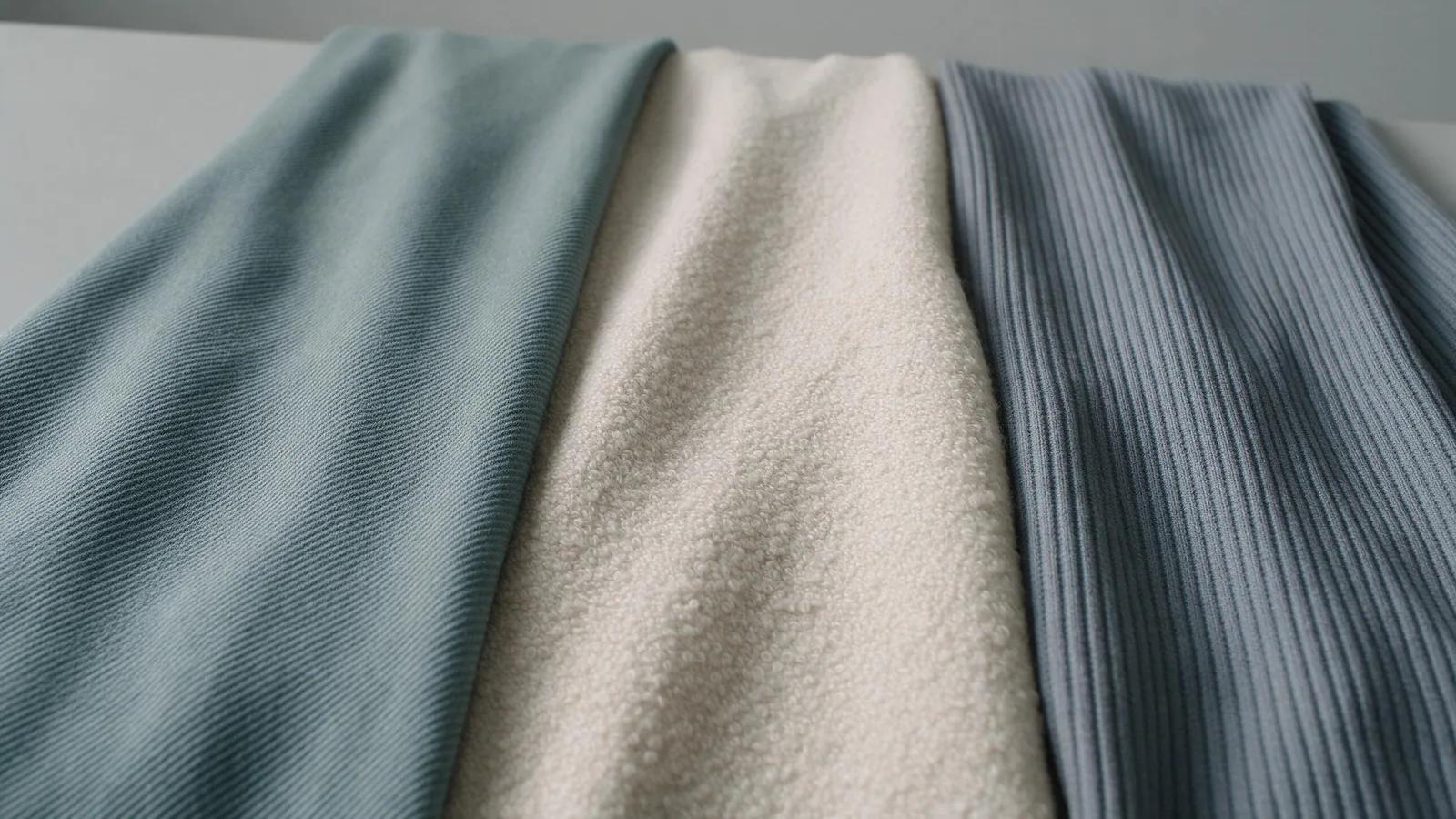
5. Keep material approval separate from supply approval
Approve the fabric's suitability and its commercial availability as separate decisions. One record should identify the specification, reference sample, review results and unresolved issues. Another should confirm the quantity, allocation, payment conditions and agreed delivery plan. Both must support the same proposed production material.
A lab dip is a color-development reference, not proof that the entire production quantity has passed review. Datacolor's color-management workflow explicitly includes production quality checks after lab-dip or strike-off approval. Agree how production material will be compared with the approved standard and how a difference will be handled; this article does not prescribe a universal color tolerance.
Review the finished fabric in the garment as well as on the table. Use the sampling guide to agree checks for fit, drape, construction and relevant care behavior. Record any substitute used during sampling. A sample made in a convenient alternative cannot settle every question about the intended production cloth.
For a later order, retain the approved reference and specification but verify the newly offered lot and current supply conditions. Treat substitutions or changed processing as review points. Choosing custom development does not, by itself, remove the need to check repeat production.
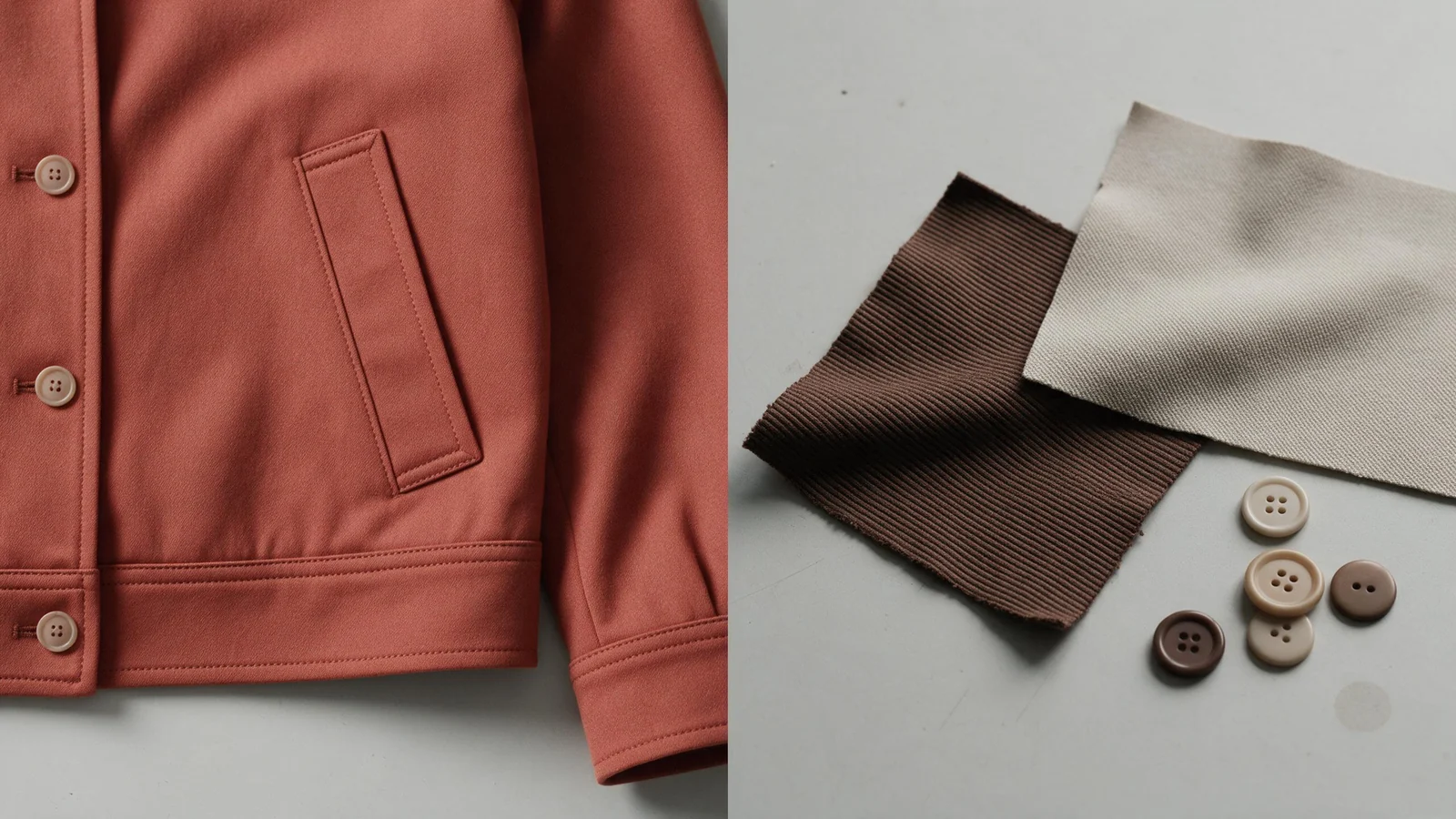
6. Choose the route and the next commitment
Select the route that meets the garment brief with commitments your first collection can support. Stock fabric is a useful starting point when the material is suitable, enough identifiable quantity is available, and its repeat-supply limits are acceptable. An existing base with custom processing may fit when the base works but an essential color or finish does not. New construction needs a product reason strong enough to justify development and material exposure.
Before approving the purchase, write a short decision note: selected article and route; essential specification; sample status; available or required quantity; reservation or processing terms; outstanding checks; and the person responsible for each next action. If one critical answer is missing, keep that commitment open rather than silently filling it with an assumption.
Bring the note, garment references and intended quantity into your product-development brief. Then ask GoVoloom to review the material and garment scope together. The useful next step is a feasible, documented material decision for your collection.
