
Material Notes / Activewear Development
Nylon vs Polyester for Activewear: How to Choose
A material-selection guide for clothing brands: compare specifications, feel and movement, then define what your samples must demonstrate.
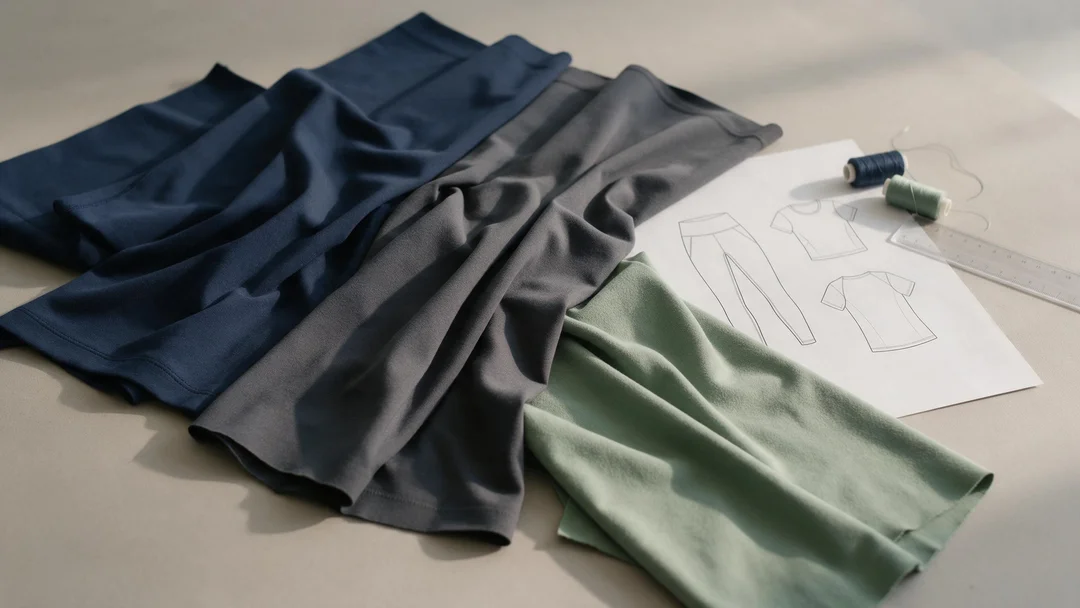
The nylon vs polyester for activewear decision is not just a question of which fabric feels nicer on a swatch card. For a clothing brand, the choice also needs to work in the intended garment, colour, size range and care routine.
This article focuses on nylon-spandex and polyester-spandex options for leggings and training apparel. Use it to organise a material comparison before committing to samples or bulk fabric—not as a substitute for a fabric specification or test report.
Which Is Better for Your Activewear Collection?
Neither fibre is the best choice for every collection; compare complete fabrics against the garment’s intended use and sample requirements.
For a yoga collection, a nylon-spandex knit is one starting point worth sampling alongside a polyester-spandex alternative. For training tops, include a lighter polyester option. These are shortlist directions, not automatic winners. The material that suits a close-fitting legging may be wrong for a loose running top.
Start with Yoga, Training or Running Use
Write down what the garment must do before choosing its fibre. A legging brief might prioritise comfortable movement, a stable waistband and coverage when stretched. A training top brief may prioritise lower weight, ventilation and wet-wear comfort.
Use this comparison to request useful alternatives rather than two unrelated swatches:
| Decision | Nylon-spandex candidate | Polyester-spandex candidate | What should decide? |
|---|---|---|---|
| Close-fitting leggings | Request the intended surface and support level | Request a comparable construction and support level | Fit, feel and coverage in the actual garment |
| Training tops | Include if its feel and weight suit the brief | Include lightweight or mesh options where appropriate | Wear comfort and relevant moisture tests |
| Colour-coordinated sets | Approve the finished colour | Approve the finished colour | A physical comparison, not screen images |
| Cost comparison | Quote the exact material and finish | Quote the exact material and finish | Total garment cost at the same order scope |
Compare the Full Fabric Specification
Ask for 7 fields on each material card: supplier reference, composition, knit structure, weight, usable width, finishing details and colour reference. Keep these attached to the swatch throughout development.
For example, “80% nylon, 20% spandex” identifies a blend, but does not give you a finished-garment performance result. That percentage is an illustration, not a recommended formula. Request the missing construction and test information before treating two blends as equivalent.
Compare the Properties That Matter to the Buyer
Compare the actual candidates on feel, movement and moisture behaviour; fibre names alone do not settle these three decisions.
Handfeel, Surface and Colour Direction
“Soft” is a useful starting description, but a poor final approval instruction. Select a reference swatch and describe what you want to retain: a smooth face, a dry touch, a brushed surface or a particular drape. Ask to review both candidates under the same lighting and after the intended care procedure.
Do not assign one look permanently to one fibre. A fabric supplier can offer different constructions and surface treatments within either family. Compare the offered material, not an imagined “standard nylon” against an imagined “standard polyester.”
For a matching set, review the top and bottom together. A colour that looks acceptable as an isolated swatch may not create the visual match you want across different structures. Keep the approved pairing as a physical reference.
Stretch, Recovery and Opacity
Stretch tells you how a fabric extends under stated conditions. Recovery concerns how it returns after the load is removed. Compression and garment fit are related design questions, but should not be treated as the same measurement.
As one example of a multi-factor approach, the material developer’s LYCRA SPORT programme evaluates stretch, recovery, compression and fit. This reference explains the approach; it does not imply that a GoVoloom fabric is certified under that programme.
Ask for the relevant results for the offered material, then check the garment. Do not approve “squat-proof” from a fibre percentage, fabric weight or a photograph. Include the actual colour and intended fit in your review, especially at the seat, knees and other stretched areas.
Moisture Management, Drying and Care
Separate the claims you want to make. Transporting liquid through a fabric and drying that fabric are different questions. AATCC lists TM195 for liquid moisture management and TM201 for drying rate using a heated plate. Neither method name is itself a pass result. See the AATCC test-method directory.
The public scope of TM195 also identifies fabric structure and fibre/yarn characteristics as factors in its measurements. Consequently, “polyester means quick-dry” or “nylon cannot manage sweat” is not a sufficient specification for a finished product.
Ask the supplier or laboratory which method suits the intended claim, and agree on the relevant conditions and acceptance criteria. Keep the before-wash and after-care assessment clear. Do not borrow a result from another material or present an informal swatch demonstration as a laboratory report.
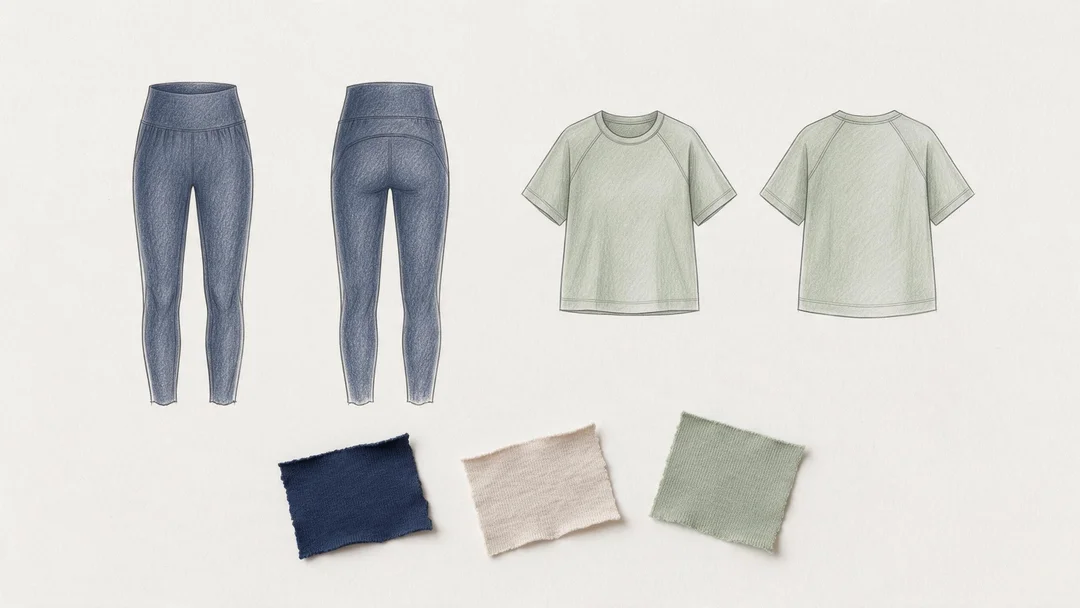
What Should You Check Before Approving Samples?
Approve the material and the garment separately, then record which combination is cleared for production.
Test the Actual Colour and Garment Construction
A swatch helps you shortlist materials. A garment sample lets you evaluate how the chosen material works with the pattern, seams and trims. Neither stage replaces the other.
Organise the review into 3 checkpoints:
- Material review: identify the swatch, confirm its specification and record the colour and finish under consideration.
- Garment review: use the intended fit to assess coverage, movement, seam comfort and waistband behaviour.
- After-care review: follow the agreed care procedure and record appearance, measurements and any performance checks that need repeating.
This is a suggested development checklist, not a standardised test protocol. Let the buyer’s requirements and the selected laboratory methods determine the detailed procedures. Agree on who reviews each checkpoint and how an unresolved issue will be recorded.
If you approve a dark colour first, do not automatically approve a pale colour without assessment. If you change the waistband elastic or pattern, revisit the relevant fit checks. Keep a short change log so that approval belongs to a defined version, not simply to a style name.
Record Acceptance Criteria Before Bulk Production
Use a sample approval sheet with the material reference, colour, garment version, size, reviewer, decision and outstanding actions. The decision can be approved, approved with stated corrections, or not approved. Make clear whether another sample is required before cutting.
Where colour transfer or fading matters, build the relevant colourfastness checks into the plan. For the sequence of prototype, fit and pre-production approvals, use the clothing sampling process article.
Ask that test records identify the tested material and conditions. A report is much easier to use when it can be matched to the approved sample rather than to an unspecified “similar fabric.”
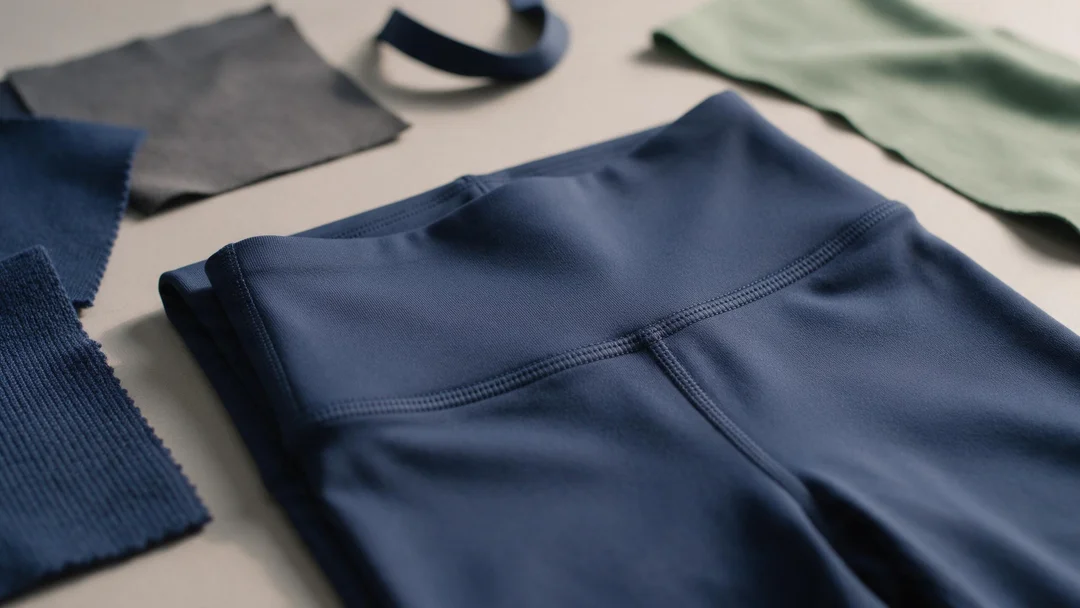
Place the Fabric Choice in Your Wider Sourcing Plan
Keep two linked decisions visible: which material meets the product brief, and which production plan can deliver that approved material.
Read the Clothing Fabric Sourcing Guide
If you are still comparing broader material families or need help specifying a construction, start with the clothing fabric sourcing guide. Use this article for the narrower nylon-versus-polyester decision; avoid restarting the entire material search whenever a new swatch arrives.
Include supply questions in the comparison: whether the offered colour is available, whether the material is stock or custom-developed, and how it will be identified on a repeat order. Obtain project-specific answers rather than assuming the same terms apply to every candidate.
Connect the Material Brief to Activewear Development
GoVoloom’s private label activewear development page covers leggings and training garments, with nylon-spandex and polyester-spandex among the material directions. Bring the comparison back to the intended style and sample requirements.
A shortlist becomes useful when each option has a defined specification, an approval plan and a quote based on the same product scope. That is a firmer basis for choosing than a general claim that one fibre is always more premium.
Ready to Compare Fabrics for Your Collection?
Send a short product-and-material brief so the discussion starts with your requirements, not an unspecified request for “good activewear fabric.”
Send a Short Material and Product Brief
Include these 6 items:
- Product type and intended activity.
- Reference garment, sketches or design images.
- Desired feel, fit and support level.
- Available fabric specifications and colour references.
- Size range and estimated quantities by style and colour.
- Target market, care expectations and performance claims you want to assess.
You do not need every answer before starting the conversation. Mark the undecided fields and separate essential requirements from preferences. A reference image can communicate appearance, but cannot establish composition, dimensions or tested performance.
Discuss your activewear fabric brief with GoVoloom, or email [email protected]. The next step is to narrow the material options and agree on what the samples must demonstrate.