
Adult Clothing · Starting a Brand
How to Turn Early Clothing Returns Into a Useful Revision Brief
Early clothing returns are useful when they lead to a specific next decision: clarify the product information, investigate a technical issue, fix an order-handling problem, or collect missing evidence. Record what the buyer reported separately from what you can verify. A reason such as “too small” does not, by itself, tell you to enlarge the pattern.
Within your clothing-brand plan, this is the step between receiving feedback and approving a change for the next sample or order. Keep customer service moving under your published terms and applicable market requirements while the technical review continues. A manufacturing investigation should not become a reason to postpone a response that is already due to the buyer.
1. Give each returned item a record you can follow
Use one anonymous unit reference for each garment under review. Keep the identifying order information in your restricted customer-service system; the technical review needs the relevant product facts. Repeated emails, a refund and an inspection can all concern the same item, so they should update its record rather than create three apparent problems.
| Field | What to record |
|---|---|
| Item identity | Anonymous unit code, style/SKU, size, color, known production or specification version; mark missing references as unknown. |
| Timeline and status | Delivery date if known, report date, return requested, received or still in transit; refund/exchange status separately. |
| Buyer report | A concise, neutral description of the reported problem and when it appeared. Keep personal details out of the shared brief. |
| Observed evidence | Photos, measured location and method, visible condition, and the specification or retained sample used for comparison. |
| Unknowns and next step | Unconfirmed care history, missing measurements or unclear version; the person responsible for checking and the next review date. |
A requested return is not yet a physically received garment. A refund also does not establish why an item was returned. Shopify's current returns documentation makes a related distinction: a refund without a return does not record a return reason. Whatever system you use, check the actual meaning of each field before copying it into a quality log.
2. Check the observation before naming the cause
Start with the product version and the buyer's expectation. Was the listing showing this version? Did its size information describe body measurements or finished-garment measurements? Was a relaxed silhouette presented as a close fit? These questions can reveal an information gap without proving that the garment was made incorrectly.
For a dimensional concern, identify the exact measuring points, units and garment condition. Compare the actual reading with the agreed specification and tolerance using the same method. Keep washed or worn-item observations distinct from measurements of an unused retained sample; an unknown care history remains an unknown. The body versus finished-garment measurement guide explains that basic distinction.
For a construction concern, take an overall view that identifies the item and a close view that locates the issue. Photograph the inside only where it can be inspected without altering the garment. A visible opening at a seam is an observation; its cause still needs investigation. Do not convert a photo into an unsupported conclusion about thread, tension or operator error.
This follows the distinction behind ASQ's root-cause guidance: describing a problem and establishing its cause are separate tasks. Keep possible explanations in a questions column until the evidence supports them. The method below is a practical brand workflow, not a claim that a photograph or return reason completes a formal quality investigation.
3. Choose the next action the evidence supports
Assign a provisional route and an owner. More than one route may apply: a listing can be unclear while a particular garment also needs technical inspection. Preserve the original report when the classification changes so the next reviewer can see why.
| Route | Evidence to check | Useful next action |
|---|---|---|
| Product information or size guidance | The item matches the agreed reference, but the listing omits or misstates a relevant measurement, fit description or view. | Correct the confirmed information; check it against the actual product. Do not promise that a new description will eliminate returns. |
| Technical review | An observed feature differs from an agreed requirement, or a reported performance concern needs an appropriate examination. | Give the sample/production team the version, comparison and evidence. Agree what to investigate before approving a construction or pattern change. |
| Service or fulfillment | The ordered and dispatched item differ, a delivery issue is documented, or the return needs an operational response. | Address the order and handling process. Retain relevant packing or dispatch evidence; do not automatically revise the garment. |
| Further investigation | The item has not arrived, the version is unknown, measurements conflict, or the report is too general to locate the concern. | List the missing checks, assign the follow-up and set a review date. “Unresolved” is a valid status. |
A fit preference can still matter even when a garment conforms to its specification. Review whether the intended silhouette suits the wearer group you want to serve; that is a design decision to evaluate, not an automatic manufacturing fault. For an information change, use the product-page confirmation checklist to keep photos, size guidance and wording consistent.
4. Compare matching groups, not unrelated return totals
Start with counts by style, version, size and reason. ASQ's check-sheet guidance recommends defining the event and collection period before recording it. That helps prevent a log of physical returns from quietly becoming a mixture of cancellations, exchanges, repeated messages and reported faults.
If you calculate a rate, state the unit, population and cutoff. One useful internal measure is distinct garments physically received back from a defined delivery group ÷ garments delivered in that same group × 100. Call it a received-return rate for that delivery group. It is not automatically the same as your shop platform's metric, a defect rate or a completed assessment of every buyer's experience.
Hypothetical arithmetic: six distinct garments received back from 100 delivered garments is 6%. One from 20 is 5%. If the first group has been observed for 30 days after delivery and the second for only three days, those percentages do not demonstrate an improvement. The durations here illustrate unequal observation; they are not suggested return-policy deadlines.
Choose a comparable observation rule, document the cutoff and show open returns separately. Count an original unit once even if it is exchanged and refunded; record a replacement under its own linked reference. Exclude unshipped cancellations from a delivered-unit denominator. Where one returned garment has several reported reasons, explain that reason counts overlap instead of adding them up as extra garments.
Check exported metric definitions too. Shopify distinguishes broad order reversals from physical returns; a financial adjustment is not a confirmed product defect. Small counts can identify an item worth investigating, but they do not establish a batch-wide cause or a universal threshold for changing the design.
5. Turn a verified finding into a focused revision brief
Send the technical team a question they can investigate and a result they can review. Avoid “make the quality better” or changing the whole size chart because several comments mention fit. Preserve approved features, identify the affected area and agree which evidence will be needed before a proposed change is accepted.
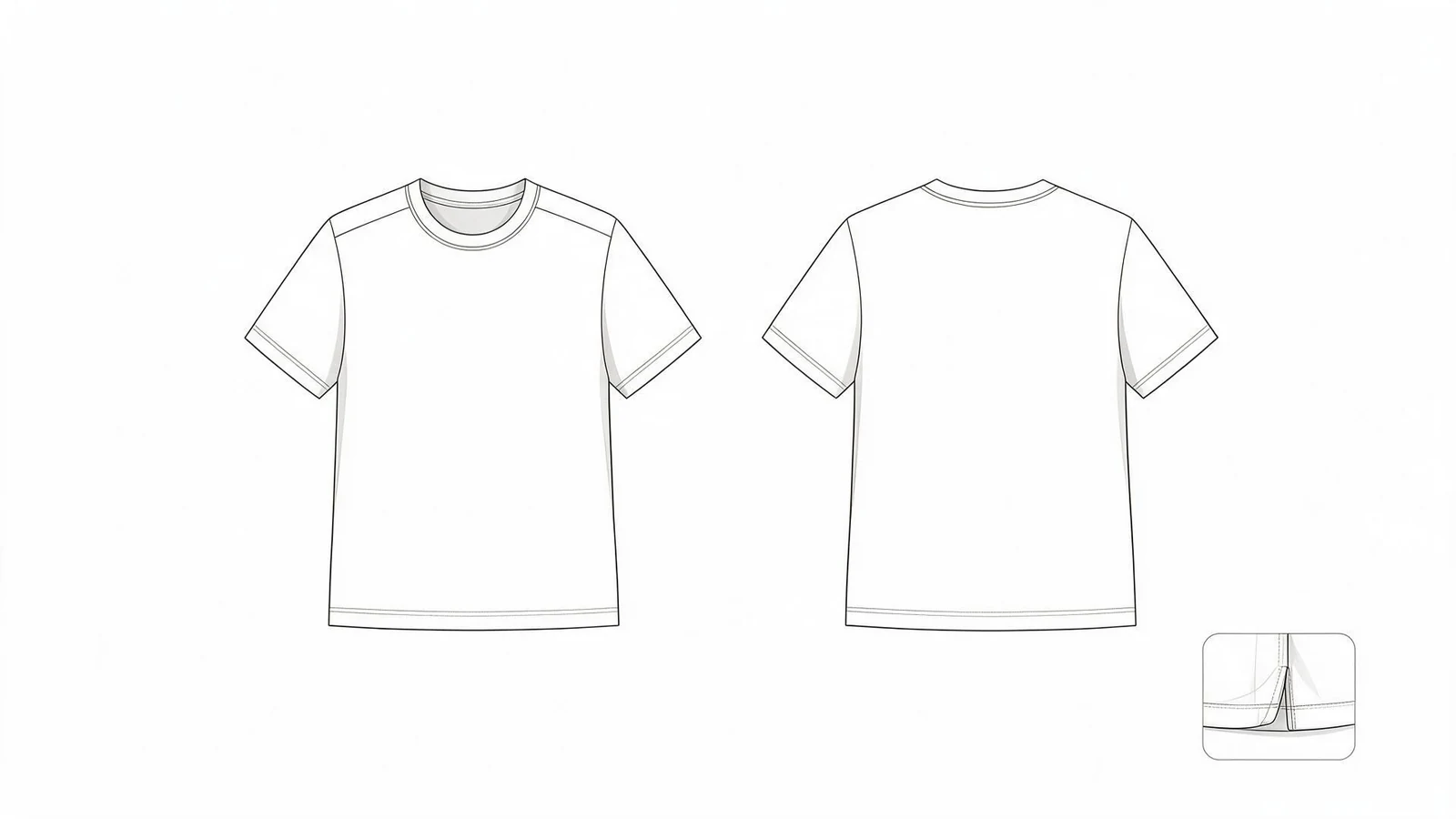
| Brief field | Example entry |
|---|---|
| Reference | Pullover hoodie, specification version 1; anonymous received-item references R01 and R02. Attach the approved pocket drawing and retained-sample reference. |
| Verified observation | An opening is visible at the lower-left pocket attachment on each received item. Mark the location on each item's own photograph. This does not establish the cause or condition of other units. |
| Still unknown | When the openings developed, the relevant wear/care history and whether the two observations share a cause. |
| Request | Review the attachment against the agreed construction and retained sample. Explain the findings and any proposed correction before making a revised sample. |
| Preserve and review | Retain approved pocket placement and silhouette unless a change is explicitly agreed. Define the examination or test method, acceptance criteria and approval scope before assessing the revision. |
Use the existing sample change log worksheet to record the sample ID, observation, proposed change and approval status. Attach the evidence under the same revision reference. The sample review guide provides the checks for comparing the revised garment with its agreed specification.
6. Close the change only after the agreed check
A supplier's acknowledgement is not an approved revision. Record what was changed, what was actually checked, the result and who accepted which features. Keep an unresolved point open if the required material, sample or test result is still missing.
Give an accepted specification a new version and identify the order or batch where it takes effect. Keep the previous reference available so later feedback can be assigned correctly. Do not combine returns from the earlier version with the revised version and claim that the change worked without comparable follow-up.
Once the product decision is clear, return to the first-batch and reorder checklist for quantities, material continuity, pricing and approvals. A useful feedback brief tells you what to investigate or change; it does not, on its own, show how much to reorder.
Method references checked October 24, 2026: ASQ, Check Sheet and Root Cause Analysis; Shopify Help Center, Creating returns and exchanges and Sales reports. The clothing workflow and hypothetical examples are editorial guidance, not customer records or a prescribed return policy.
