
Adult Clothing · Starting a Brand
How to Check a Clothing Retail Price Before Your First Order
Check a clothing retail price by modelling what you keep from a sale, the costs that sale causes, and the cash needed before it happens. A markup on the factory price cannot answer all three questions. Run the same product through full-price, discount and return assumptions before committing to a first production order.
This guide helps a new adult clothing brand decide whether to keep a product specification, revise it or pause the order. It is a planning method, not a sales forecast. For the wider sequence, start with the clothing brand launch guide.
1. Fix the product and selling route first
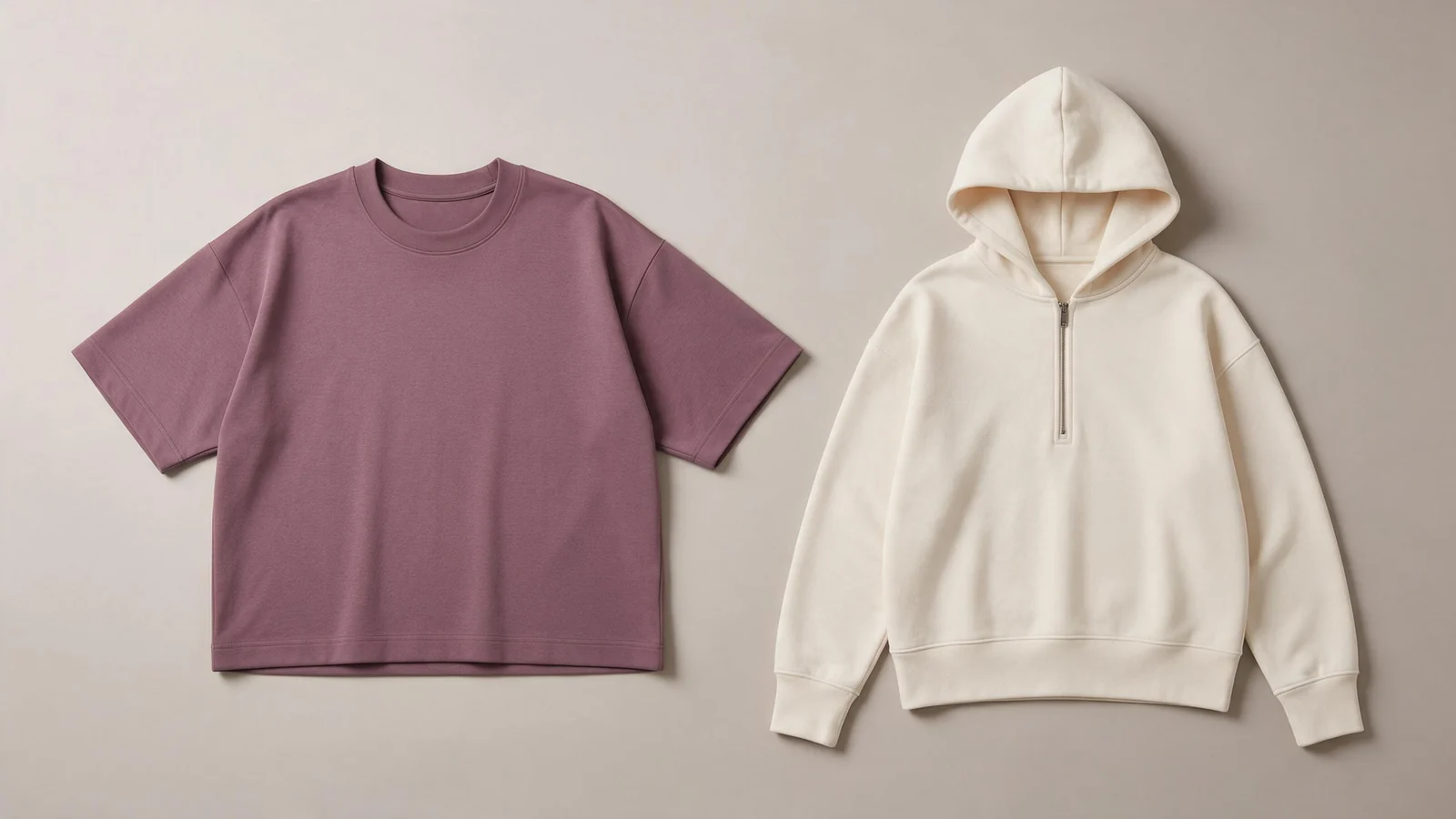
Give each price calculation a specific garment, specification and sales route. A basic T-shirt sold from your own store and a zip-neck hoodie sold through a marketplace do not have the same costs. Neither should inherit the other's margin assumption.
Record the fabric and construction version, decoration, label and packing scope, planned quantity, currency, destination market and sales channel. Specify whether the calculation is for one garment per order or a basket. Allocating a per-order fee to every item can overstate costs; treating it as a per-item fee once for a multi-item basket can understate them.
Connect these decisions to your first collection's styles, colours and sizes. More variants can divide available cash across stock that sells at different speeds. A profitable-looking average does not show which sizes remain on the shelf.
2. Start with the amount the sale actually brings in
Use the intended transaction price after discounts and refunds, with a consistent tax basis. The number on a hang tag is only the starting point. Show a promotion, a customer delivery charge and any refund separately so you can see what changed.
- Product revenue: the selling amount after the applicable discount and refund.
- Customer delivery charges: include them as a separate revenue line if collected, then include the corresponding delivery cost.
- Tax: identify amounts collected for a tax authority and treatment of input taxes under the rules that apply to your business. Do not treat a universal tax percentage as a pricing rule.
- Settlement: distinguish revenue from the amount a platform or payment provider deposits after its deductions. If you start from the net deposit, do not subtract those same fees again.
A wholesale route needs its own model using the wholesale selling price and agreed delivery scope. A direct-to-consumer retail calculation does not establish a workable wholesale price.
3. Count each cost once, on the right basis
Separate inventory cost, selling costs and fixed launch spending before adding them. Mark each line as included, separate or still unconfirmed. A quoted garment price may include some decoration or packing; adding it again inflates the model.
| Cost group | Basis to record | Check before using it |
|---|---|---|
| Garment and inbound delivery | Per unit or shipment allocation | Same specification, quantity, named delivery point and included charges. Avoid adding freight, duty or labels twice. |
| Labels and packing | Setup total, per piece or per order | Distinguish factory packing from the parcel used to fulfil a retail order. |
| Platform and payment charges | Percentage, fixed transaction fee or subscription | Current provider terms for your region, currency, fee base and refund treatment. |
| Retail fulfilment | Per order plus any relevant storage charges | Picking, packing, outbound delivery and fees for additional items or destinations. |
| Returns and replacements | Separate scenarios tied to orders | Refund amount, unrecovered charges, transport, handling and whether an item is saleable again. |
| Customer acquisition | Relevant cost per order or named campaign budget | Use observed evidence where available. An assumed acquisition cost is not a forecast or a zero-cost customer. |
| Development and overhead | One-time costs and costs for a stated period | Samples, revisions, photography, store costs and other spending attributable to the plan. |
Use the reference-price budget guide as a scoped starting point, then obtain a written quote. The private label manufacturing guide explains how to compare included work. Published reference ranges are not your confirmed landed cost.
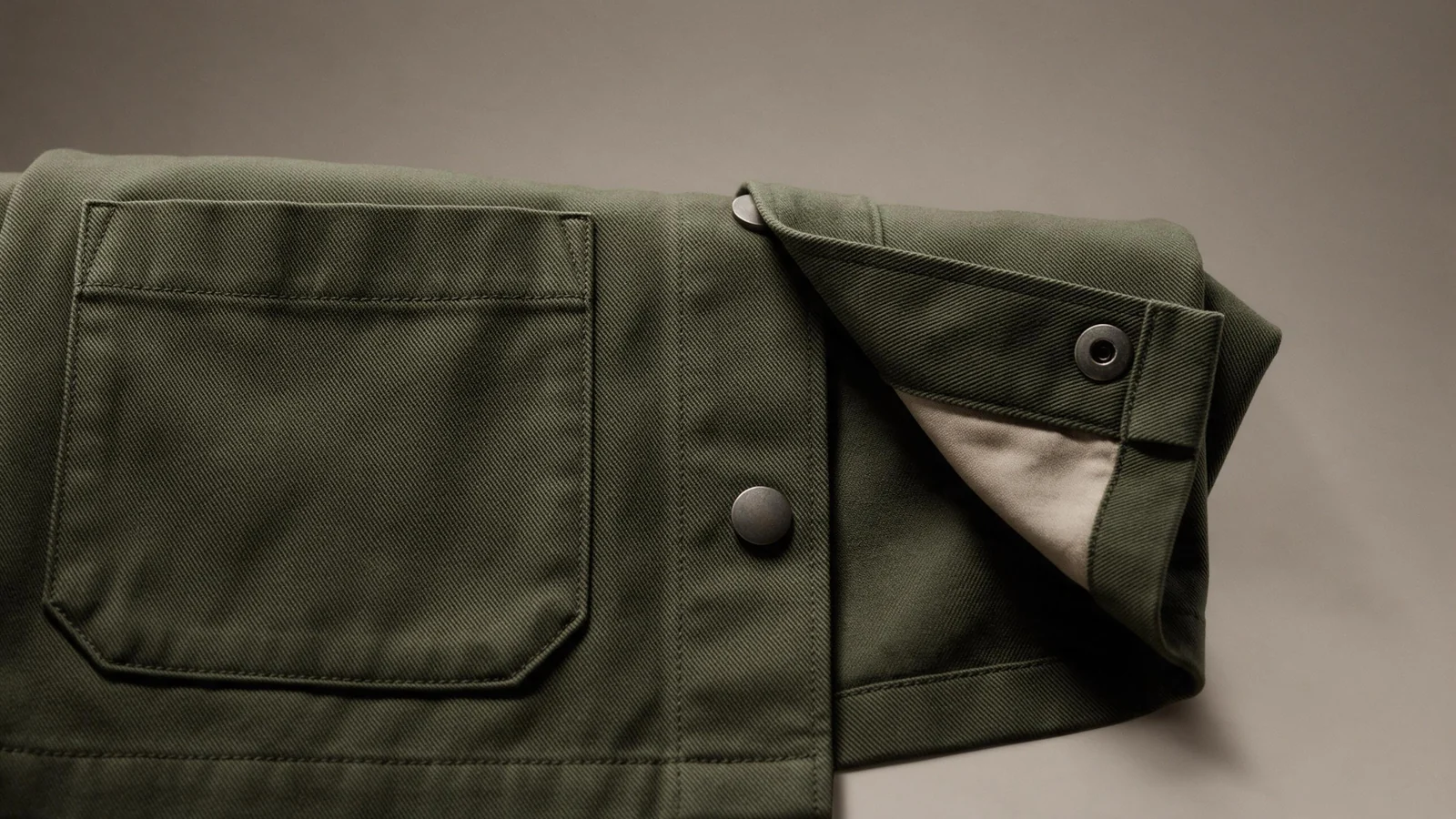
Some costs change in steps rather than smoothly with sales. A warehouse minimum, for example, may have a fixed part and usage charges. Record that structure instead of forcing every cost into a single percentage.

4. Calculate contribution before calling it profit
For a consistent single-product model, contribution per kept sale is its revenue less the variable costs assigned to that sale. It is the amount available for the fixed spending and other expenses you still need to cover. It is not automatically net profit.
Here is a deliberately fictional example, in US dollars. The product price is $60 excluding sales tax. Landed inventory cost is $30 per garment, retail parcel packing $1, and fulfilment including outbound delivery $5. A made-up payment charge is 5% of the product amount originally collected: $3 on a $60 order. There is no fixed payment fee, platform fee, customer delivery charge or acquisition cost in this example. Those omissions limit what it can tell you; add applicable costs to your own calculation.
$60 − $30 − $1 − $5 − $3 = $21 contribution per full-price, kept order. The invented payment rate and all dollar amounts are arithmetic assumptions, not provider rates, GoVoloom prices or an industry benchmark.
Keep markup and margin denominators separate. With price $60 and inventory cost $30, markup on that inventory cost is ($60 − $30) ÷ $30, or 100%; gross margin on that stated cost basis is ($60 − $30) ÷ $60, or 50%. Neither subtracts the remaining selling costs above. A price of twice inventory cost therefore does not mean half the price is net profit.
5. Test discounts and returns on the same order cohort
Change the assumptions, not the definition of the result. The table follows 100 one-item orders, with all 100 garments purchased and sent. This is a hypothetical cohort for calculation, not a recommended order size, return rate or expected demand.
For return scenarios, assume 10 complete product refunds; the 10 returned garments cannot be resold and have no recovery value in this example. Their original $30 inventory cost remains a cost. Payment charges are not refunded, outbound fulfilment and packing remain spent, and return handling costs a fictional $4 per return including any return transport. All refunds are reflected in revenue; do not subtract them a second time as an extra expense. The discount is 20% where shown.
| Scenario | Product revenue after refunds | Inventory cost | Payment charges | Fulfilment + packing | Return handling | Cohort contribution |
|---|---|---|---|---|---|---|
| $60, all kept | $6,000 | $3,000 | $300 | $600 | $0 | $2,100 |
| $48 after discount, all kept | $4,800 | $3,000 | $240 | $600 | $0 | $960 |
| $60, 10 refunded returns | $5,400 | $3,000 | $300 | $600 | $40 | $1,460 |
| $48, 10 refunded returns | $4,320 | $3,000 | $240 | $600 | $40 | $440 |
The discount removes $1,200 of revenue in the all-kept scenario, but the inventory cost does not fall. Payment charges fall only because this particular assumption makes them proportional to the collected price. Your provider might have a different fee base, a fixed component or different refund terms.
If returns can be resold, model their inspection, repacking, resale timing and any markdown separately. Do not keep the full write-off while also treating the same garment as saleable inventory. Conversely, a refund is not evidence that an item can be sold again.
6. Check fixed spending and cash separately
A positive contribution can coexist with a cash shortage. The U.S. Small Business Administration describes a single-product break-even estimate as fixed costs divided by selling price less variable cost. Use a consistent period and cost scope, and recognise that the estimate depends on its assumptions.
Suppose the example has another fictional $1,000 of fixed spending assigned to the launch period. At $21 contribution per kept sale, $1,000 ÷ $21 is about 47.62: the simplified model needs 48 full-price kept sales to cover that named spending. This assumes constant costs, no refunds and no other expenses. It does not establish how many customers will buy.
Now consider cash. Assume all 100 units cost $3,000 upfront, the $1,000 fixed spending is paid, and 48 sales are settled. Revenue is $2,880; payment charges are $144, fulfilment $240 and packing $48. Cash from those sales after these charges is $2,448. Against the $4,000 already paid, the model still has a $1,552 cash gap, while 52 units remain in inventory at the assumed $30 each. The model's contribution after the named fixed spending is $8; that is a different measure.
Build a dated cash schedule for deposits, balances, inbound delivery, storage, refunds and platform settlements. A positive unit result does not pay a supplier before customer money arrives. Australian Government business.gov.au guidance similarly connects pricing, payment timing and inventory management with cash flow.
7. Turn the model into a first-order decision
Use the result to choose what to confirm or change. A price ceiling is only useful when the assumptions behind it are visible.
- Keep investigating: a material, delivery or fee assumption remains unpriced. Obtain that specific information before treating the model as workable.
- Revise the specification: request an alternative for an identified fabric, trim or packing choice, then check appearance and function on the relevant sample. A lower quote is not evidence of equivalent quality.
- Reconsider the offer: if you change price, channel or delivery charges, assess the offer again with the intended customer. A model cannot establish willingness to pay.
- Reduce commitment or pause: discuss a feasible scope with the supplier, or pause when the required cash or contribution does not fit your constraints. Do not assume an arbitrary smaller quantity will be accepted.
Keep the retail decision separate from the supplier conversation. Share the specification version, planned quantity and destination; ask for price basis, included work, development charges and delivery exclusions. Supplier pricing is confirmed for that scope, not reverse-engineered from a promised retail profit.
If the first quote exceeds the amount your plan can support, use the design simplification guide to compare specific revisions, preserve the garment’s essential function and request a clearly identified new quote.
When the uncertainty is still customer interest, use the idea validation guide before adding more stock assumptions. For product development, discuss your clothing brief with GoVoloom and identify the quote or sample information the model still needs.
Questions before pricing a first clothing order
Is there a universal markup for a new clothing brand?
No. The workable price depends on the product, selling route, included costs, discounts, refunds, fixed spending and customer response. A multiplier alone does not establish contribution, net profit or the cash needed to launch.
Should I spread sample costs over every garment?
You can allocate development spending for planning, but keep the total visible and record which quantity you used. Do not allocate it into unit cost and then subtract the same total again. The date you pay it belongs in the cash schedule.
Can a positive contribution justify a production order?
It is one check, not a complete decision. Confirm the specification and quote, test relevant demand assumptions and check cash timing and exposure to unsold stock. Positive contribution under one scenario does not guarantee sales or an affordable launch.
Method sources: the U.S. Small Business Administration's startup-cost and break-even guidance, and Australian Government business.gov.au pricing and cash-flow guidance. The clothing examples, rates and scenario figures above are original editorial assumptions; they are not quotations, market data or tax advice.
