Adult Streetwear · Pants Development
Cargo Pocket Placement: A Streetwear Pants Sample Brief
A cargo pocket changes more than the outline of a pair of pants. Its position affects where the wearer reaches, how a filled pocket sits and how the side of the leg looks. A large rectangle drawn on the thigh leaves the sample team several decisions to make.
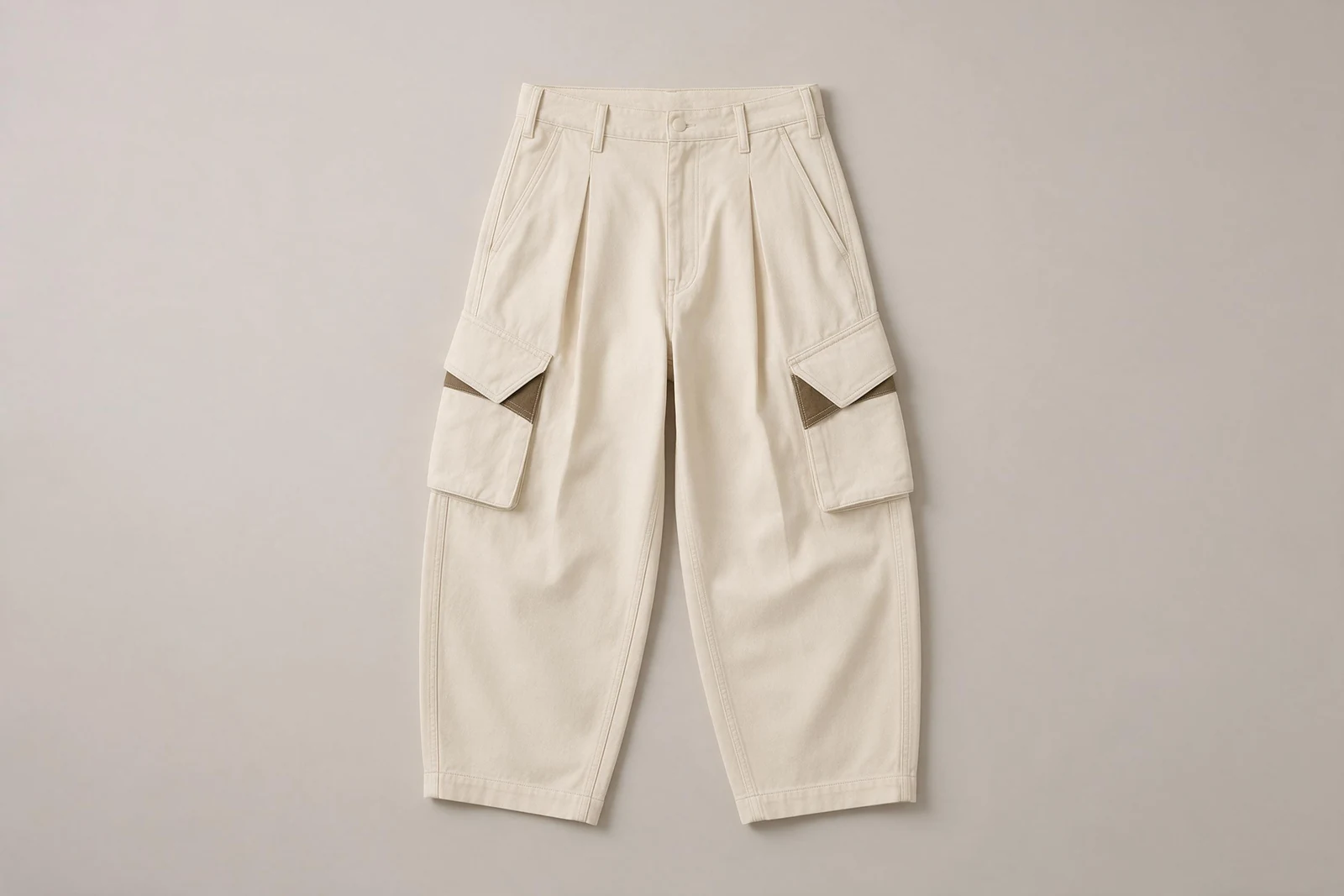
Start by separating pocket placement, usable opening and pocket volume. Then review those choices on the intended trouser fit. The garment references in this article show different design directions; they do not establish dimensions or demonstrate a wear test.
1. Place the pocket on the intended trouser fit
Set the trouser wearing position and leg shape before fixing the cargo pocket location. The same distance below a waistband can sit differently on a high-waisted trouser and a lower-slung style. A pocket that looks balanced on a flat drawing may also turn towards the front or back when the garment is worn.
Mark the intended waist position and use a reference size or garment. Decide whether the pocket should be centred on the side of the leg, shifted towards the front, or wrapped around a panel. Show this in the drawing instead of relying on the word “side.” Identify left and right from the wearer's perspective.
Next, consider the lower edge in relation to the knee area and the intended trouser silhouette. There is no universal distance above the knee for every cargo pocket. Leg length, rise, pocket height and the design direction change that relationship. A deliberately low pocket can be a valid design choice, but it still needs a sample review.
Keep this decision separate from adding room to the whole leg. If the trousers already pull across the thigh, moving the pocket will not necessarily resolve the underlying fit. Use the streetwear pants fit review to define rise, thigh and hem balance before blaming the pocket.
2. Specify the face, opening and expansion separately
Record the visible pocket face, usable opening and expanding sections as separate features. A wide pocket face does not guarantee a hand or intended item can pass through its opening. The flap, fastener and way the opening is finished all affect access.
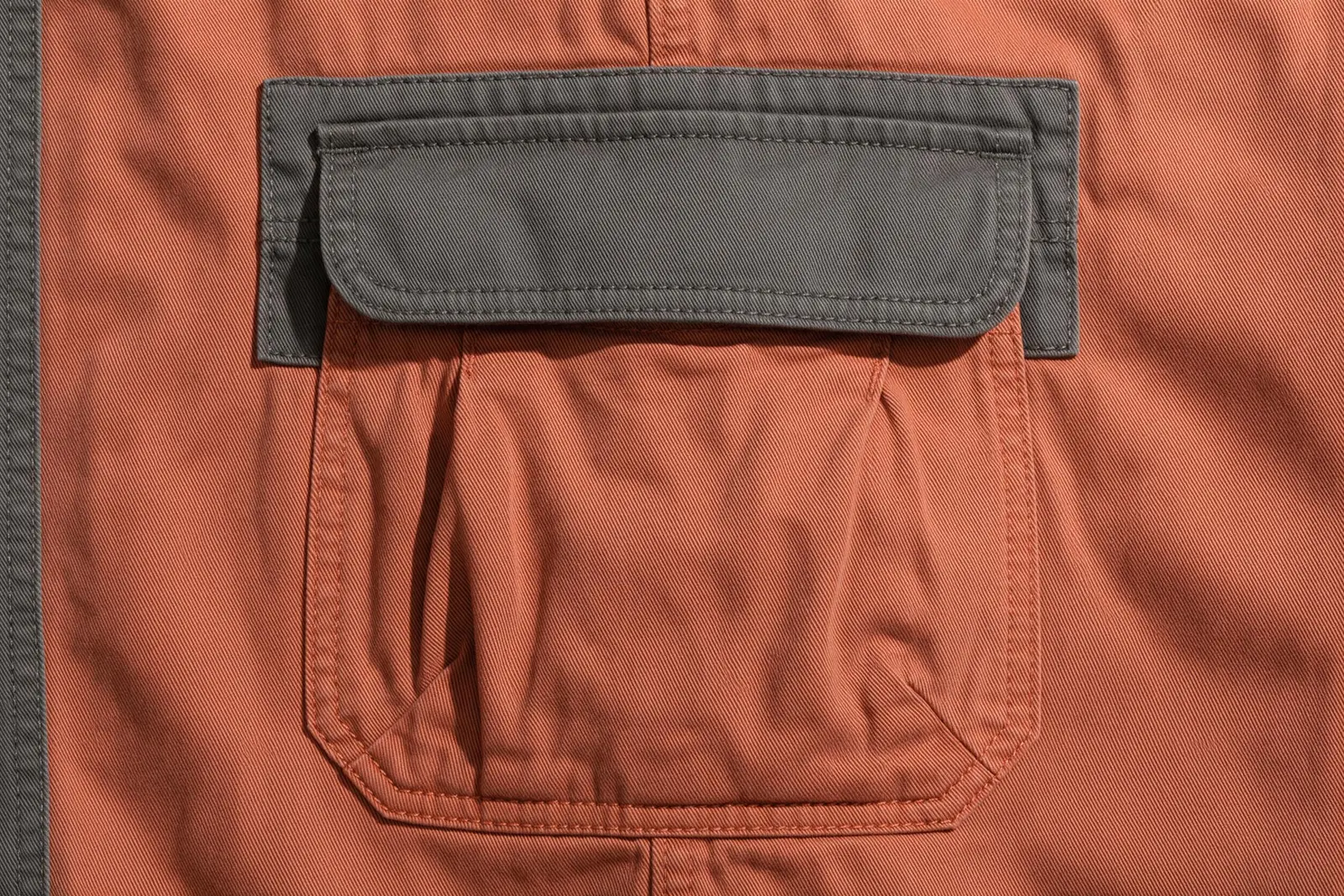
A flat patch pocket sits close to the trouser panel. A pocket with a pleat or side gusset can expand away from it. Show which edges are attached and where the extra fabric opens. “Bellows pocket” alone does not define the fold direction, finished depth or how flat the pocket should look when empty.
| Field | What the drawing or brief should define |
|---|---|
| Vertical placement | Named starting point, such as the waistband joining seam, and the exact pocket endpoint |
| Position around the leg | Relationship to the side seam or a clearly identified panel seam; wearer’s left and right |
| Finished pocket face | Width and height between marked finished edges, with the pocket in a stated condition |
| Usable opening | Accessible span and opening direction, separate from the width of the pocket face |
| Pleat or gusset | Location, fold direction, finished expansion and the intended empty appearance |
| Flap and closure | Coverage, overlap, fastener position and the area left clear for access |
Use an arrow for each measurement and name its endpoints. “Pocket down from waist” is ambiguous if one person measures from the top edge and another from the waistband seam. If a style has no conventional side seam, choose another stable reference and label it.
Do not scale every pocket dimension automatically with the trouser size. Decide which features should stay consistent and which need adjustment. The opening still has a practical purpose, while the face and location contribute to the overall proportion. Confirm the proposed size rules with the technical team.
3. Review the pocket on a sample, empty and in use
Review the pocket on the complete trousers, first empty and then with the agreed intended contents. Record the material and sample revision. A crisp fabric can hold a folded pocket differently from a soft fabric; a picture cannot confirm fabric weight, strength or dimensional stability.
Check the empty garment first. Look at the flap coverage, whether a pleat stays in its intended direction and whether the pocket pulls the adjacent panel. Compare the front and side outline with the drawing. A pocket designed to stand away from the leg should not be judged against an unspoken requirement to lie completely flat.
Then use ordinary, safe items representing the intended use. Note what was placed in the pocket rather than writing “tested with weight.” Observe whether the opening is easy to reach, whether the item fits without forcing it and whether the closure can be used as intended. These are development observations, not proof of a load capacity.
With the trousers at the intended waist position, review comfortable walking and sitting. Record any contact at the knee, pulling around the attachment area or change in the leg outline. Keep the contents and wearing conditions consistent when comparing revisions. The clothing sampling guide explains how these observations fit into a wider approval process.
If a problem appears, describe it before prescribing a change. “The lower pocket edge presses against the knee when sitting with the agreed contents” is more useful than “make it better.” A change to height, location, expansion or the trouser fit may be relevant; the sample team needs to identify which one addresses the observation.
4. Turn the decisions into a factory brief
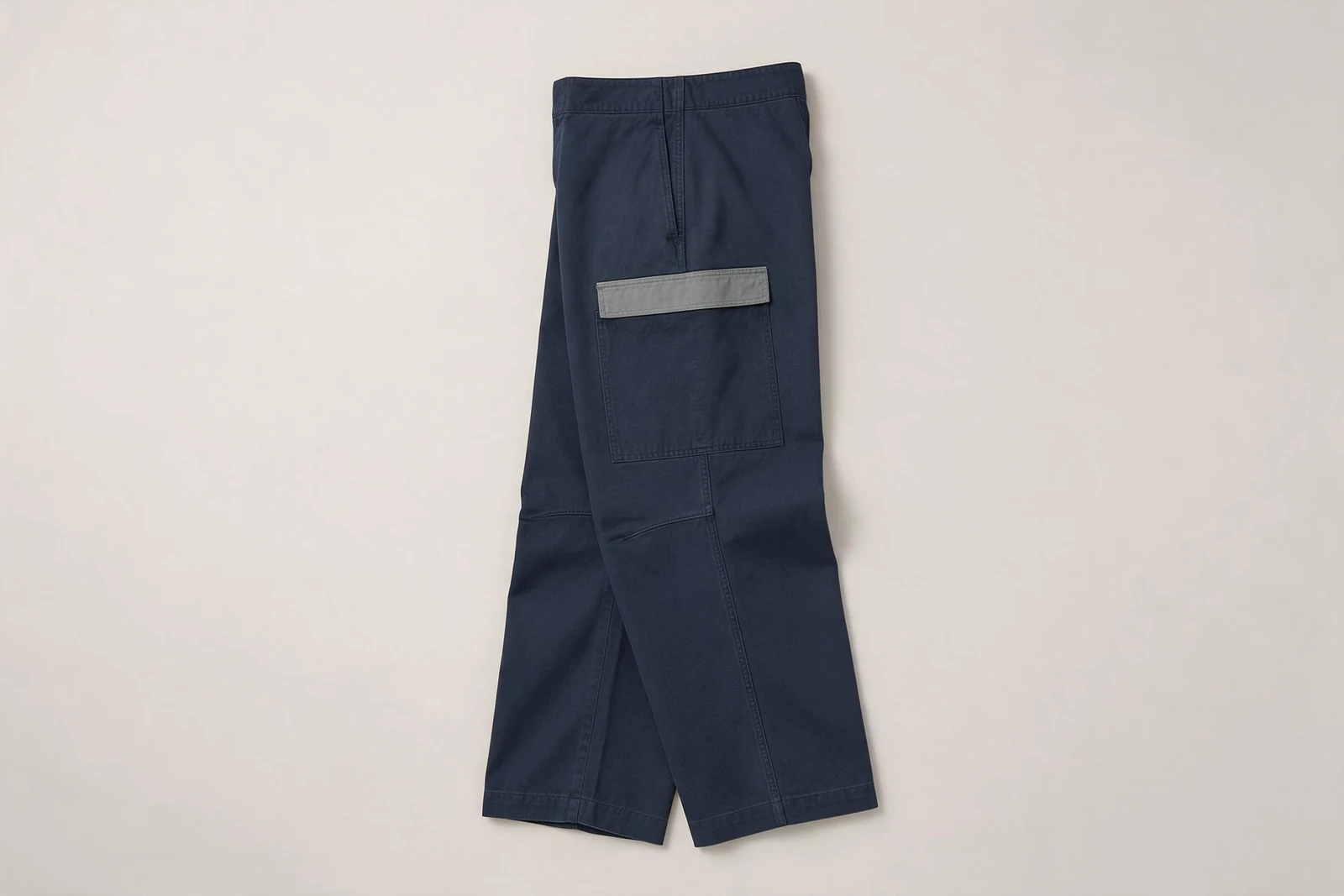
Send clear design views and identify the starting size, fabric requirements and fit requirements. GoVoloom needs front and back views at minimum; front, back and side views are preferable. A front-only image is insufficient. For a cargo pocket that wraps around the leg, a side detail is especially useful for explaining the design.
You can begin without a completed measurement chart. State the reference size and target adult wearer or market, then separate known requirements from decisions that need advice. A size label is a starting point, not a universal finished-garment measurement. The factory can help clarify the technical specification from this brief.
Use the tech pack construction checklist to connect your pocket notes with the rest of the garment. Keep the drawing version and written comments together so an older pocket shape does not remain in the next sample request.
Style / drawing version / sample revision:
Front and back views / side view or pocket detail:
Reference size / intended wearer / waist position:
Fabric requirements / fit requirements:
Pocket position and named measurement references:
Finished face / usable opening / pleat or gusset:
Flap and closure / intended contents:
Observed issue / requested change / features to preserve:
Confirmed details / open questions / next review:
Add this record to your pants development brief. GoVoloom's MOQ is 100 pieces. Quantities, colour and size allocation, sample scope, costs and timing need written confirmation for the project. Pocket approval should identify the actual sample and reviewed conditions; it does not automatically approve unreviewed materials or the entire size range.
5. Questions before sending a cargo pants design
Confirm the design intent and measurement references before asking for a pocket revision. These questions cover decisions that are easy to leave implicit.
How far above the knee should a cargo pocket sit?
There is no universal distance. Choose the position in relation to the intended waist level, leg shape, pocket height and reference size, then check comfortable movement on the sample.
Does a larger pocket face mean more usable capacity?
Not necessarily. The opening, attached edges, pleats or gussets, flap and closure also affect what can be placed inside. Specify those features separately and review the intended contents.
Must the left and right cargo pockets be identical?
No. An asymmetric design is possible as a design direction. Show each side explicitly and label wearer’s left and right, so a deliberate difference is not mistaken for a sample error.
Can I start with a reference size instead of a full chart?
Yes. Provide front and back views at minimum, preferably with a side view, plus a reference size, fabric requirements and fit requirements. GoVoloom can help clarify the remaining specification; a front-only image is insufficient.
Send your cargo pants design and starting brief, including the pocket details you want to preserve and the questions you would like the sample team to resolve.