
Industry News · Manufacturing Technology
China’s Sewing Robots Are Here: A Shirt Line Claims 70% Fewer Workers
Forty workers down to twelve. That is the staffing comparison behind Aitu’s new robotic shirt line—and the figure that makes this Chinese sewing-robot launch worth watching.
Aitu, a business under Jack Technology, unveiled its “Aini” (艾妮) sewing robot and a complete garment production line in Hangzhou on October 28, 2026. The line’s maker reports equivalent production capacity with 12 people instead of 40: a 70% reduction in line staffing, calculated from the company’s figures. Hangzhou Daily reported the launch on October 29.
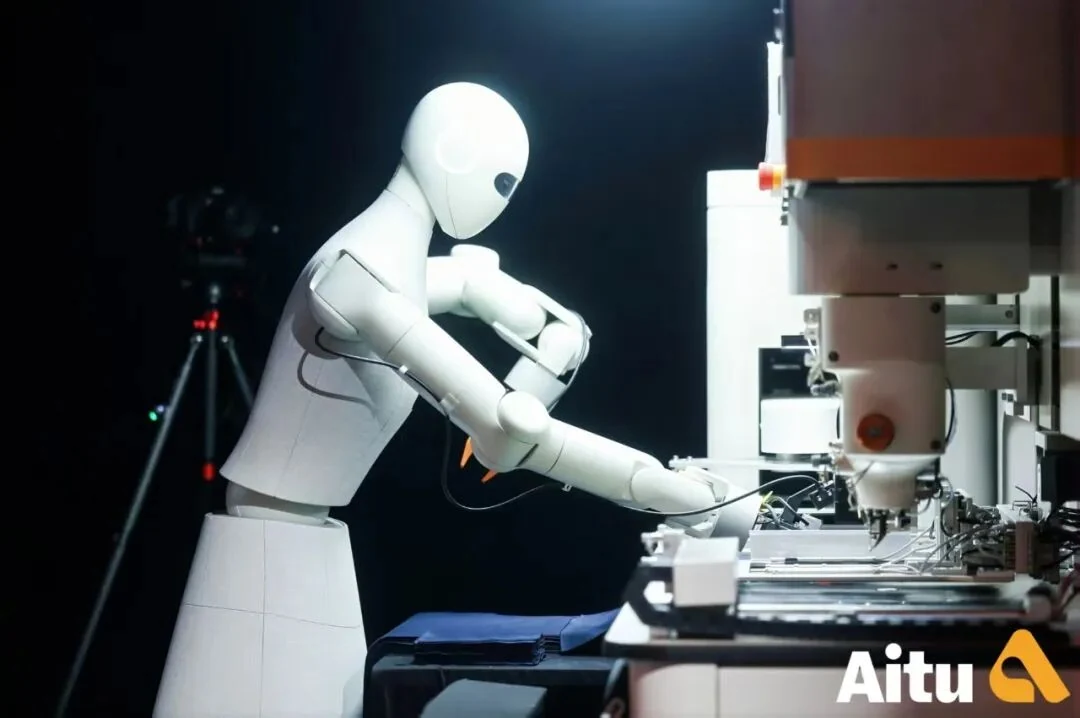
From 40 workers to 12—and up to 1,000 shirts a day
The headline numbers describe a complete shirt line. Aitu’s system combines cutting, material delivery, robotic sewing and inspection. Its Chinese product name is “产线王,” which we refer to here as Aitu’s complete robotic garment line.
The Beijing News reported the following company figures for the line installed at Shengtai Group:
| Measure | Reported figure | Stated conditions |
|---|---|---|
| Line staffing | 40 people reduced to 12 | Equivalent production capacity. |
| Solid-color shirts | 1,000 per day | A 20-hour operating period. |
| Striped or checked shirts | 700 per day | The same stated 20-hour operating period. |
The same report gives the Aini robot a China launch price of RMB 308,000. That is the announced single-robot price; a complete line also needs its connected equipment and installation arrangements.

Two factory deployments put the launch into focus
Chenfeng Group and Shengtai Group appear in the reporting for different applications. Chenfeng is identified with Aini working on five shirt-making operations: collars, cuffs, pocket attachment, buttonholes and button attachment. Shengtai is identified with the integrated shirt line. The Beijing News describes both deployments.
The distinction shows the scale of Aitu’s proposal: a robot that can be assigned work at particular stations, and a wider system that coordinates equipment and materials through production. That structure moves the story beyond a single sewing demonstration to a connected set of production operations. This is industry coverage of those companies’ systems, not equipment installed at GoVoloom.
The telling moment: a missed pick, then another attempt
A small incident at the launch helps explain the bigger technical challenge. Hangzhou Daily reported that the robot missed a piece of fabric, then tried to pick it up again instead of proceeding as though it had succeeded. That is a specific observation from the demonstration, rather than a measured production success rate.
Fabric handling sits at the center of Aitu’s proposal. Its official product description lists separation, gripping, placement and alignment of cut pieces, with robots working alongside fixtures and sewing equipment. The visible work starts before the needle moves: extracting the required piece, positioning it and preparing it for the next operation.
The launch report also describes workers teaching the robot operations and the system responding to fabric displacement. These are the capabilities to watch closely as deployment expands beyond the announced applications. See Hangzhou Daily’s account of the demonstration.
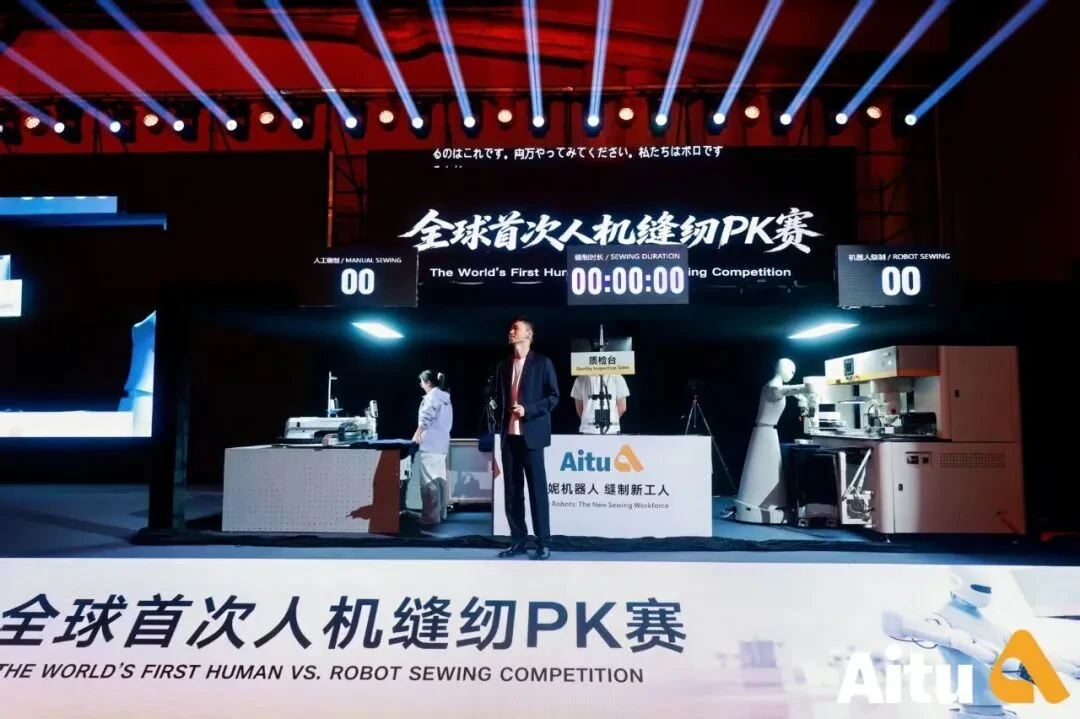
Watch: an official Aitu sewing-robot demonstration. The source page does not state when this footage was recorded. It is included as background, not as a recording of the October 28 launch or proof of the new shirt line’s daily output.
Watch the official demonstration (23 seconds)
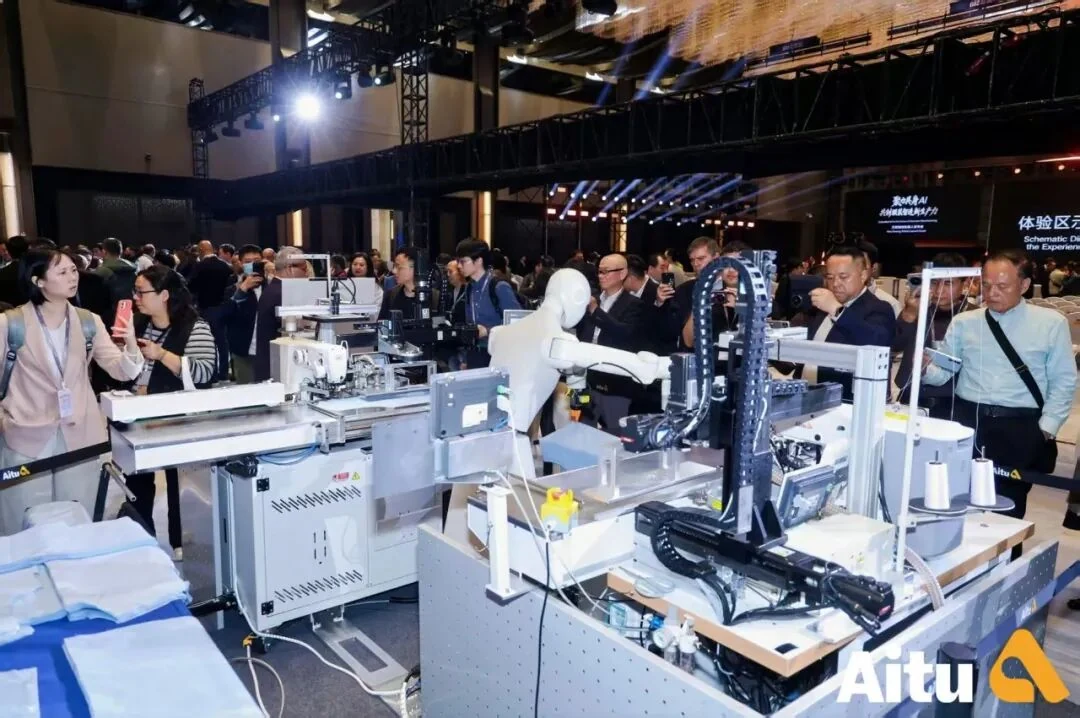
A commercial launch—with scale still to prove
Jack Technology’s own filing places the business in early commercialization. In its 2026 third-quarter report, published October 30, the company confirms the launch and says the business is moving beyond product validation and small-volume trial sales into commercial promotion. It also states that large-scale commercialization remains uncertain.
The reported line still uses 12 people. Its staffing and output numbers are company disclosures, not independent GoVoloom test results. They support a claim of substantial automation in the described shirt line, rather than a completely unattended factory or automatic production of every garment style.
The economics will also depend on equipment, maintenance, training, changeovers, utilization and accepted output. A lower headcount is a powerful starting point for that comparison, but it does not settle the cost of each finished garment. Repeat production records will give a clearer picture than the launch figures alone.
What clothing brands should watch next
The next useful evidence is repeat performance on the clothes a buyer actually needs. For sourcing teams, the practical questions concern the selected fabric and construction, the operations that remain manual, style changes and the way acceptable output is counted.
A clear product brief provides the basis for that discussion. Line output also has to fit the wider order: material sourcing, sample approval, inspection and delivery. Our manufacturing timeline guide explains where the production stage sits.
The launch gives the apparel industry something concrete to examine: a named robot, named factory applications and a 40-to-12 staffing claim. The next question is how far that performance travels across repeat orders, materials and operating conditions.
