
Design Journal · Autumn Womenswear
Autumn Apparel Design Inspiration: From Color Palette to Everyday Silhouette
A visual study of how a caramel trench coat and indigo wide-leg denim can become one coherent autumn story.
August 28, 2026 · 7 min read
Design Journal
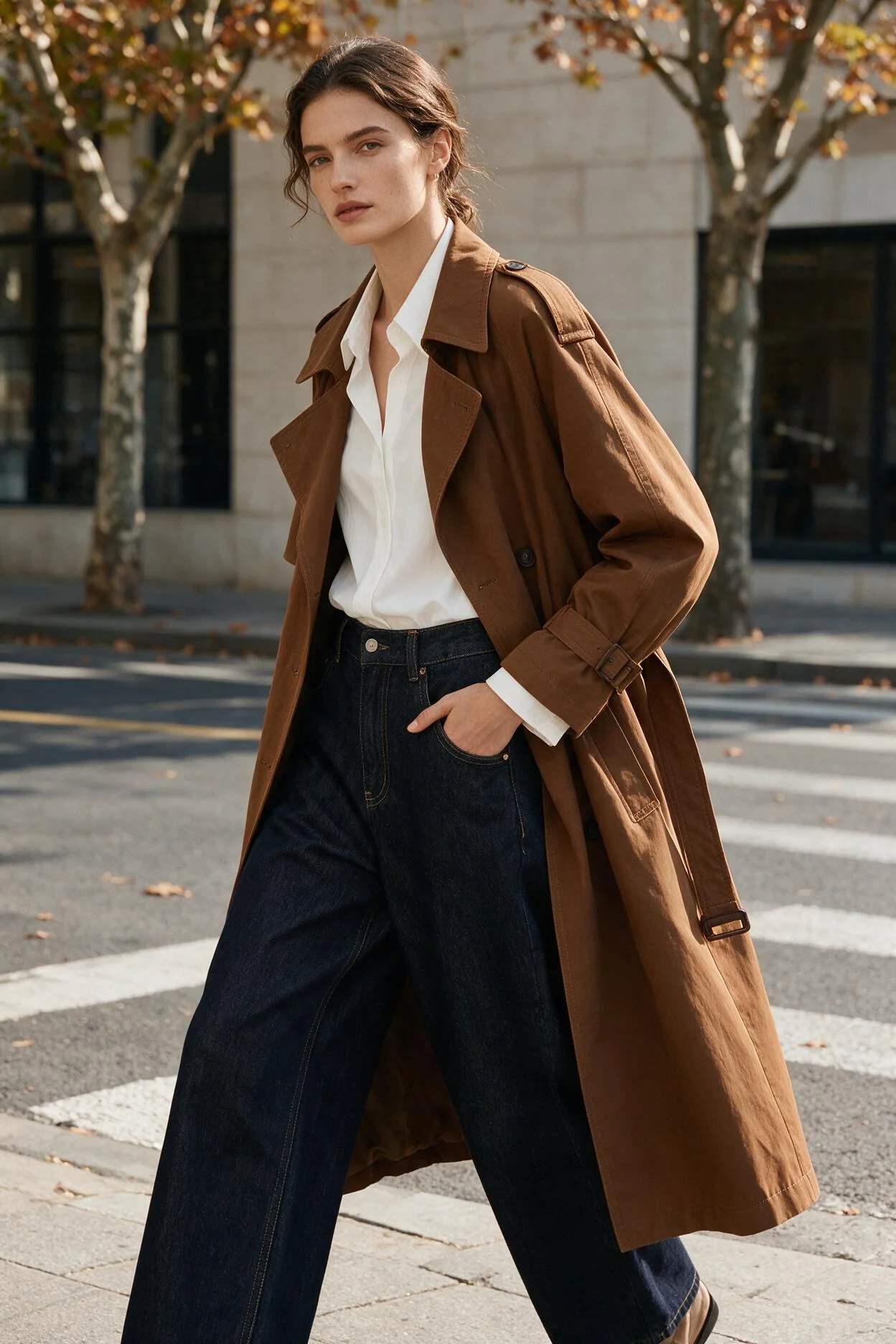
This article explores an autumn outfit: the color relationship, the proportion of each piece and the details that make a classic silhouette feel current. The visuals are design references, not final production specifications.
In This Study
1. Starting with Two Anchor Pieces
For this autumn design study, we started with two familiar wardrobe pieces: a long trench coat and a pair of wide-leg jeans. The goal was not to create a complicated outfit. It was to see how a strong outer layer and a relaxed bottom could work together without competing for attention.
The trench coat gives the look structure and a clear vertical line. The jeans bring volume, ease and a more casual rhythm. A simple white shirt sits between them as a visual pause, keeping the outfit readable.
2. Building the Autumn Color Palette
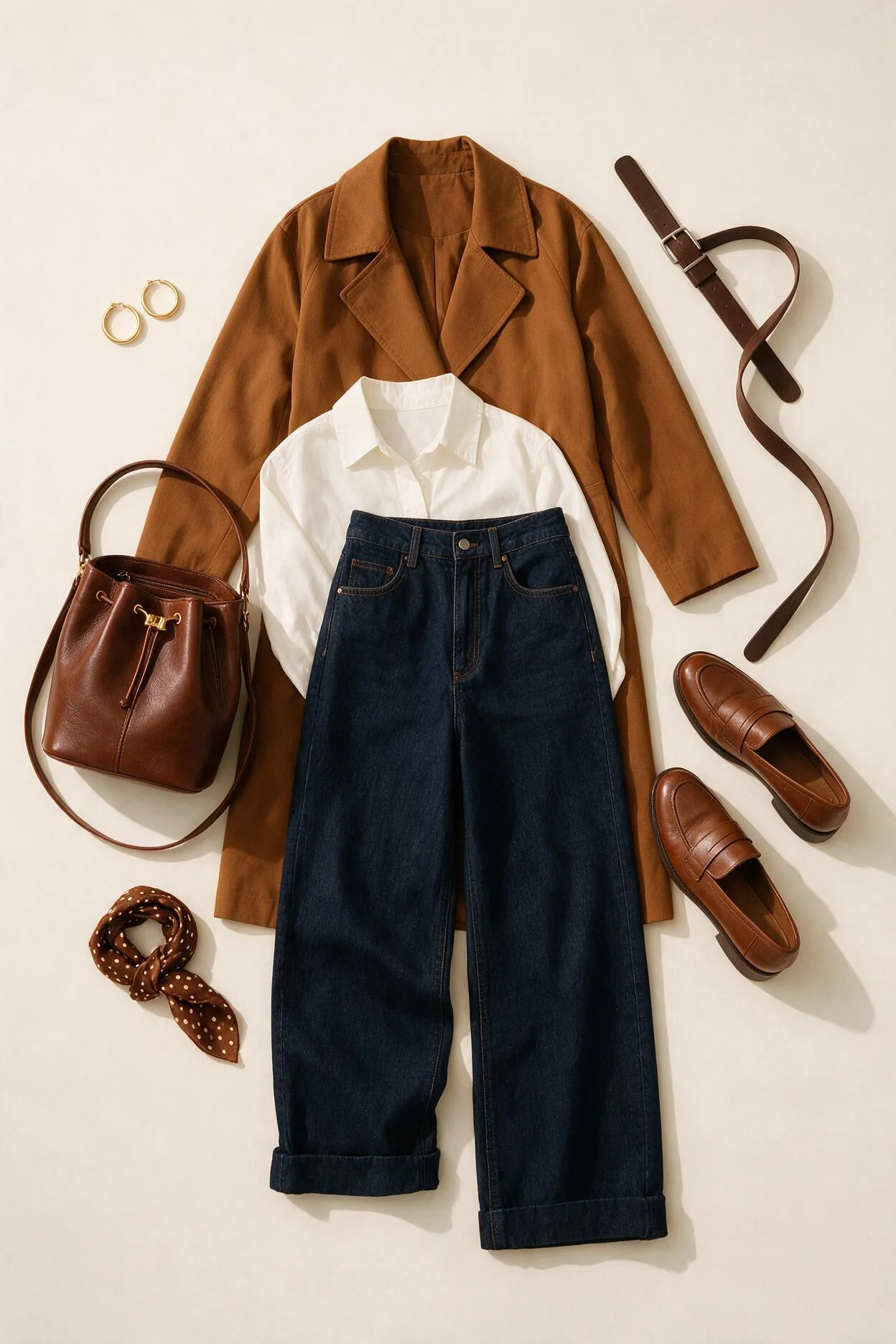
The palette is intentionally small. Caramel brown carries the warmth of the season, deep indigo adds weight and contrast, and ivory keeps the combination light enough for everyday wear. Espresso accessories connect the two main colors without introducing another loud accent.
A limited palette also makes the design easier to extend. The same caramel outerwear direction can work with denim, tailored trousers or a knit dress. The point is not to lock every look into one outfit, but to create a color system that gives the collection a recognizable mood.
3. Balancing Proportion and Movement
The coat falls below the knee, creating a long outer line. The jeans are relaxed through the leg, so the outfit feels comfortable rather than sharply tailored. The contrast is important: a structured collar and shoulder line keep the top half composed, while the wide leg gives the lower half room to move.
When two oversized pieces are worn together, proportion needs to be intentional. A cleaner shirt, a defined waistband and a visible shoe help anchor the volume. The result feels relaxed, but not shapeless.
4. Why the Small Details Matter
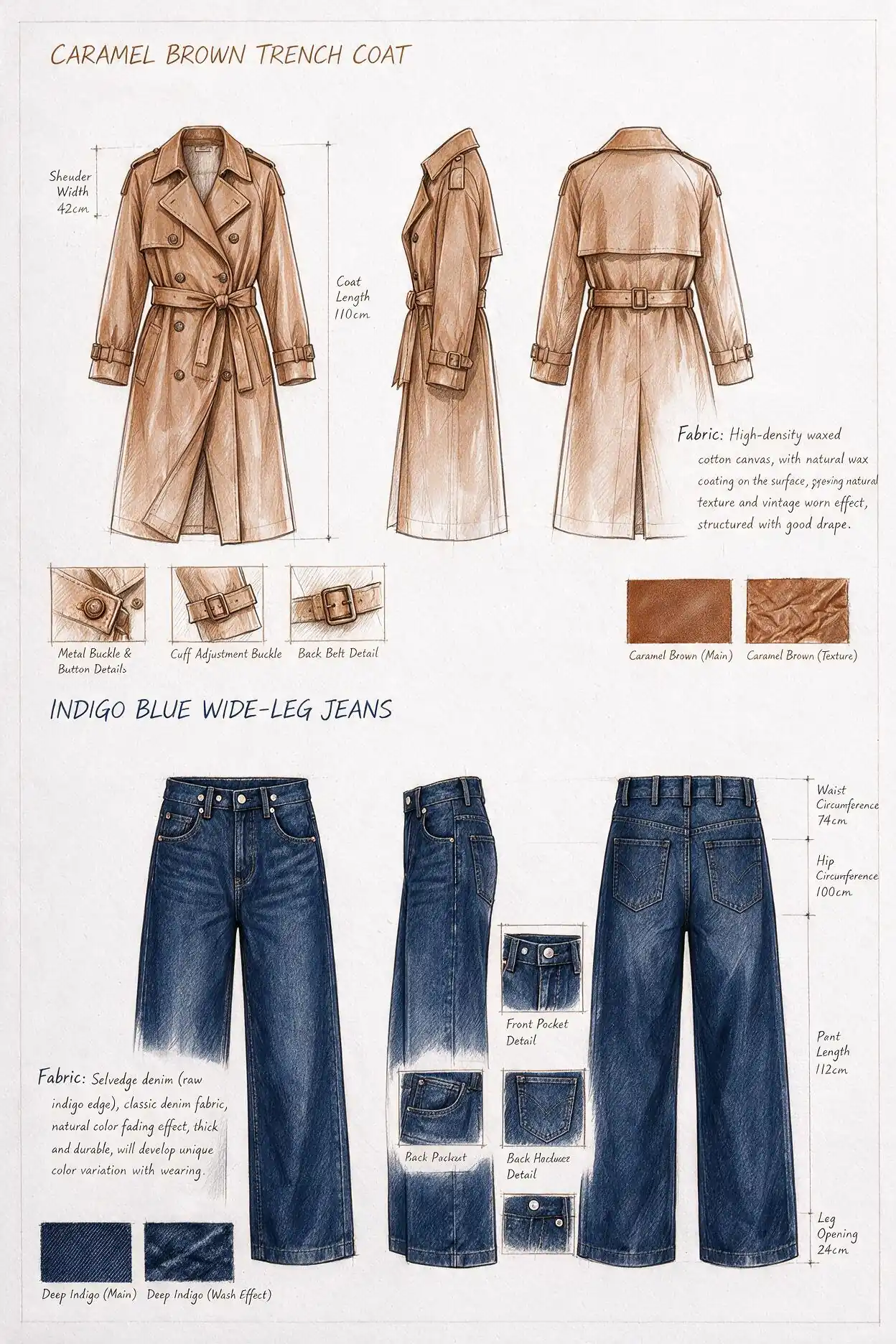
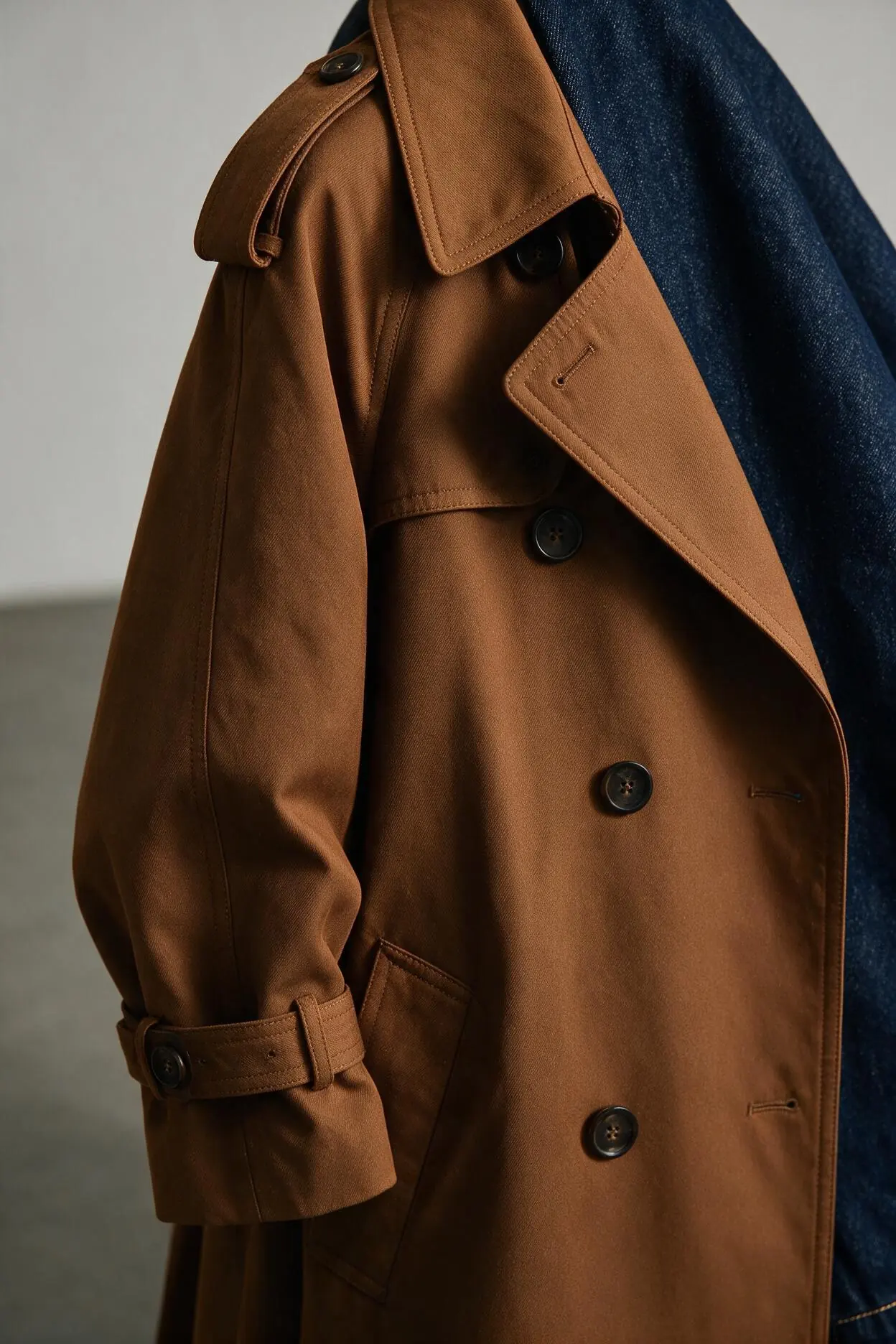
Classic garments are often recognized by their details. In this coat, the pointed collar, shoulder tab, double-breasted front, cuff adjustment and belt create the visual language of a trench coat. Their placement matters as much as their presence: the collar frames the face, the belt controls the waist and the cuff detail adds structure at the wrist.
The denim follows a quieter approach. Contrast stitching, a traditional five-pocket layout and a clean wide leg are enough to give the jeans character without taking attention away from the coat.
5. Testing the Look in Everyday Styling
A design becomes more useful when it survives more than one styling idea. The first test is the simplest: open coat, white shirt and denim for a relaxed weekday look. The same coat can be belted for a more defined silhouette, or layered over a fine knit when the temperature drops.
This kind of styling test helps separate a beautiful image from a workable wardrobe idea. It asks whether the pieces can be worn together, separately and across more than one occasion.
6. Moving from Concept to Sample
An image communicates direction, but a sample must answer practical questions. Before making a first sample, the design needs a measured size chart, confirmed fabric behavior, lining and trim decisions, pocket dimensions, closure details and a clear fit intention.
When that concept becomes a seasonal range, the next step is to build a Fall/Winter collection development plan around materials, approval gates and the required delivery date.
- Turn the sketch into a clean technical flat with verified front, side and back details.
- Define the base size, garment measurements and intended ease.
- Confirm the fabric weight, drape, recovery and wash or finishing plan.
- Make a first sample, then review balance, mobility, collar shape and hem position.
The most useful part of a design board is not an invented measurement. It is the shared visual language it creates between the designer, patternmaker and sample room.
Keep the design conversation open
Which detail would you change first: the coat length, the denim volume or the color balance? A strong design often starts with one clear question and improves through the next sample.
FAQ
Can a three-view design sketch be used directly to make a pattern?
It can guide the first pattern, but it is not a production-ready pattern by itself. Measurements, ease, fabric behavior and construction details still need to be defined and tested.
Why use a limited color palette for an autumn collection?
A focused palette creates visual cohesion and makes it easier to style the same pieces across several outfits and product stories.
What should be approved before making a final sample?
Approve the technical flat, measurements, fabric direction, trims, fit intention and key construction details before moving from concept to final sample.